Pittsfield Scraps Camping Ordinance for Outreach Program
PITTSFIELD, Mass. — The City Council has scrapped the controversial "Camping Ordinance" and sees hope in an outreach program that connects unhoused individuals with resources.
"It was a bad idea, please file it," Mayor Peter Marchetti said to the council on Tuesday about the ordinance that would have banned public camping and storing of personal items.
The ordinance was sent to the Board of Health last year, and after months of consideration and a visit to the Northampton Division of Community Care, health officials recommend piloting an alternative community response program with two new homeless service coordinators who would begin work in the spring.
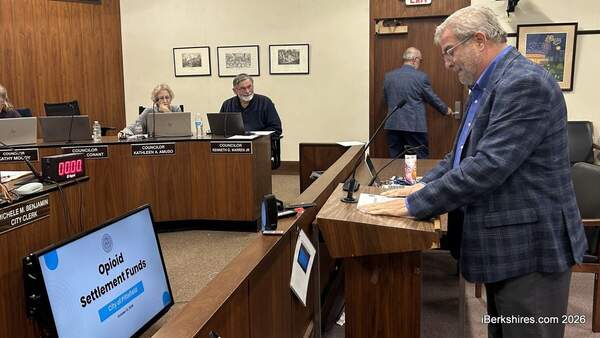
"Our conclusion from that is very important. It is that street homelessness is a visible symptom of an underlying issue of deeper housing instability, complex health, and behavioral needs," Director of Public Health Andy Cambi said.
"While enforcement was an option, enforcement alone cannot address the underlying conditions that I just mentioned. These conditions are what's contributing to the downtown experiences that were presented to you, and also what's happening in the community at large."
The camping ordinance was filed, and the BOH's recommendations were sent to the Public Health and Safety subcommittee.
The BOH found that homelessness is multi multifactorial, with intersections of housing instability, economic vulnerability, mental health challenges, and substance abuse. They also found that Pittsfield's current engagement response is reactive, with co-responders handling crisis calls, but there is no consistent municipal public health approach.
The pilot will establish two dedicated community health workers in the Health Department who focus on serving unhoused individuals in the downtown and larger community. The team will coordinate closely with agencies already doing this work, Cambi said, and without duplicating it.
Marchetti said these positions won't impact the city budget.
Ward 6 Councilor Dina Lampiasi said she has often asked for a compassionate person to go out and interrupt a situation that may be occurring "with little imagination of what that really looks like or where that's housed," and is excited to see what comes forward.
Councilor at Large Kathy Amuso said it has certainly been a learning experience for her, and included differing opinions at public meetings.
"I think it's been eye-opening, and I think it's been a process that was sometimes painful, but I think with this, the Board of Health recommendations, I think have moved us to a very positive approach to helping a serious issue that we have," she said.
Ward 7 Councilor Katherine Moody recognized the "long, strange" trip it has been since the camping ordinance was proposed.
"I want to say, thank you. This is how it should work. You tried something, it didn't work, and now we're moving on to this holistic approach to a city-wide problem," she said.
She hopes that it will include further outreach than downtown and into places like public parks, which she has been vocal about making sure they are "safe, health-wise, and available to our entire public."
When it came time to file the formerly proposed ordinance, Ward 2 Councilor Cameron Cunningham expressed a wish for the current approach to have some kind of enforcement after speaking to North Street business owners in his ward's part of the downtown. He said they want a beat cop.
"It's a hard thing to describe and characterize, but speaking to businesses, it's almost that there's a comfort and there's a perception problem with North Street, and so what they look for is something to try to improve that," he said.
"And I'm not up here proposing a solution, not up here proposing verbiage that would do that. I'm saying that I think there is something, that a lot of businesses feel that way. There's something to do with comfort, there's something to do with perception that needs to be solved, that is impacting their business, not just one, not just two, but it seems like my whole side of the street."
Lampiasi said she heard the same thing from her side of North Street, and business owners feel like they need law enforcement to show up and interrupt the cycle they are seeing. She pointed out that the public health response is interrupting these cycles before punitive responses, "because that is essentially what it ends up being."
"The last thing that I'm going to support is putting a beat cop somewhere where we have something else to alleviate some of these issues. We don't have enough officers for the pressure that our system has right now, at least that's what we're hearing from people who need help," she said.
"Maybe the answer is reorganizing how we're using officers and what their priorities are. I don't know, but what we have now is a need to address public health concerns, and I think the beauty of being able to have this organized, compassionate response is that we can also enforce the law."
She, Marchetti, and other councilors pointed to laws that are not being enforced around illegal public activities. It was also pointed out that a Pittsfield Police Department sergeant conducts outreach with unhoused individuals.
Amuso said she has some similar concerns to Cunningham's. She hopes that this plan, along with the units of affordable housing that have come online or will come online, will alleviate some of the issues North Street business owners bring forward.
"We can't ignore that there are issues on North Street, and I'm hoping, Director Cambi, that you incorporate some of that into your plan, and I think again, we have to look at our data and see what this does and doesn't have."
Marchetti said there is a two-prong approach, pointing to the open container law that was passed last year. He said the city needs to look at its laws, including loitering laws, and work with the new police chief to have officers connect with business owners and people on the streets so there is not an "us versus them" mentality.
"So we may come back to you over the next six months with ordinance changes to assist the police with doing some of this stuff," he said, later recognizing that there is a "lot more work" that still needs to be done with city departments working together.
On changing his perspective on the ordinance, Marchetti said he was trying to solve the problem of criminal or disruptive activities in the downtown, and that the approach evolved over time and needed the Board of Health's help.
Tags: board of health, camping, homeless,