Governor Awards $8.7 Million to Support Energy Efficient and Clean Energy Projects

Print Story | Email Story
BOSTON — The Healey-Driscoll Administration announced $8.7 million in grant funding to support 34 projects that increase energy efficiency and generate renewable energy. 
 
The funding is going to municipal water facilities, agricultural and food-producing non-profits and small businesses, working to modernize operations and save energy. 
 
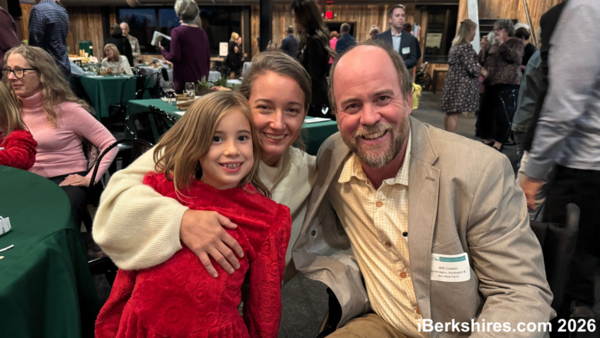
"Berkshire County has an incredible agricultural community, and we understand the importance of energy efficiency and clean water resources, so it's great to see our farms and municipalities getting the support we need to invest in the future of our natural resources," said State Sen. Paul Mark. "Projects like the solar installations at Red Shirt Farm and Greenagers, along with the digester expansion at Pine Island Farm, will help reduce energy costs while continuing the important work these farms do for our local food system and community. I'm grateful to the Healey-Driscoll Administration and MassDEP for supporting practical investments that will help our region remain sustainable and strong." 
 
The Gap Energy Grant Program, administered by the Massachusetts Department of Environmental Protection (MassDEP), helps fill the last "gap" in project financing. Recipients can combine these grants with utility incentives and other funding sources to build or install energy efficiency and clean energy projects that might otherwise be delayed or impossible. 
 
"These investments are helping turn energy efficiency and clean energy upgrades into real savings for communities and small businesses," said Governor Maura Healey. "We're not only strengthening our climate resiliency but enabling recipients to reinvest locally, all of which build an economically stronger Massachusetts."
 
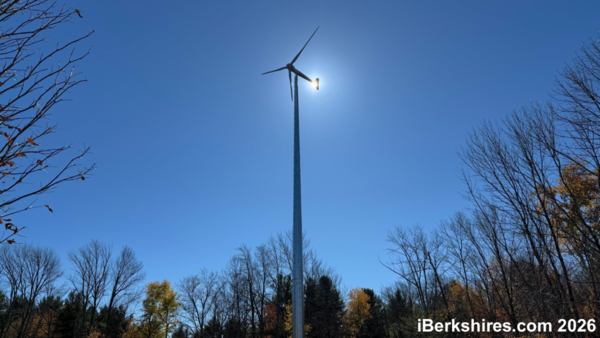
The awarded projects are expected to collectively save the grant recipients more than $1.6 million in energy costs every year. They are also expected to generate more than10,691,963 kilowatt hours (kWh) of annual electricity savings — enough to power and heat more than 416 households — and reduce carbon emissions by 2,440 metric tons, the equivalent of removing 569 cars off the road annually. 
 
These grants are managed by the Clean Energy Results Program, an initiative led by MassDEP, and supported by the Massachusetts Department of Energy Resources and the Massachusetts Clean Energy Center. Please visit MassDEP's Massachusetts Gap Energy Grant Program webpage, for more information on the 2026 Gap IV Energy Grants. 
If you would like to contribute information on this article, contact us at info@iberkshires.com.

Lee Wants Bioremediation in Housatonic River Vernal Pool Study

LEE, Mass. — The town has asked the U.S. Environmental Protection Agency and General Electric to include PCB bioremediation in its vernal pool study on the Housatonic River. 

Lee officials are urging the EPA to require GE to add a bioremediation treatment arm to the vernal-pool study or provide the public with a clear explanation for why such testing is being excluded.

"This is exactly the kind of question EPA and GE should be asking before final remedy decisions are locked in," Select Board Chair Bob Jones said in a statement released to the press. "The town is not asking to slow the cleanup. We are asking EPA and GE to make the cleanup smarter, less destructive, and more protective over the long term."

An open house was held in Pittsfield earlier this summer for the Vernal Pool Pilot Study on Reach 5A of the Housatonic River, a five-mile stretch between the river's confluence and Lenox border.

EPA has required GE to conduct a Vernal Pool Pilot Study as part of the Housatonic River Rest of River remediation, comparing excavation and restoration with activated-carbon-based treatments, including a product called SediMite and powdered activated carbon, the town said. 

Ten vernal pools will be cleaned of polychlorinated biphenyls in total, five with excavation and five with active carbon, and seven additional vernal pools will be monitored as controls. Construction will be complete around October, but the pools will be left to their natural processes and monitored with surveys and sampling for three years. 

The Lee PCB Advisory Committee wrote a letter calling for the 21st-century approach it said could reduce long-term toxicity, avoid unnecessary destruction of sensitive habitats, and improve the effectiveness of the cleanup.

It states that Lee supports the study's purpose and agrees that EPA and GE must understand how cleanup activities affect sensitive vernal-pool ecosystems.

"The current pilot includes 10 treatment pools and seven control pools, while local officials understand that roughly 100 vernal pools may occur in the broader remediation corridor," the Aug. 27 letter reads. 

"That makes the pilot study consequential: the methods tested now could shape how many sensitive wetlands are excavated, reconstructed, treated, or left with PCBs managed in place."

View Full Story

More South Berkshire Stories