Students Show Effects of Climate Change in Art Show
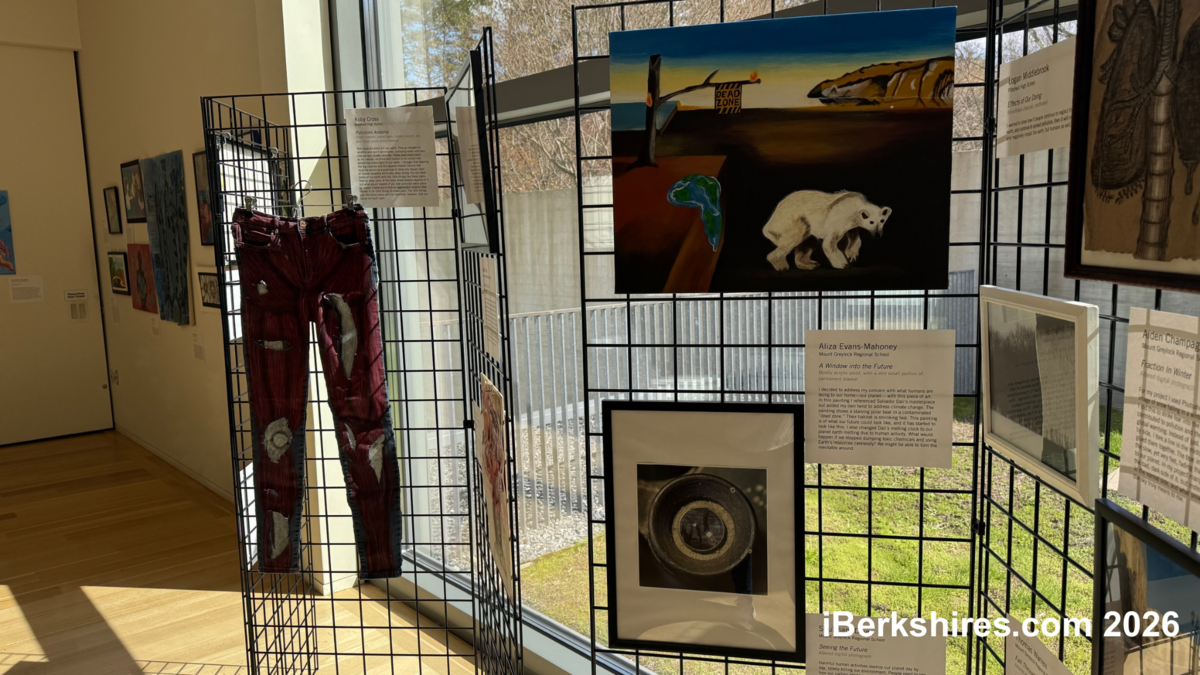
WILLIAMSTOWN, Mass. — Students got to showcase their art at the Clark Art Institute depicting their relationship with the Earth in the time of climate change.
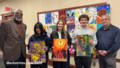
"How Shall We Live," a juried art exhibit, was on display Saturday in the Clark's Hunter Studio at Stone Hill. Students from 10 high schools participated.
Climate educational organization Cooler Communities has hosted this show for the past couple of years at different venues across the Berkshires. This year, it was approached by the Clark to host the show and is co-organizing with Living the Change Berkshires.
This was the first year Cooler Communities, a program of the Harold Grinspoon Charitable Foundation, changed its prompt to make it more personal for the students in hopes to start a conversation in the classrooms on climate change.
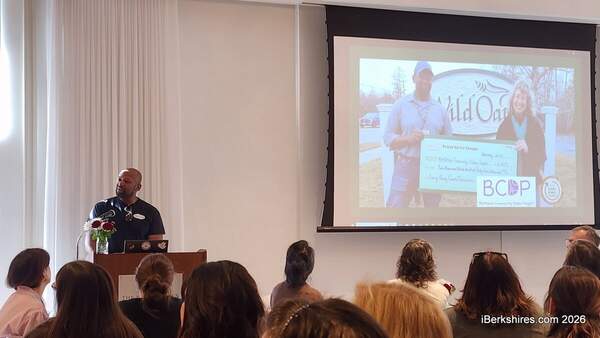
"In our work with Cooler Communities, we want to really make conversations about climate change normal, so it doesn't just happen in high school science or in activist circles, but for everyone to feel like they have a role to play, and for everyone to explore what it means for them," said Executive Director Uli Nagel.
"And so that's why the work of classrooms rather than after-school programs, but actually have it in the classroom and then bring it to the community and connect it to solutions. That's why the community is here, and so we always try to actually make it real, but also give kids the opportunity to explore their own emotions and interior experiences through art."
The Clark wanted to expand on its Sensing Nature Program and give students a higher impact experience instead of just the program tour that could help fit the criteria for the students’ portrait of a graduate.
The show had 74 displays as well as an iPad that showed other students’ art that was not showcased in the show, which was around 180 submissions.
Students were asked to respond to one or more elements in the following prompt:
- What does nature provide?
- What are the Earth's needs?
- What matters most?
- What is resilience?
- Where do you find guidance and inspiration?
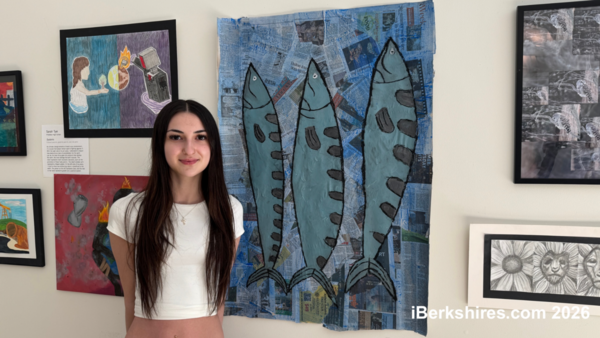
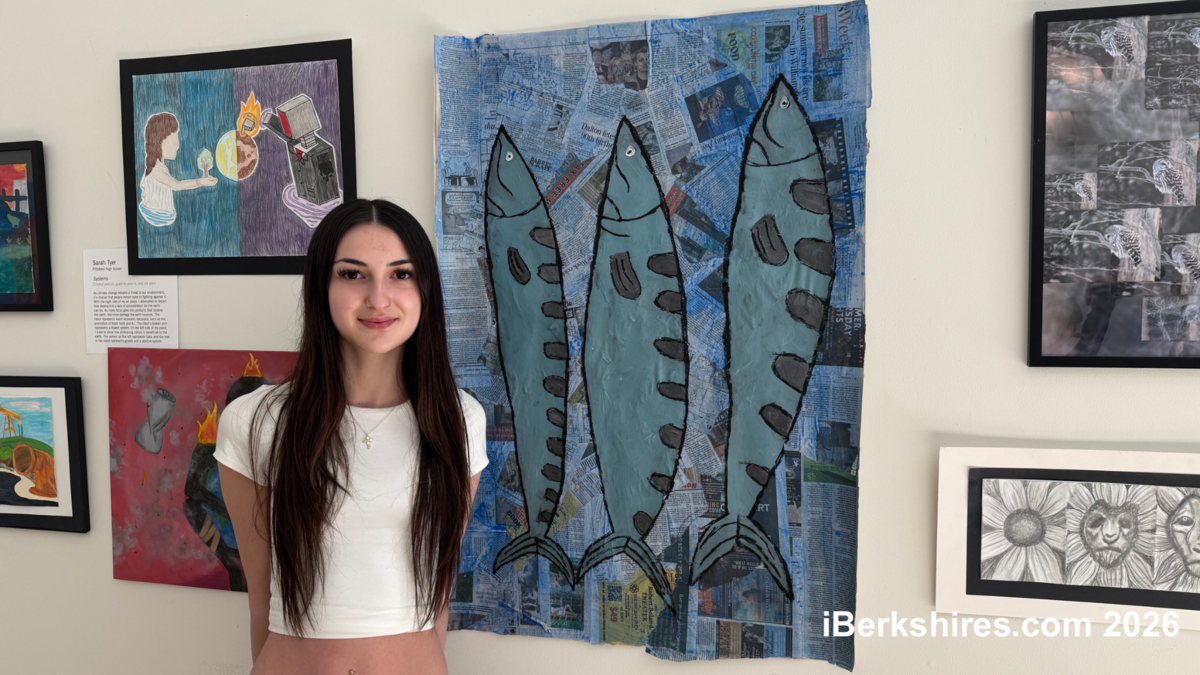
Pittsfield High student Stella Carnevale, 16, made her artwork out of newspaper, Mod Podge, chalk, and watercolors. She drew three sardines showing the effect polluted water had on them and wrote in her artist's note that she wants people to pause and feel empathy while also recognizing their role in protecting the natural world.
"Fish are vital to our world. They balance ecosystems, feed communities, and remind us how deeply connected life on Earth is. When our waters are polluted, fish are often the first to suffer, and their disappearance signals a greater loss that affects us all," she wrote. "Pollution doesn't just damage rivers and oceans; it threatens food sources, cultures, and the health of the planet itself. I make art to bring attention to what is quietly being taken away."
She said it was really cool to see her art hanging in the Clark and never thought it would happen.
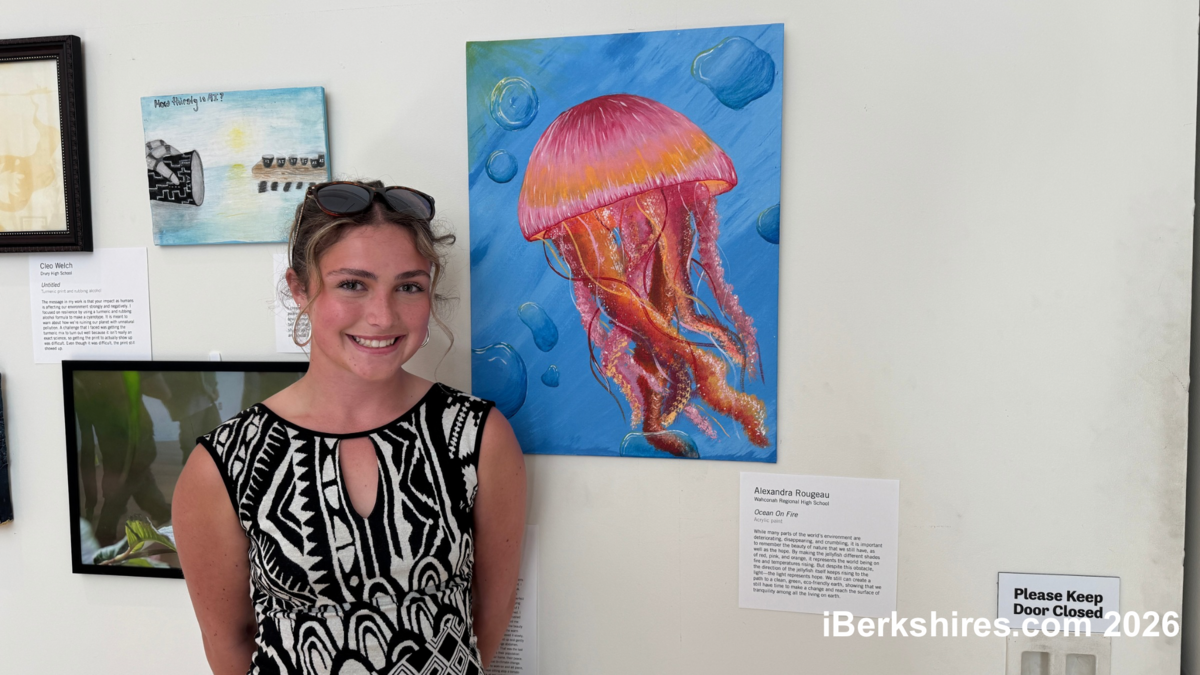
Wahconah Regional High student, Alexandra Rougeau, 18, painted a jellyfish in acrylics.
"I started off making a different painting that was very depressing, obviously, because it's climate change, and I got really annoyed because everything was so negative," she said. "And although climate change is a really negative part of the world right now, I want to try to show that there is some hope in it. And that we do have some hope in saving our environment. So the jellyfish is meant to depict fire, global warming, but it's in the ocean and it's rising up, and there is some hope, hopefully at the top, in the surface."
Rougeau said it is an honor to be chosen to have her art here and to see all the other depictions from other students.
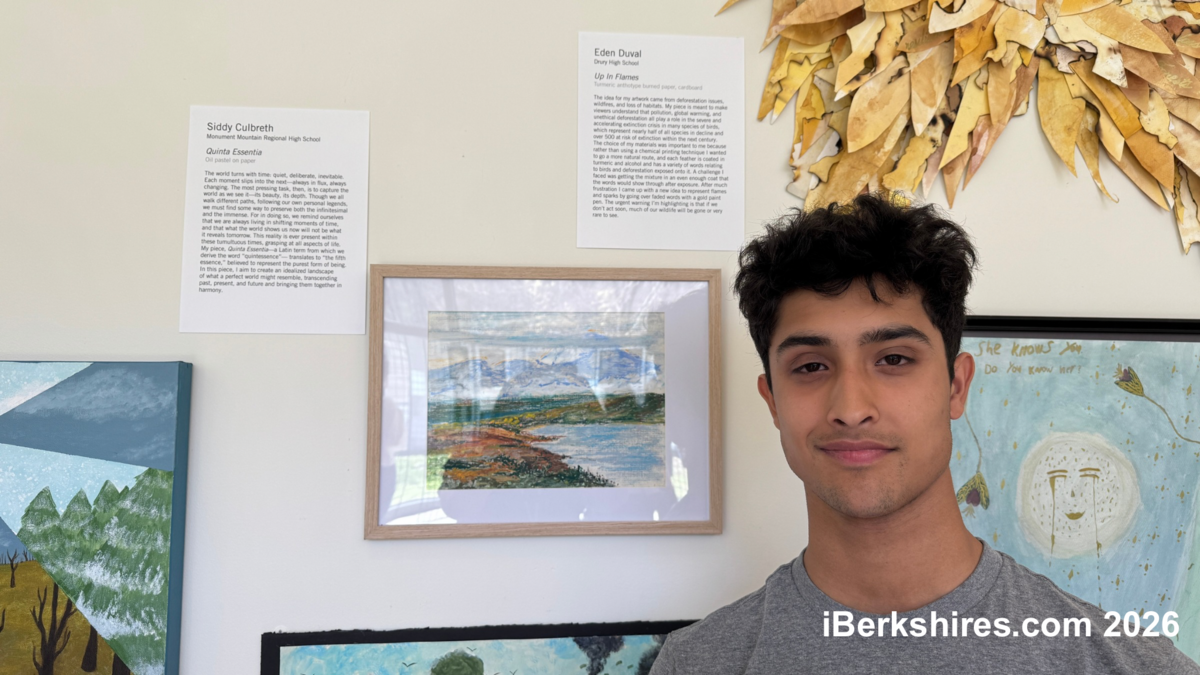
Monument Mountain High sophomore Siddy Culbreth painted a landscape in oil pastels and said he was inspired by his grandfather who is a landscaper and wanted to depict "what we should save."
"I was picturing this as a quintessential, it's kind of like epitome of what a nice landscape should be like," he said. "And so in terms of climate change, like how that is kind of shifting, or what our idea of like the world is shifting. And I feel like it's really important to preserve what, like, almost not a perfect world, but, what the world should be like."
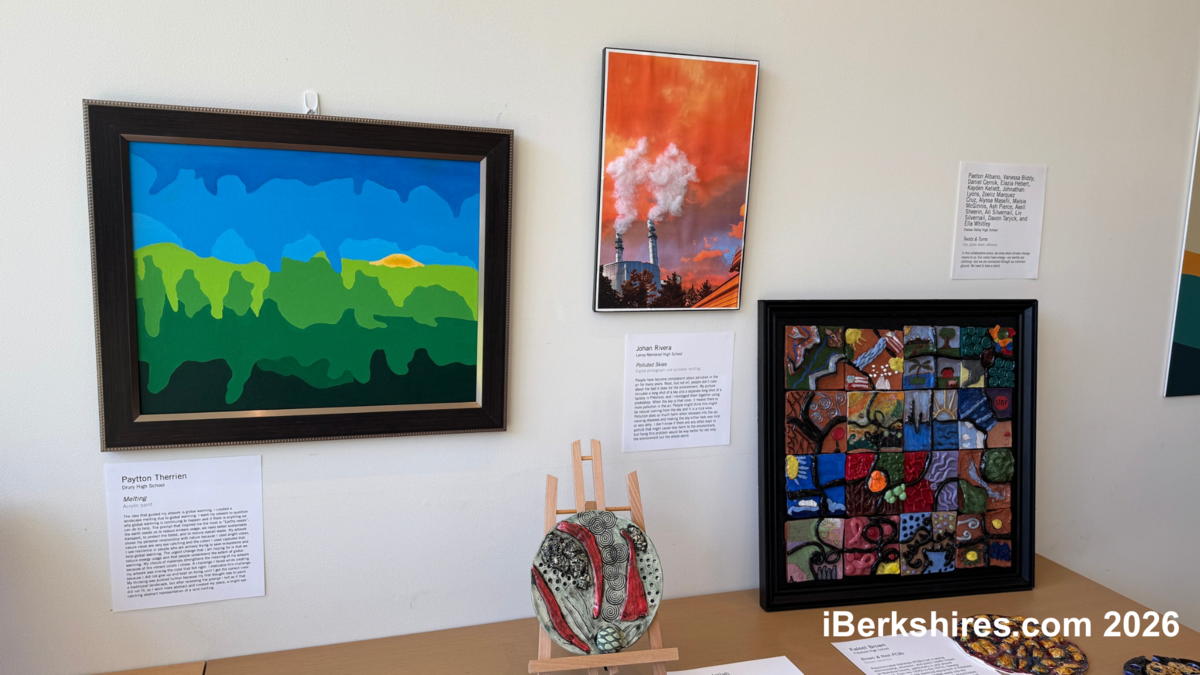
Some students from Pittsfield High in Colleen Quinn's ceramics class created a microscopic look of what they thought PCBs looked like and wanted to depict how the polychlorinated biphenyls might have affected them at Allendale Elementary, near disposal site Hill 37.
Quinn said she is very proud of all her students.
The show is at the Clark until April 26 and is free and open to the public. It will be moved to Pittsfield City Hall to run from May 1 through June 8, and then to Sheffield's Dewey Hall from June 12 through 21.
Tags: art exhibit, Clark Art, high school,