Hoyt, Rice Face Off for Adams Board of Selectmen
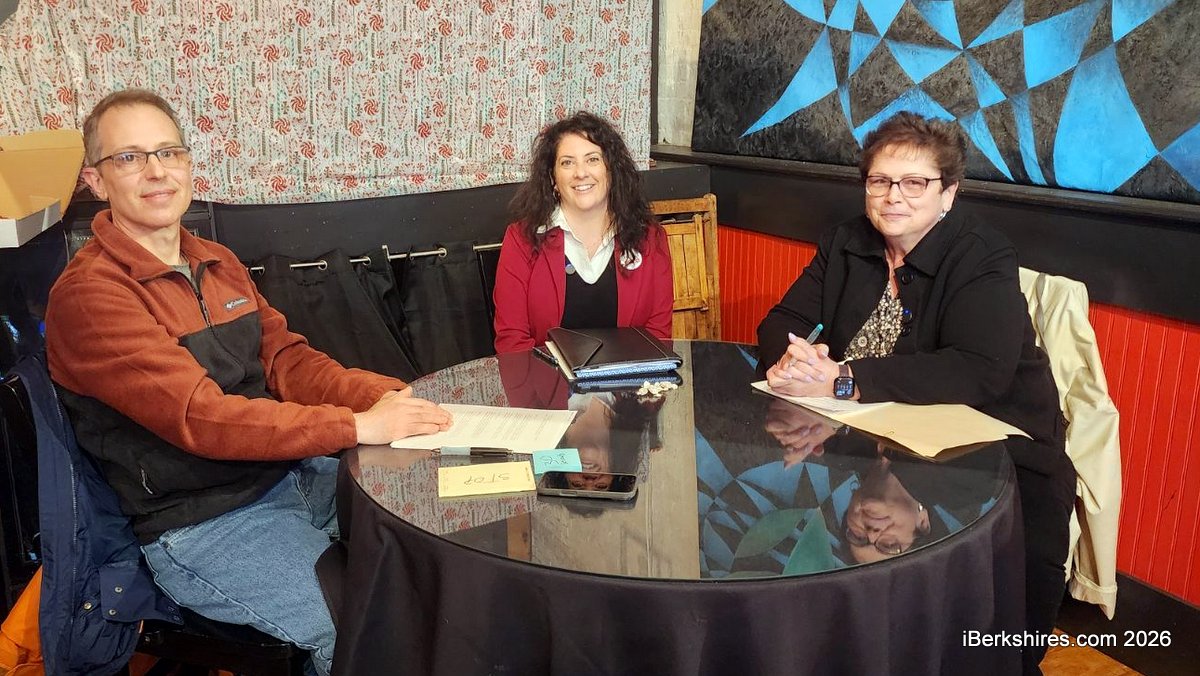
Peter Wagner was the moderator and supplied the questions for the forum at the Firehouse Cafe on Park Street. The event was also recorded for play on NBCTC.
Christine Hoyt is seeking a fourth term on the board and is being challenged by Kelly Rice, who is retiring next month as town treasurer/collector after 14 years.
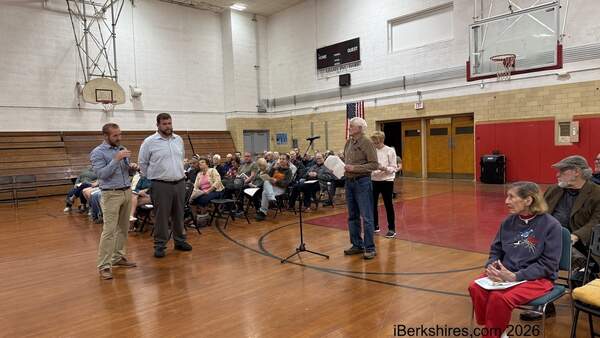
The gathering at the Firehouse Cafe was not a debate, but rather the candidates answering questions supplied ahead by moderator Peter Wagner, then a few from those attending the forum.
About two dozen people attended the forum hosted the Adams Democratic Committee and Adams Concerned Citizens, and recorded for Northern Berkshire Community Television.
Hoyt said she started with a "simple commitment to work hard, listen carefully, and make decisions that put Adams on a stronger path." She pointed to responsible budgeting, reducing the residential tax rate, supporting businesses and the opening of the long-awaited Greylock Glen Outdoor Center.
"I'm proud of the progress we've made, and I believe we're on the right track. It's why I'm running for a fourth term to continue that work, same focus on fiscal responsibility, community investment and practical steady leadership," she said.
Rice also noted fiscal management during her tenure as treasurer, including improving the tax collection rate from 95 percent to 98, successfully securing multiple grants for housing and business initiatives, and her long career in municipal government and as a department head.
"I have firsthand experience observing the strengths and weaknesses of the town's daily operations. I believe I possess the skills and ability to collaborate effectively with the town staff and the citizens to that I interact with on a daily basis," she said. "I have a comprehensive understanding of the town's government structure, its shortcomings and the valuable lessons that come with the experience."
When questioned how they would convince four other board members to back their proposals, Kelly pointed to her "challenging position" in getting people to comply with their tax obligations. She recently placed four of 22 properties in tax title and was able to keep the other 18 on the tax roles.
Hoyt's response was of the recent Selectmen's meeting regarding Rice's resignation. She brought in facts and data regarding the preference for professionals in that office and convinced her colleagues to approve a temporary appointment rather than putting the office up for election.
"I was in the minority, and my colleagues went with an appointment for a one-year term," she said, adding she hoped it would go to a ballot vote next year.
Wagner asked if there were decisions the board made that they disagreed with. Hoyt said she couldn't really think of one, saying she comes in prepared to discuss a matter but "whatever is decided is decided. We move forward with that decision, and I don't tend to look back on it."
The citizens' petitions regarding the Greylock Glen hadn't been acted on, said Rice. "I believe it's important to prioritize this issue and work towards fulfilling the wishes of the town's meeting. My goal is to see if we can get some of that meeting done, get the update for the Greylock Glen."
The advisory petition asked the Selectmen to hold monthly community forums on the Glen project and Wagner picked up on the topic later in the forum. Hoyt said the she would "push back respectfully," saying nearly a third of the Selectmen meetings between December 2024 and June 2025 contained Glen updates, and there were two presentations since then on budgeting, staffing and contracts.
"Although they weren't structured and set up as separate meetings, those conversations have been taking place, Hoyt said. "And what I will also say is they're taking place during normal Select Board meetings, which are on people's radar."
Rice said the resolution should be addressed in a timely manner and "we must listen to our constituents."
Both said there were limited options for town officials to address blight and that code enforcement has to follow state regulations. Rice said if there's taxes owed, she can take the property to land court as collector. As a selectman, Hoyt said her board leans on town employees for direction as to what can be done.
Rice called for all Chapter 90 monies to be exclusively used on road repair, and not equipment. The town, for instance, in 2024 spent $147,000 in road funds to purchase a paving machine.
"I think the Chapter 90 needs to go to all the roads. We need to get the roads fixed," she said. "And there should be a five-year plan to do redo the roads. And I think it should all be the roads and not other uses for any other purposes."
Hoyt pointed out the town only gets $284,000 to $293,000 a year in road funds while a mile of road now costs $1 million. But it was able to use those funds for engineering to leverage the $9 million Commercial Street project.
"We have 55 road miles in the town of Adams that we do have to take care of," she said. "So what have I done? What I can tell you is that I've advocated on the local, regional state level for more dollars from the state Chapter 90 program."
Hoyt said she's testified before the Joint Committee on Transportation, the Local Government Advisory Commission and the Massachusetts Municipal Association and supported the administration's Transportation Funding Task Force, which has lead to a 50 percent increase Chapter 90.
Both agreed that the budgeting process needs to start earlier to avoid some of the confusion that Wagner referenced at last year's town meeting with the Finance Committee and Selectmen differed on late budget requests.
As to the turnover in Town Hall over the past two years, Hoyt said that was driven by retirements and people leaving for higher salaries. She said she has advocated for more educational programs for municipal positions, including as a member of the Massachusetts Select Board Association Board of Directors. Rice said, "when the staff feels valued and heard, they are more likely to stay and perform at their best" and thought succession plans should be put in place.
The annual town election is Monday, May 4, from 7 a.m. to 7 p.m. at the Adams Memorial Building.
Tags: election 2026, town elections,