Adams Starts Talks on Short-Term Rental Bylaw
ADAMS, Mass. — There are many unknowns in developing short-term rental regulations, but one thing is clear: the Planning Board needs community input, especially from short-term rental operators.
Short-term rentals, a topic of extensive debate in towns and cities throughout the county, is now a hot issue in Adams as officials weigh how to balance the safety and neighborhood impacts of the rentals without eliminating their economic benefits.
"We have a lot of information and we have a lot of different ideas. I think we need some guidance," Vice Chair Sandra Moderski said.
Local people have been renting out rooms, apartments and homes off-book for years, mostly to the employees and performers of the seasonal cultural venues. The rise of online booking platforms, like AirBnB and Vrbo, have turned those infrequent summer leases into year-round vacation and work rentals.
The town must consider several key issues in regulating their use, including taxation, registration requirements, clear enforcement authority (including weekends and off-hours), and realistic safety inspections.
Additional concerns include neighborhood protections such as occupancy limits, parking and noise rules, and whether accessory dwelling units should be limited to owner-occupied or non-owner-occupied rentals.
"I believe the board would like to bring inspections up to the same level as landlords that landlords have to meet, " Moderski said.
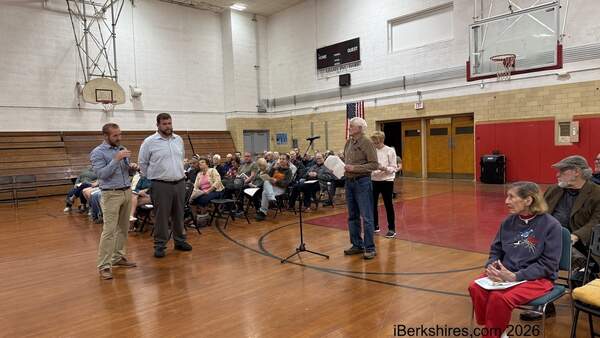
During Monday's Planning Board meeting, tensions at times ran high as members and attendees debated what aspects of short-term rentals should be regulated.
From behind the camera, Cathy Foster, who was filming for Gateway Collaborative Media [NBCTC], argued that the board is trying to regulate non-issues and questioned whether any of the board members ever stayed in a short-term rental.
None of the three present board members said they have, but emphasized the importance of community input — especially from those with firsthand experience as operators or occupants.
One attendee recommended the board have a Zoom option to improve the accessibility of the meeting in the hopes to get more input. If advertised in advance this is something the town can consider for future meetings.
Some of the items being discussed are already regulated in other town bylaws, Foster argued.
She provided background on her experience operating a short-term rental in another town, claiming her neighbor "thinks it's wonderful" because renters are quiet and usually gone all day.
"They're not here to stay in the house all day, and they're very respectful and pleasant when they see them," Foster said.
She said short-term rentals should be regulated at a "minimal level" — the same level as apartments or any rental gets.
Although Foster has had good experience with occupants, there may be cases in which guests are not respectful and that town has to prepare for that, Moderski said, and also emphasized the need to ensure the units are safe.
Moderski said she believes the bylaw should limit the number of occupants in a unit based on size.
"Having 20 people cramped into a two-bedroom house is not really appropriate. Having eight cars on the street. That's not appropriate, in my mind," she said.
Foster criticized this, saying it was a "wild outlier."
"We have to take the good and the bad," Moderski said, stressing that the town has to prepare for the bad.
Resident Peter Wagner acknowledged the town's shortage of habitable housing but urged the board to clearly identify specific problems and goals before drafting regulations to prevent barriers to small businesses.
"I do lose sleep over the fact that a lot of the habitable housing in town is taken up by short-term rentals. That does bother me," he said, while adding that taxing or regulating them out of existence is not the answer.
"I think that would be very bad for tourism, very bad for economic development, very bad for employers … Adams is a struggling community, and I don't think we want to create too many additional barriers to small businesses or to people coming to town to do things," Wagner said.
According to the state, the town has 45 registered short-term rentals but does not have a registration requirement to ensure they are up to sanitary and safety standards, said board member David Rhinemiller.
The state charges a Room Occupancy Excise Tax rate of 5.7 percent to room rentals of 90 days or less, including short-term rentals.
In addition to the state excise, cities and towns are also permitted to charge a local room occupancy excise tax up to 6 percent.
Tags: Planning Board, short-term rentals,