OLLI at BCC Focuses on Plants, Landscapes in June Events

Print Story | Email Story
PITTSFIELD, Mass. — The Osher Lifelong Learning Institute at Berkshire Community College (OLLI at BCC) announced registration is open for events in June: "Ornamental Alternatives: Replacing Invasives with Beautiful Natives that Restore a Healthy Home Landscape," a class Chris Ferrero on June 2-3, and "Making Sense of Grape Scents," a lecture with Professor Cynthia Holland on June 10. 
 
"Ornamental Alternatives: Replacing Invasives with Beautiful Natives that Restore a Healthy Home Landscape" with Chris Ferrero will be held in person at BCC and online on June 2 and 3 from 10:00 - 11:30 a.m. Official invasive plant lists have unmasked the "bad actors" in home landscapes, but some of these culprits are beloved for their blooms, shade performance or fall foliage. This program highlights common trees, shrubs, vines and perennials from Massachusetts’ "prohibited" lists and offers native alternatives with superior flowers, fragrance, fruits & fall color, plus value to pollinators and birds.   
 
Chris Ferrero trained as a Cornell Master Gardener in New York, where she led demonstration garden teams, plant propagation workshops and alternatives-to-invasives work groups. She regularly consults on challenges like shade gardening, deer deterrence and pollinator gardening with native perennials and flowering shrubs, and she frequently speaks to garden clubs and master gardener symposiums. Formerly a corporate marketing director, she retired to Stockbridge, Mass. near Berkshire Botanical Garden, where she serves on the faculty and also sits on the Horticulture Advisory Committee. 
 
The cost of the class is $30 for OLLI at BCC members and $40 for non-members. To register, visit https://berkshireolli.org/event-6603477
 
"Making Sense of Grape Scents" with Professor Cynthia Holland, part of OLLI at BCC’s Distinguished Speaker Series, will be held online via Zoom on June 10 at 7 p.m. Plants produce a wide array of airborne molecules, or volatiles, that function in attracting pollinators, deterring herbivores and communicating with their surroundings. The volatile methyl anthranilate, which is responsible for the characteristic grape aroma, is emitted by grapes, citrus, maize and other flowering plants. This talk will highlight the Holland lab’s discovery of how methyl anthranilate is synthesized in grapes and will preview current experimental evidence on plant detection and response to volatiles.  
 
Cynthia Holland is an Assistant Professor in the Biology department at Williams College, where she teaches courses on molecular biology and biochemistry. Before starting at Williams in 2020, she pursued her PhD in Plant and Microbial Biosciences at Washington University in St. Louis, followed by a postdoctoral fellowship at the Boyce Thompson Institute in Ithaca, NY. Her research lab investigates the enzymes that plants use to produce molecules with commercial and pharmaceutical relevance. Recently, the Holland lab has identified the enzymes from grapes that are used to produce the volatile responsible for grape aroma. Current experiments focus on how plants may perceive airborne aromas and the implications for plant-to-plant communication. This project has been funded by the U.S. National Science Foundation through a five-year CAREER award.   
 
The cost of the lecture is $10 for OLLI at BCC members; $15 for non-members; free for students, staff and faculty from Berkshire Community College, MCLA and Williams; free for youth ages 17 and under; and free for those holding WIC, EBT/SNAP or ConnectorCare cards. To register, visit https://berkshireolli.org/event-6599451.  


Tags: BCC,   

If you would like to contribute information on this article, contact us at info@iberkshires.com.

Dalton Planners Hold Public Hearing on Tiny Homes Bylaw

By Breanna SteeleiBerkshires Staff

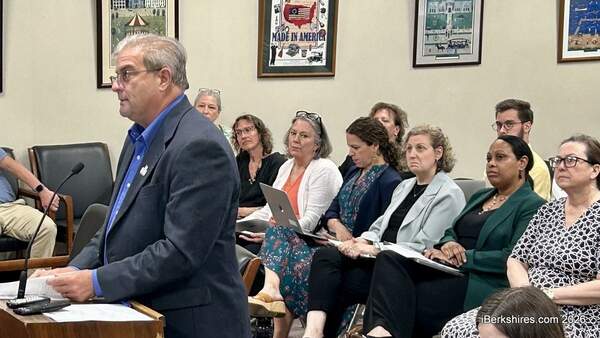
DALTON, Mass. — The Planning Board held a public hearing last week on a bylaw for mobile accessory dwelling units (ADU) that will be brought before a special town meeting.

For nearly two years, Amy Turnbull has been trying to amend the current ADU bylaws to allow mobile tiny homes.  

A movable tiny home is defined as a unit under 400 square feet that meets all of someone's daily needs, including sanitation, cooking, and other facilities, and which is also mobile. Most homes considered "tiny" are built on a trailer so they can be towed.

Her proposal defines a movable tiny house as a "residential property with an existing primary house, intended for year-round living," and outlines eight conditions for approval.

Among these conditions: the unit must adhere to accessory dwelling unit regulations, undergo site plan review, be licensed and registered with the state Registry of Motor Vehicles, have approved energy, water, and wastewater systems, and comply with American National Standards Institute 119.5 and National Fire Protection Association 1192 safety requirements.

Additionally, the unit must be certified for ANSI or NFPA compliance by a manufacturer or third-party inspector, including adherence to Appendix Q and the International Residential Code's structural guidelines and energy efficiency standards. The tiny house cannot move under its own power, and its undercarriage, wheels, axles, tongue, and hitch must be concealed from view. Wheels and leveling or support jacks are required to rest on a level gravel or paved surface.

Turnbull has gotten enough signatures for her petition to amend the current bylaws to add her definition of the mobile ADUs. Last Wednesday, the board held a public hearing on the petitions, which will be voted on at a special meeting.

Turnbull says she has two reasons for wanting to add this to the town's bylaws: aging in place and affordable housing.

"We need a variety of housing types in Dalton, and that we also need to address the idea that you know nearly 30 percent of our population by 2035 is going to be over 65 years old, and it's problematic because  ... there's not enough choice for these people to to age in place,"she said. "What movable tiny houses does, is it provides a less restrictive ADU. It's much cheaper to place, and it's easier to place, less time consuming. And what it offers to people is it offers people who are owners a place for their children to come and live, or a caregiver to come and live, or for the people who own their own house to come and live while they rent out their maybe their three bedroom home to a new family who wants to attend to Craneville simultaneously."

She said people need to move away from calling and treating the tiny homes as though they are trailers, as one former Planning Board member has voiced opinions on.

"That is an opinion, and I think we need to get over that, because I want to say that these are foundation homes, and that the chassis is a foundation, and it's a stick-built home on a chassis, and in very many ways it's like a modular house. I think we will not be surprised in the next 10 years if we see the market turn around and start to make smaller, tiny modular homes, but that is not the case right now, and we have a dire need for affordable housing," she said.

At a former Fire District meeting the Water Department drafted regulations for water hook-ups for these types of homes. The superintendent sent a letter to the Planning Board to be read at the meeting stating it will not be a hindrance for sewer system connection.

"The Department of Public Works does not feel that mobile ADUs will be an issue with the town sewer system. The homeowners will be responsible for any issues outside of the sewer main and connect and responsible for connecting in, so that would address any permits, fees, or anything like that would be added to that," the letter states. 

"The Water Department, as we've stated previous, and as you stated, the water department has come up with their own set of SOPs, standard operating procedures, for hooking up a an adu and a mobile adu, which will then have to meet winterization and all those, but they've laid out a plan for that, that they have, so I'd like to point that out," board Chair Robert Collins said.

One concern was raised that if someone can have a mobile ADU could they also have another tiny home on their property, including the main house. That situation is not likely, said Turnbull, as it would cost a considerable amount of money. Town Manager Eric Anderson also stated that in his former community when they adopted similar laws their first one wasn’t put in until a couple years later and then maybe one a year.

View Full Story

More Pittsfield Stories