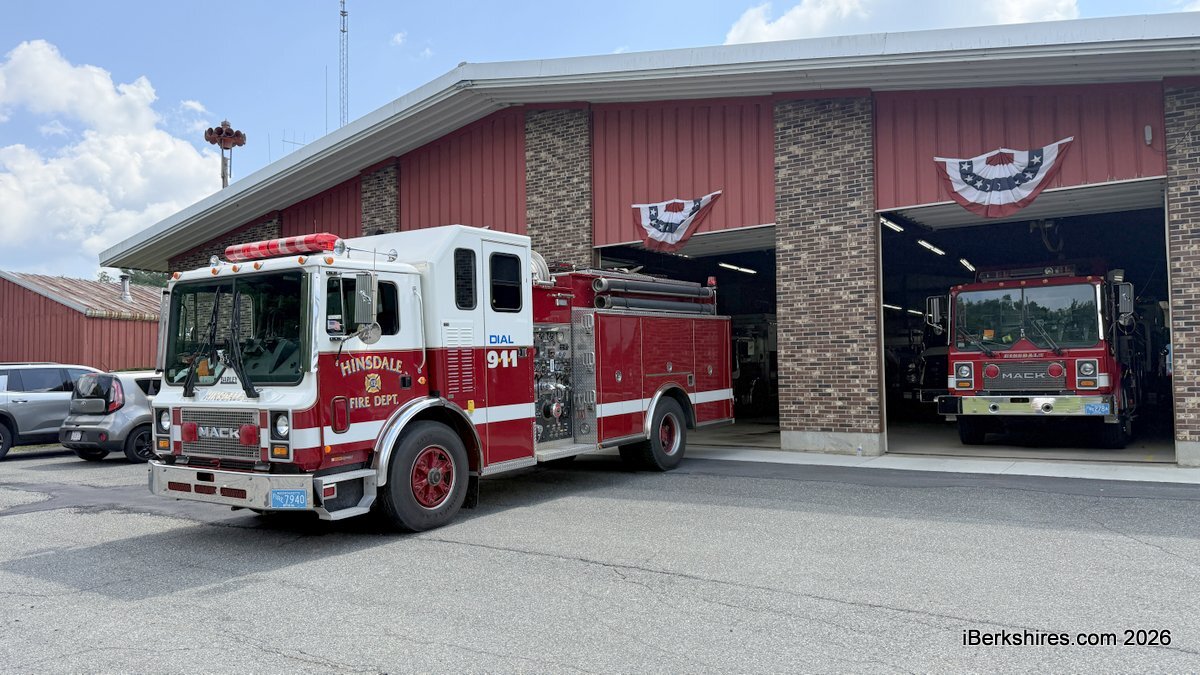
Hinsdale Fire Department in Need of New Engine
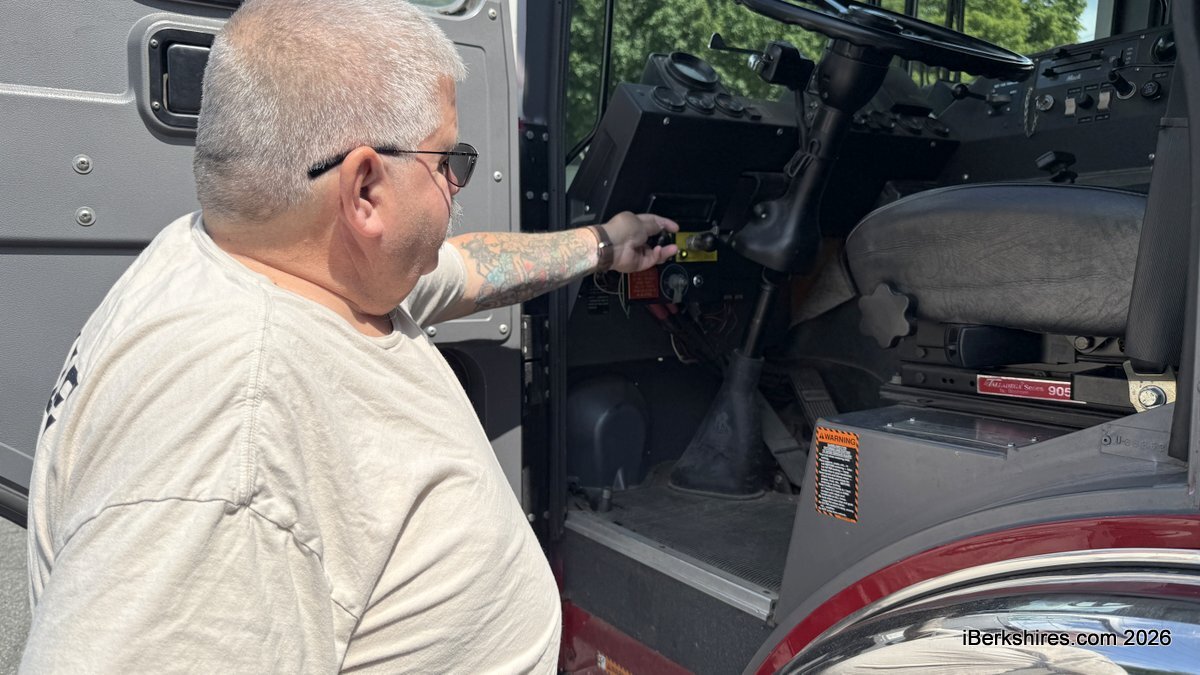
"Somebody's going to get hurt. I don't like putting my guys [in] not knowing if that truck's going to quit while they're in the house," Fire Chief Ralph Cormier told the Select Board last week.
The town has 10 apparatus, including two fire engines, ambulances, a rescue truck, a tanker, a brush truck, and two air/rehab trucks, Cormier said in a follow-up.
The town owns the two engines, the tanker, and brush truck, while the Hinsdale Fire Association owns the remaining equipment.
The two fire engines are more than 30 years old: Engine 2 is a 1996 Darley with a compressed air foam system and Engine 3 is a 1991 Marion and does not have the CAFS system.
The department has been telling the town for a "long time" that the engines need to be replaced because of the age, said the chief.
Cormier is advocating against purchasing a used engine, saying the department could inherit the problems that prompted the previous owner to sell it.
He noted that when the town bought Engine 2 in 1996 it cost about $200,000, and that comparable new engines now are "over a million."
The department has requested that an engine be added to the town's capital plan several times but it has not moved forward because of the high cost and lack of funding, Cormier said.
This is not a unique situation, several towns are struggling to keep their equipment up to date because of the sparse funding available, said Town Administrator Robert Graves during last Wednesday's Select Board meeting.
There are virtually no grants for fire trucks and the only one he is aware of is the one through the U.S. Department of Agriculture.
The age of the department's trucks also affects the town's Insurance Services Office rating, which helps dictate homeowners' insurance premiums. The current rating is a six out of 10, Cormier told the board.
The department responded to 89 calls last year, but no structure fires. It has 30 volunteers, including 20 active firefighters and eight junior members who are limited to exterior and support duties and do not enter burning buildings.
While the apparatus have been well maintained because two of the department's volunteer firefighters are mechanics, issues with the engines are starting to become more challenging to resolve as parts take longer to replace because of age and repairs increasingly require specialized work, Cormier told iBerkshires.
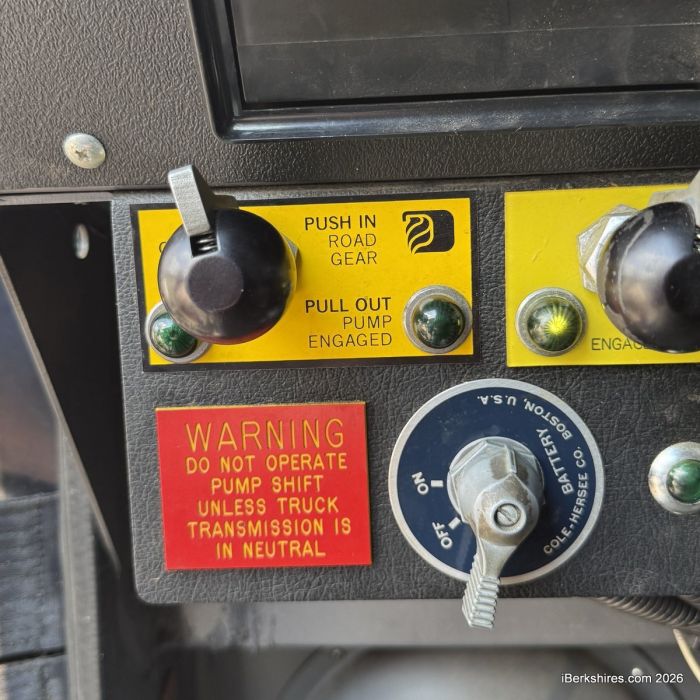
The need for a new engine has become more evident than ever with a recent incident with Engine 2 at a rail fire when its pump wouldn't go into gear.
The department had to bring Engine 3 in to finish the job, resulting in about a 10- to 15-minute delay.
The issue is likely electrical and the department is in the process of getting it fixed, with repairs expected to cost over $1,000, Cormier said.
A delay like that would not be good in the case of a house fire, especially outside the hydrant district, because Engine 3 would have been at a water source.
If the department were to arrive on scene and see a working fire, it would call for mutual aid, which is added time.
Time is everything when it comes to fires, Cormier said, pointing to limited daytime staffing, the high speed at which modern building materials burn, and the way fires can travel through wall cavities in older balloon-frame homes.
When the department is able to purchase a new engine, it plans to retire Engine 3 and keep Engine 2 in service as a reserve. Delivery of the new apparatus would take roughly 900 days from the time the engine is ordered.
Although Engine 2 is currently experiencing ongoing electrical problems with its pump, those issues are fixable by a specialist.
Both engines are already well past the National Fire Protection Association's recommended 25-year service life and the guiding practice is that "the newest truck stays," Cormier said.
Tags: fire engine,