Third Crew of Wildland Firefighters Help Battle Minnesota Fires
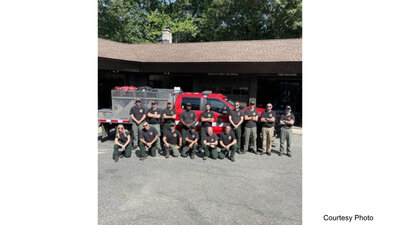 |
CARLISLE — Governor Maura Healey announced that Massachusetts is sending a third crew of specially trained wildland firefighters to northern Minnesota to help fight ongoing fires in the region.
The 15-person team includes firefighters from the Massachusetts Department of Conservation and Recreation (DCR) and Massachusetts Department of Fish and Game's (DFG) Division of Fisheries and Wildlife (MassWildlife). Massachusetts
"I'm incredibly proud of our Massachusetts firefighters, including several who are volunteering to head back to Minnesota for a second time," said Governor Maura Healey. "They are leaving their families and putting themselves in harm's way to help communities that need them. We're grateful for their service and wish them a safe deployment."
Five large wildfires continue to burn across the Boundary Waters region of northern Minnesota, including the Bear Trap Fire, which extends into Ontario, Canada. Together, the July Lighting Fires span more than 65,000 acres and have drawn more than 750 personnel as part of a coordinated response.
The Massachusetts team includes 11-person wildland
"Massachusetts' firefighters are again lending support to our partners in other states," said Energy and Environmental Affairs Secretary Rebecca Tepper. "Drought and dry conditions are worsening fire risk across the country. Some areas are in need of more capacity as they combat wildfires at a much bigger scale. These trends speak to how climate change puts strain on our first responders. We stand with them and are ready to send our support to communities in need."
Since 1985, DCR's Bureau of Forest Fire Control and Forestry, in partnership with U.S. Forest Service and the Northeast Forest Fire Protection Commission, has been sending crews to fight fires across North America. In recent years Massachusetts firefighting personnel have been deployed to multiple wildfires, including fires in Montana, Idaho, California, Oregon, Arizona, as well as Canada. Last year, DCR and DFG sent a 20-person crew to Fairbanks, Alaska,, for a two-week deployment. In each case, Massachusetts firefighters are able to apply the unique skills they have learned in service at home and acquire new techniques and expertise they can bring back to address future fires.
In the fall of 2025, Chief Fire Warden Dave Celino and the DCR wildland firefighters received the Fire Marshall's award at the 36th annual Firefighter of the Year awards in recognition of the experience, expertise and firefighting resources they contributed to state's efforts to combat the historic fires that burned 4,000 acres across Massachusetts during the 2024 wildfire season.
The responding Massachusetts firefighters are:?