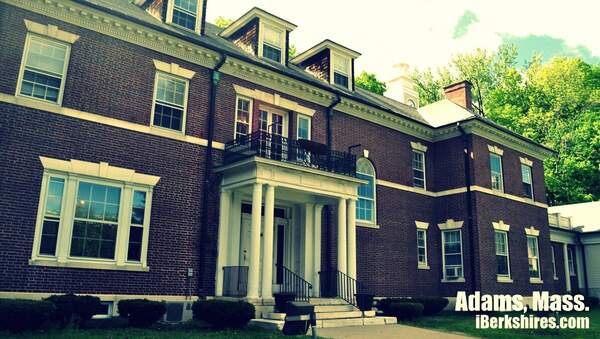
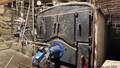
ADAMS, Mass. — For more than two decades, the Curtis Fine Paper Mill has sat vacant, continuing to deteriorate, but the town is working to find solutions that would revitalize the property.
Adams Town Administrator Nicholas Caccamo recently announced that the town missed out on a $4 million U.S. Environmental Protection Agency Brownfields and Land Revitalization grant.
According to a notice from the EPA, the agency received 558 applications and only had enough funds to award 193 grants from the "highest-ranking applications."
During a debriefing with the agency, the town was informed that its application was slightly weaker than the awarded applicants because it lacked a "definitive reuse plan for the building complex," said Donna Cesan, interim Community Development Director.
"These grant programs are very competitive…so, we're gonna be evaluating that," she said.
The town was "apparently close," falling just a couple of points short of the cutoff for applicants ultimately awarded funding, Cesan said.
While the town intends to strengthen its application over the next few months and apply again, changes to the grant program have reduced the maximum cleanup award to $500,000, requiring officials to take a much more incremental approach to addressing the building's deteriorating condition.
"We've talked to Berkshire Regional Planning Commission, and they're helping us strategize," Cesan said.
Additionally, the town is looking into other funding sources, including grant monies from the Department of Environmental Protection, Cesan said.
"We know of some of our neighboring communities that have, kind of, piggybacked DEP funds with EPA funds that they've received, so we're going to also be investigating that if we couldn't also pursue a strategy for Curtis," Cesan said.
In 2025, the town hired engineering and environmental consultant Weston & Sampson to do a visual structural assessment of the buildings and a Hazardous Building Materials Investigation.
The visual structural assessment found that all of the buildings on the property have been exposed to water and moisture, resulting in damage ranging from moderate deterioration to complete roof collapse in some areas.
The hazardous materials investigation also confirmed the presence of asbestos, lead, polychlorinated biphenyls (PCBs), and various forms of benign waste throughout the property.
Based on these findings, buildings five and one are most structurally sound to preserve, while the remaining buildings, two, three, and four, will need to be demolished.
The three buildings that would need to be demolished have deteriorated to the point where the roof has collapsed, making traditional hazardous-material removal unsafe and renovation unfeasible, Cesan said.
The town is now working with the firm to develop a reuse strategy, which will likely include the town hosting a developers conference in the spring or summer, Cesan said.
Cesan said the property offers significant redevelopment potential, with its location along Route 8, access to an active rail line, and 12 acres of land making it one of the largest redevelopment sites in town.
Despite the setbacks, the town has made incremental progress towards the property, so far using approximately $100,000 in grant funding to address its condition, Cesan said.
The saga started in 2003 when Curtis Fine Paper Mill filed for bankruptcy, and the property was subsequently purchased by MJD Real Estate in 2009 for $15,000 for its trucking business. MJD also took on the bankrupt company's tax debts.
In 2016, MJD's unpaid taxes accounted for 40 to 45 percent of the total delinquent taxes owed to the town.
The property was tied up in Land Court during the pandemic; the town eventually took the property on back taxes.
The complex was valued at $1.85 million at the turn of the century and was most recently assessed at $446,600.
Since taking ownership, the town has assessed the contamination on the property and worked with the EPA to remove hazardous drums, demolish a failing smokestack, and clean up lead contaminated soil.
If you would like to contribute information on this article, contact us at info@iberkshires.com.
Your Comments
iBerkshires.com welcomes critical, respectful dialogue. Name-calling, personal attacks, libel, slander or foul language is not allowed. All comments are reviewed before posting and will be deleted or edited as necessary.
No Comments
State, Local Leaders Celebrate Funding Boost For Ashuwillticook Rail Trail Extension
By Sabrina DammsiBerkshires Staff
ADAMS, Mass. — State officials and local leaders kicked up their kickstands and took a ride along the final stretch of the Ashuwillticook Rail Trail on Thursday to celebrate new investments in rural communities.
Federal Funds and Infrastructure Office (FFIO) Director Quentin Palfrey joined local leaders, including State Rep. John Barrett III and Berkshire Regional Planning Commission (BRPC) Executive Director Laura Brennan, in Adams to highlight the newest round of FFIO funding. The grant will provide BRPC with $64,700 in state funds to help advance the Ashuwillticook Rail Trail expansion.
"When Governor Healey came into office, one of her big day-one commitments was to make sure that Massachusetts was fighting for every dollar possible coming out of Washington," Palfrey said, speaking about FFIO, a program created in 2023 to help the state aggressively pursue and coordinate federal funding opportunities.
This builds on a $17.3 million federal award secured last year for the project, dubbed the A2A project, which supports the design of a 9.3-mile shared-use path connecting the existing Ashuwillticook Rail Trail to the Williamstown Mohican Path.
"One of the things that she emphasized to me when we set up the Federal Funds and Infrastructure Office was that we need to make sure that these resources not only come into Massachusetts, but benefit all of Massachusetts," Palfrey added.
The additional $64,700 will allow BRPC to gather information about transportation needs in northern Berkshire County to help inform the design of the trail expansion. BRPC will partner with Williams College and Luminary Evaluation, LLC to use the University of Michigan's Transportation Security Index (TSI).
Brennan said BRPC will deploy a 16-question survey that will allow them "to research local and regional perspectives and surface the needs of our neighbors when it comes to transportation in the Berkshires."
"The best-case scenario would be if the survey turned up results that all needs are met and that everyone has access to the places and the things that they need to travel to – but we know that is not true," Brennan said. "We know that folks in Berkshire struggle to get to their place of employment, to be able to access important medical appointments, [and] other engagements. So, the transportation security index is going to help us really hone in on those specific needs, identify pockets of needs or areas where there is a strong concentration or depth of need."
She said FFIO's investment offers a "wonderful augmentation" to BRPC's current plans for the bike trail extension. It's also an investment that will make the region more competitive for other transportation opportunities.
"This is an incredibly multifaceted and valuable investment, and we deeply appreciate it," she said.
Barrett said these investments drive growth in the Berkshires.
"I've always found that if you're going to grow an area, you grow with what you have here to grow. You don't bring something in. We have a natural beauty. We have an environment that's second to none, and that's what we are going to grow on," he said.
Barrett said that in the First Berkshire District alone, 4,000 new people moved to the area.
"We're seeing that migration here. They're going to have activities. They're going to have jobs, and we're going to have a great educational system that goes with it with our two colleges that are here," he said.
Palfrey said it was clear during the initial creation of FFIO that federal funding often went to wealthier and more urban communities with larger planning departments and greater access to consultants. He added that FFIO helps reverse this trend and get projects in rural communities off the ground.
Adams Town Administrator Nicholas Caccamo recently announced that the town missed out on a $4 million U.S. Environmental Protection Agency Brownfields and Land Revitalization grant. click for more
BRPC was awarded an additional $64,700 that will allow them to gather information about transportation needs in northern Berkshire County. click for more
Matthew Wright, formerly a sergeant in the Adams Police Department, officially took his post on Tuesday, Sept. 8, and said he is excited to hit the ground running. click for more
The Fire Department's Engine 2 is suffering from rust and the Prudential Committee needs to decide if it should fixed or run until it can be replaced. click for more