Town Clerk Says Cheshire Records Need Better Storage
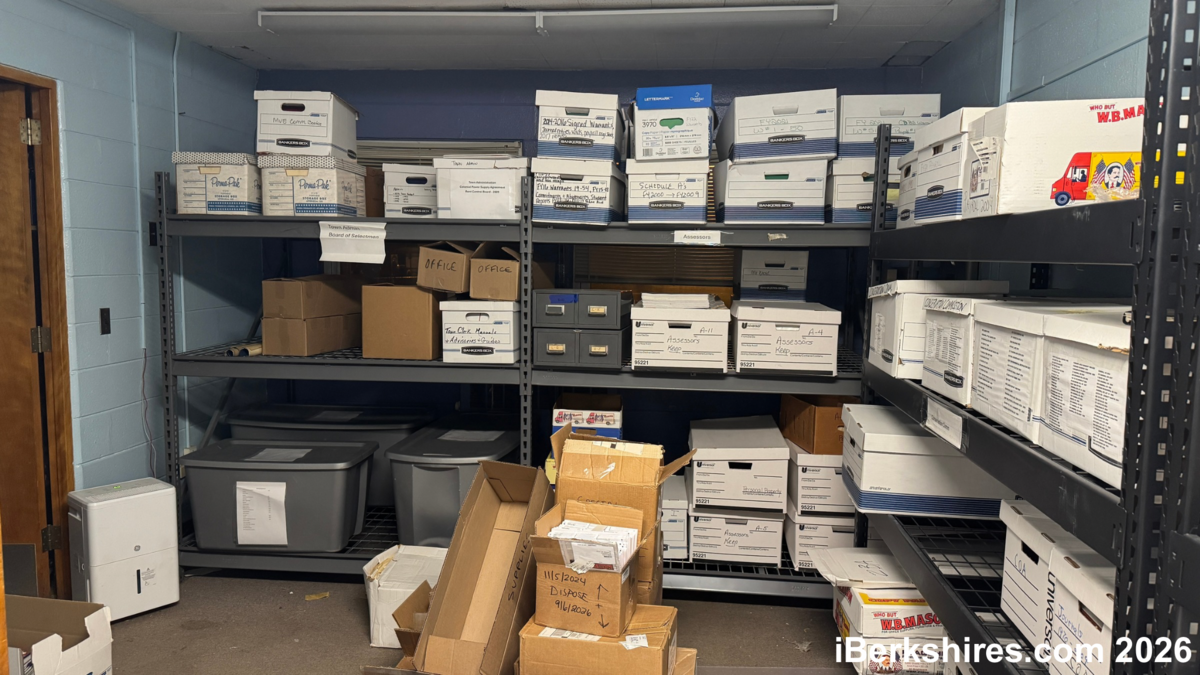
CHESHIRE, Mass. — The town clerk is asking the town to take better care of its records.
On Tuesday, Town Clerk Whitney Flynn brought the attention of the unsafe record keeping to the Select Board.
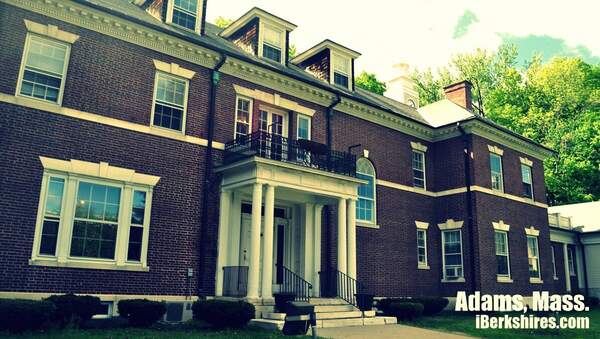
Currently some of the old records are still at the old town hall building; the town clerk moved to the Community House in 2024, following other town offices that moved the year before.
"A lot of the records are out in the hallway here. They're down in that room currently, and none of the area is safe for records," Flynn said.
Town records can include meeting agendas and minutes, town meeting votes, financial statements, licenses, local census, election rolls, bylaws and other documents.
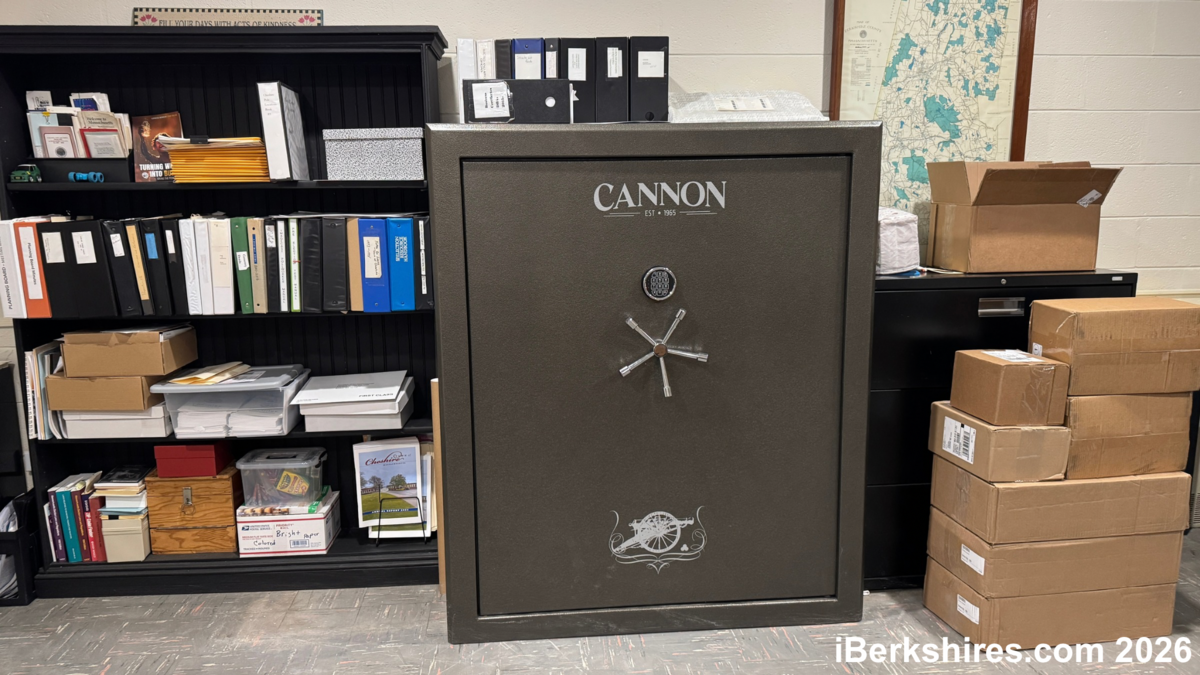
Currently the records are being stored throughout the former school, in rooms and in the hallway. Records are spilling out of the town clerk's office because the gun safe being used to store vital records is full. Flynn said these spaces do not adequately keep the documents safe from heat, fire, mold, water, or even pests.
"Have a place that doesn't have the ability for mice to chew or mold to get into, and water damage, fire damage, temperature control. I mean, we're talking about the files, vital records. All of our vital records are next to the boiler right now, and it's 95 degrees in there," said Flynn.
The gun safe in the town clerk's office shares a wall with the boiler, which heats up the office to 85-plus degrees during the winter.
"Hot, hot, hot. You know, sometimes I have to open up windows, unfortunately, but I can endure it. But the records can't sustain that level of heat for that long over the course of time," Flynn said. "I mean currently in the gun safe, the records are stacked on top of each other. They're not able to be preserved appropriately, but that was the option.
"I've been working with the options that are here, and I will continue to for as long as it's necessary. But I feel like it's time that we review better options for these historical documents to do our best to preserve the integrity of them."
Flynn gave the Select Board the Performance Standards of Safes and Vaults from the secretary of state's Archives Division as well as an audit done by FireLock on the vault's performance.
The vault audit done in May found deficiencies including the gun safe not meeting state standards of the National Fire Protection Association.
The town's records date back to the 1700s but a lot from that time was also lost to a fire, and the only records saved were because they were at the house of the town clerk serving at the time.
"So we've been here before. We've lost records before, and we want to utilize best practices to ensure the protection of all of the residents we have here today," Flynn said.
Some of the records are kept at the former town hall in a safe that Flynn had not been able to get into because of a faulty keypad. She was to have a locksmith look at the vault next week but told iBerkshires on Wednesday that she was able to access it.
The board had briefly discussed digitizing the records as well as finding a third party for record storage, but keeping the vital records with the clerk.
Flynn said digitizing is an option but it's also important to have the hard copy to ensure they are legible in the future and that state regulations on record retention need to be followed.
One idea was to move the town clerk into the assessor's space, move the assessor into the finance area, and convert a back room into a fire-protected storage area.
"There are different statutory requirements that are in there. I believe that there are specs for off-site storage, like costs associated with having them recorded somewhere else. You know, but we do have vital records, certainly that we need access every single day in the capacity of the town clerk's office," Flynn said.
This would require more assessment, she said, first such as the floor's capacity, the room's layout and suitability, renovation work, wiring, and costs all need to be figured out first.
"Whatever means to make the records accessible in 100 years from now, 200 years from now," Flynn said. "People are requesting the records today, like you're saying, from 1750, 1735. These are our oldest records. They want those. They want it for Daughters of the American Revolution. They want it for being able to be involved in different organizations, and they need proof of their lineage. They need proof of the documents. They need actual copies of these records. They need certified copies."
Board Chair Michelle Francesconi said she understands how important it is to keep records from hundreds of years ago with her work as business manager for the Catholic Parishes of Adams and Cheshire.
"In my line of work, right now Canada is offering citizenship to people with French Canadian lineage, and so because of that, and having historical baptismal records going back to the 1800s ... I'm routinely being asked to verify, especially now, given that Canadian citizenship opportunity, verify baptismal records," she said. "But the Catholic Church is really good at maintaining paper records, and so there's something to be said about keeping fireproof storage and paper records, whether you want to digitize them or not."
Former Town Clerk Christine Emerson, who still volunteers her time, advocated for the town to address the problem.
"A fire destroyed 100 years worth of vital records and town records. So I am very, very upset that the records are being kind of tossed around, talked about when they need to be preserved," she said. "She town spent a fair, a very fair amount of money doing restoration on all the old town books and the assessor's books, and that closet down there does not meet standards to put those documents in.
"I'm just hoping that you realize that when we first discussed moving over here, statements were made that oh, a vault or safes would be provided. Well, so far you've got a closet that you don't dare put the old records in. It's holding election equipment safely, yes. And then a gun safe that does not serve the purpose. She can't even put the books in order. She has to put them willy-nilly into it. That does not meet the standard."
Emerson said the records need to be moved from the old town hall with care, and that they can't just be moved in bins with a truck.
"You need an archivist to tell you what should go and should not go. I cleaned out the vault and straightened it out before I retired. I gave the Historical Commission every document or object that was pertinent to them. The only records that are in that vault belong under the purview of the town clerk," she said. "So that's why I'm a little upset. I guarded those records for 30 years."
Flynn said she consulted with town clerks in Savoy, Hancock and Clarksburg and learned they have the same problems as well while learning from Pittsfield, Lenox, and Stockbridge about their well-equipped spaces.
North Adams has also run into space problems with proper record-keeping recently received a grant for a "roving archivist" to work with the clerk's office on management.
Francesconi said assured her they want to make sure to do it right. She also mentioned that the records have been stored this way for many years before the current board members and now they will have to find a solution.
"Our board is not trying to insinuate that we're going to take records from the 1700s and shove them in a closet. ... that's why it's on the agenda tonight — a thoughtful and methodical process to ensure the continuity that those records are maintained," the chair said.
"The reality is the vault malfunctioned. Whether we were still in the old town hall or not, it's really old, and so now we're at that juncture where we have to make a decision on what to do with them. If for some reason we can't replace that keypad, we're going to have to make a short-term decision to move those safely, but to make sure that they're stored, so we don't run the risk of them getting damaged. So I respect your position 100 percent and you did spend decades of your life."
The board members said they will review the information Flynn provided and resume the discussion at the next meeting.
Note: A section about speaking with other clerks about record keeping was inadvertently left out of the initial publication and has been restored.
Tags: public records,