Berkshire Food Project Commits to Permanent Home with $50K Renovation
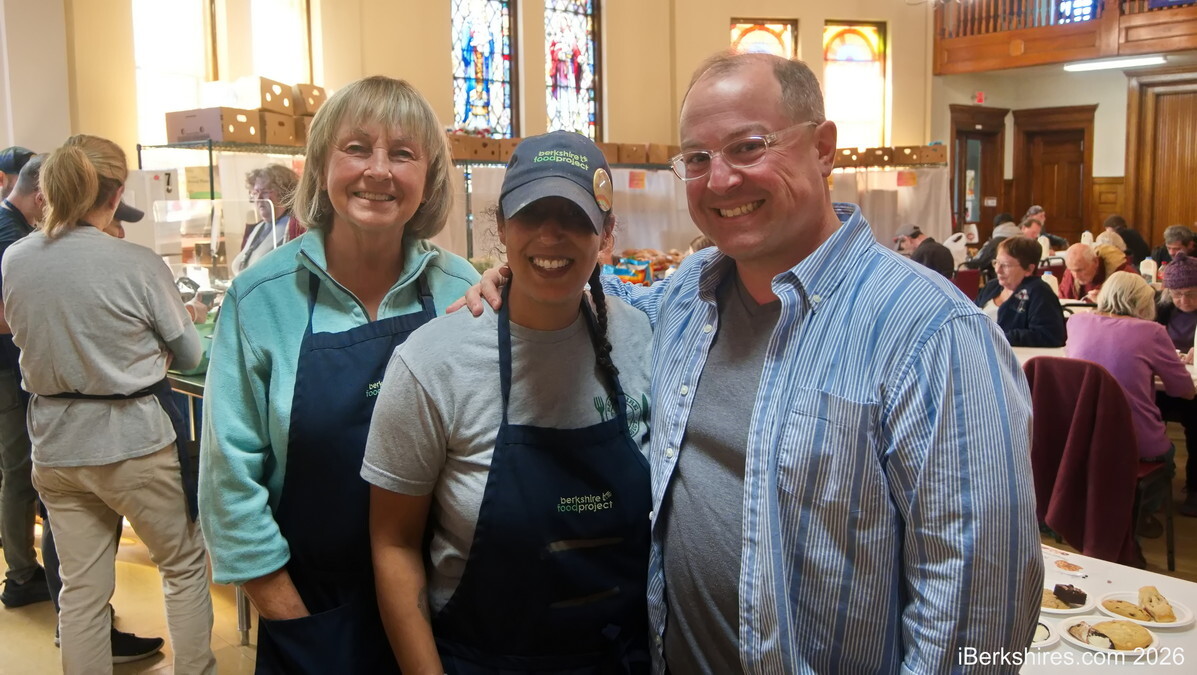
NORTH ADAMS, Mass. — After four decades of serving meals out of First Congregational Church, the Berkshire Food Project is officially putting down permanent roots — and giving its longtime dining space a major overhaul.
The project is entering its 40th year of existence, and for those 40 years they have operated out of the First Congregational Church, where they now serve a free hot lunch from 11:30 a.m. to 1:30 p.m., five days a week, all year.
BFP Executive Director Matthew Alcombright said there have always been discussions, even before his time as director, about whether BFP needed to relocate.
"We have been here for 40 years. We were invited by the church to be here, but we were looking at our growth and wondering if we needed a bigger space," he said. "We asked if we could manage here, and we can manage here. We just need to make it more accessible.
"We are proud of this, and we are proud to make this our home," he said.
Alcombright noted these improvements were made in lockstep with First Congregational Church, starting with long-standing quality-of-life issues in the dining hall: lighting and ventilation.
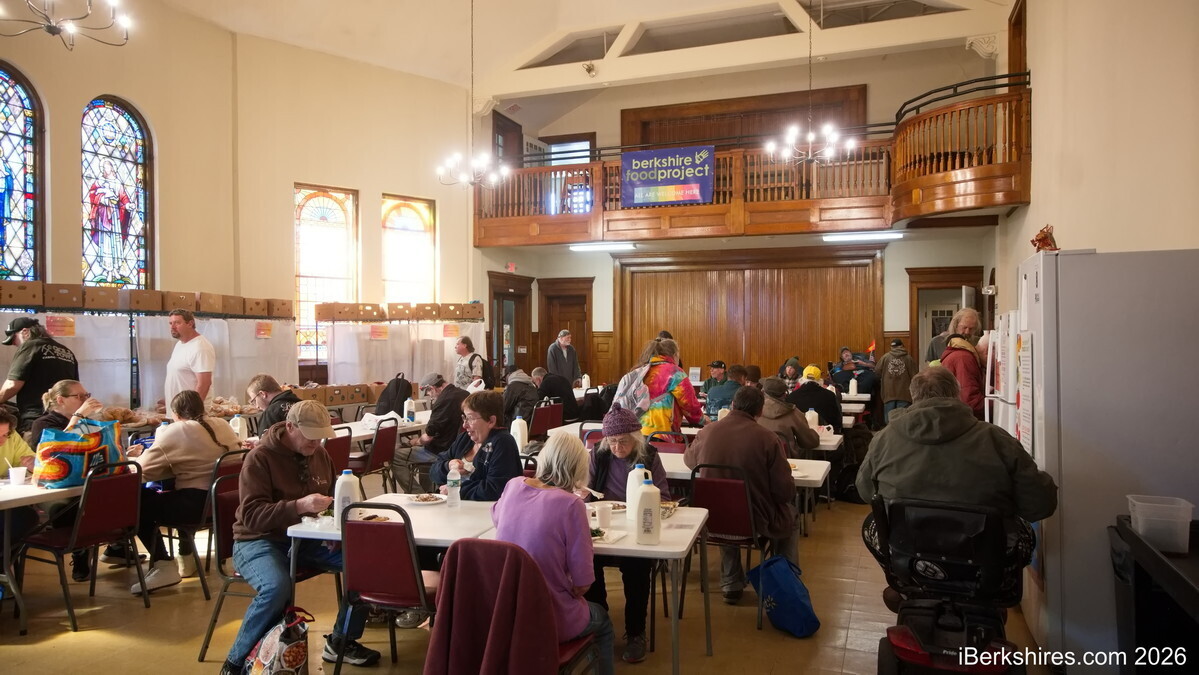
"That is basically it. It is not huge, but it is big for us. It is much more comfortable and much more welcoming," he said.
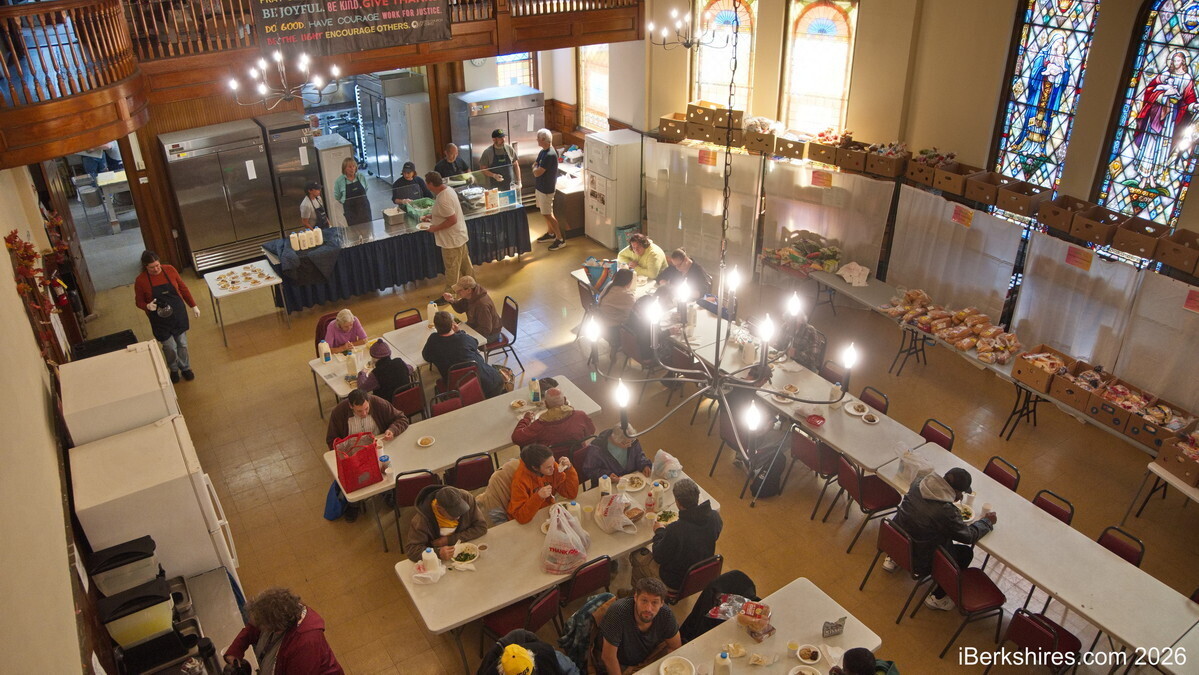
The project began by upgrading the lighting system, scaling up from roughly 480 total watts of harsh bare bulbs to more than 2,000 watts of warm, ambient light.
"Instead of this intense light where it felt like you were in an interrogation room, this feels much more welcoming, kind of like a restaurant dining room," he said.
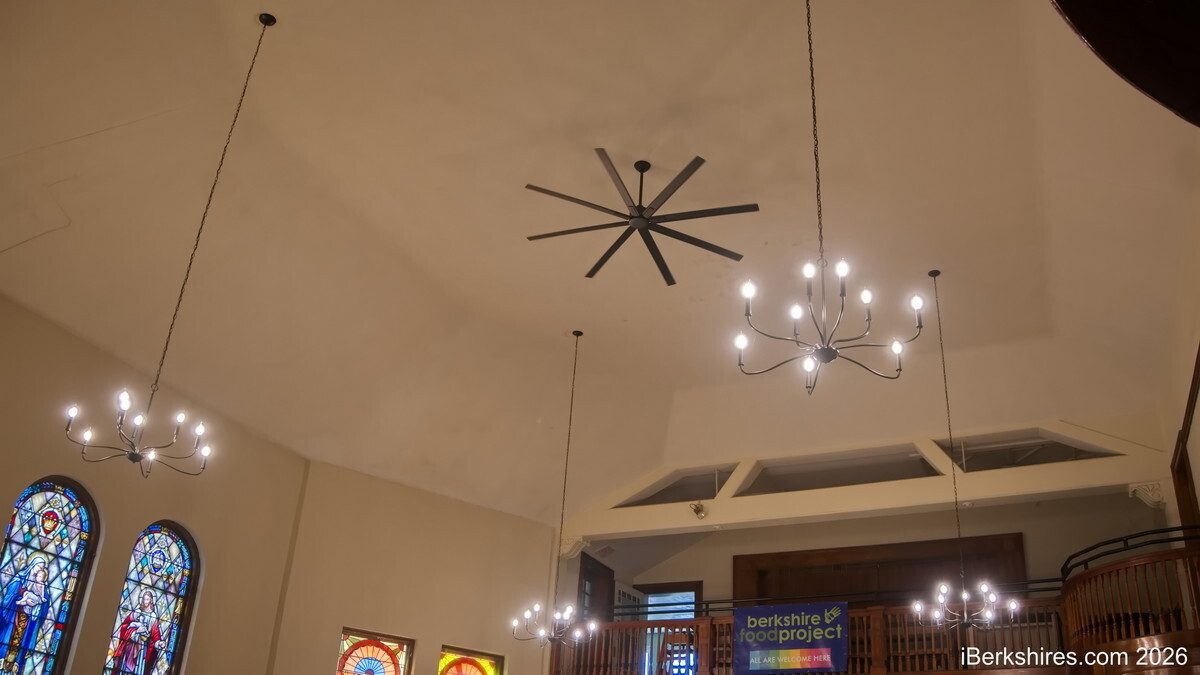
He said BFP added new, more appropriate light fixtures throughout the space.
"We dressed it up a little bit," he said. "We put in all of these light fixtures. Before, it was just chains with light bulbs hanging off of them. It had a real horror, basement feel."
Alcombright said the room was never well ventilated and they often had to rely on industrial power fans to move stagnate air. Now, there is a large fan in the dining area and a smaller fan above the serving area.
Also, there is no air conditioning. On hot summer days if it gets too warm, BFP can't open the kitchen.
"We have to close during the summer if gets too hot," he said. "We had one day when it was 87 degrees here. There was no way to open up windows."
Alcombright said they are working toward installing AC.
The initial renovations were completed in just one week while the space was closed for work by McLain Electric. Alcombright praised the electrical company, noting their attention to detail — such as ensuring fixtures were spaced evenly despite the challenges of an old building with lofted ceilings requiring scaffolding and lifts.
While the lights went up, a cleaning crew from North Adams Cleaning Services went through.
"I can't thank McLain Electric enough. They installed everything here, and North Adams Cleaning Services did a full commercial cleaning," Alcombright said. "We wanted to orchestrate it so we didn't have to open/close, open/close. Both of those services were just incredible to move this along and make it as efficient as possible."
Even when BFP was closed there was no downtime and neighbors All Saints Church and First Baptist handled meal distribution.
Alcombright said BFP invested $50,000 of its own money into this initial renovation. He does not know the last time the space was substantially renovated, aside from a repainting some years ago.
More work remains, along with further discussions with the church. BFP is utilizing a facilitator to help guide those long-term planning conversations.
"We have been here 40 years; they have been here 200 years. It is hard for us to see anything objectively," Alcombright said. "We just need someone to come in to help us have these conversations and figure out what needs to be done. It is an exciting venture, and the church has been super supportive."
Moving forward, BFP plans to continue conversations with professional contractors to determine exact facility needs.
While financial and physical donations are always welcome, Alcombright emphasized that one of the best ways the public can support BFP is simply by dropping in for a meal.
"People always ask, 'What is the best way we can support you?' ... You can donate and all that kind of stuff, but come and see what we do every day," he said. "Meet the great people that come here. There are so many people here who do struggle with food insecurity, who struggle with different things. And there are so many that don’t have those struggles. That is what we are here for. We are here to break down those stigmas."
"And we are the best free restaurant in downtown North Adams. The only snag is that we have one menu item a day. Today is homemade shepherd's pie, and you can't beat that."
Note: Berkshire Food Project is closed this Friday, Oct. 9, for the funeral of longtime volunteer Ann Romaniak.
Tags: Berkshire Food Project,