image description
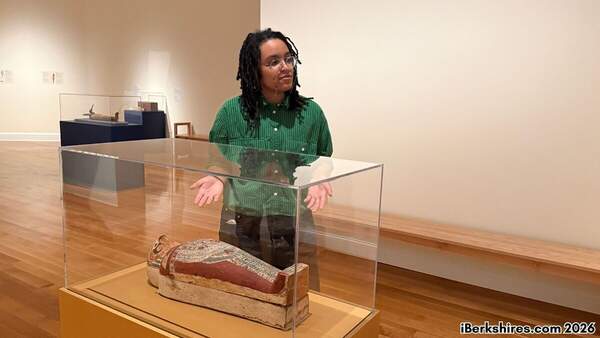
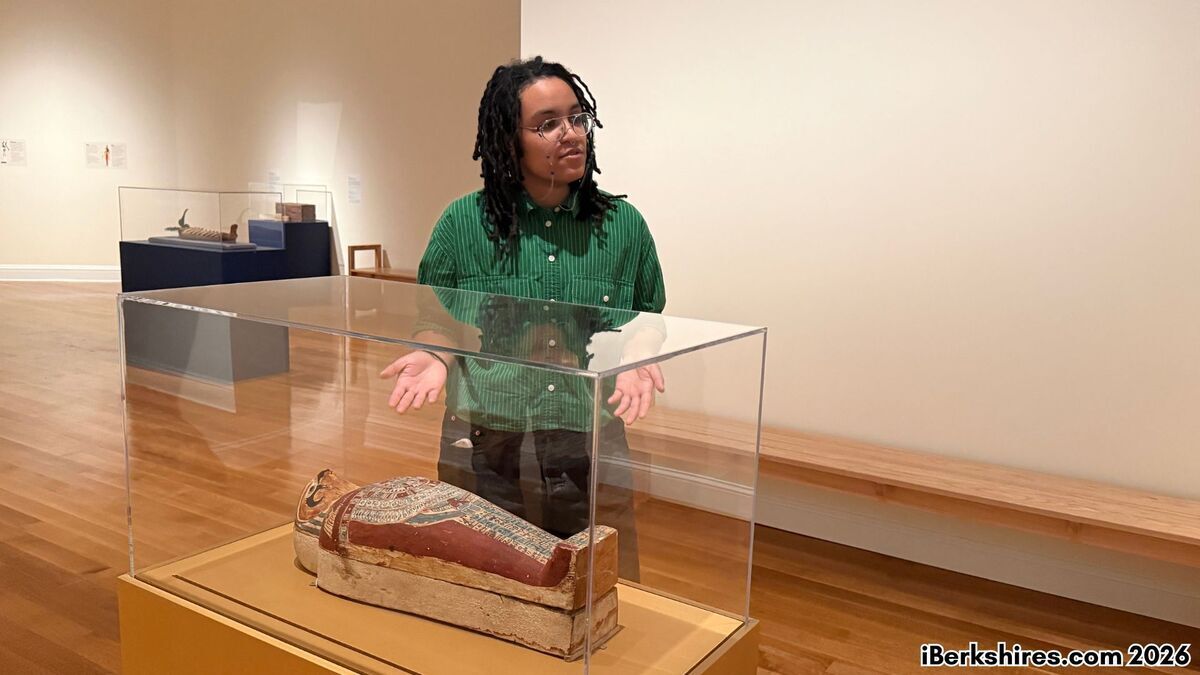
Charlie Catacalos, exhibitions manager at the Berkshire Museum, explains how the Corn Mummy has similar colors and patterns as Pahat's coffin.
image description
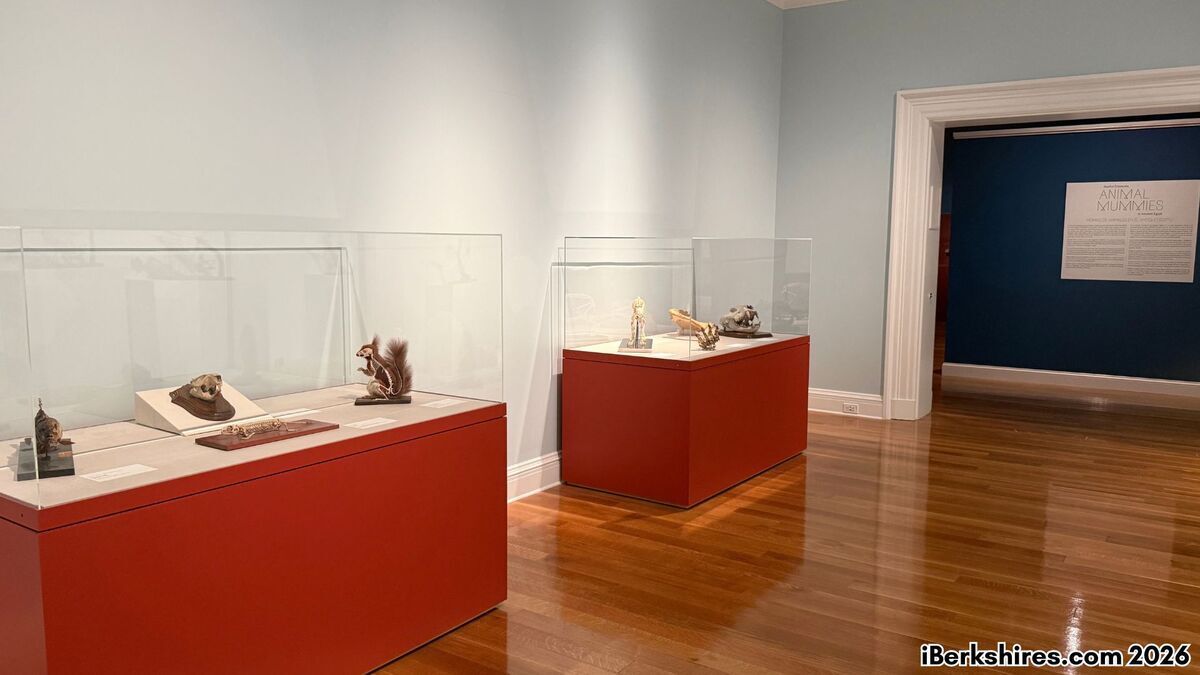
A pocket gallery outside the exhibits entrance features modern-day animal skeletons.
image description
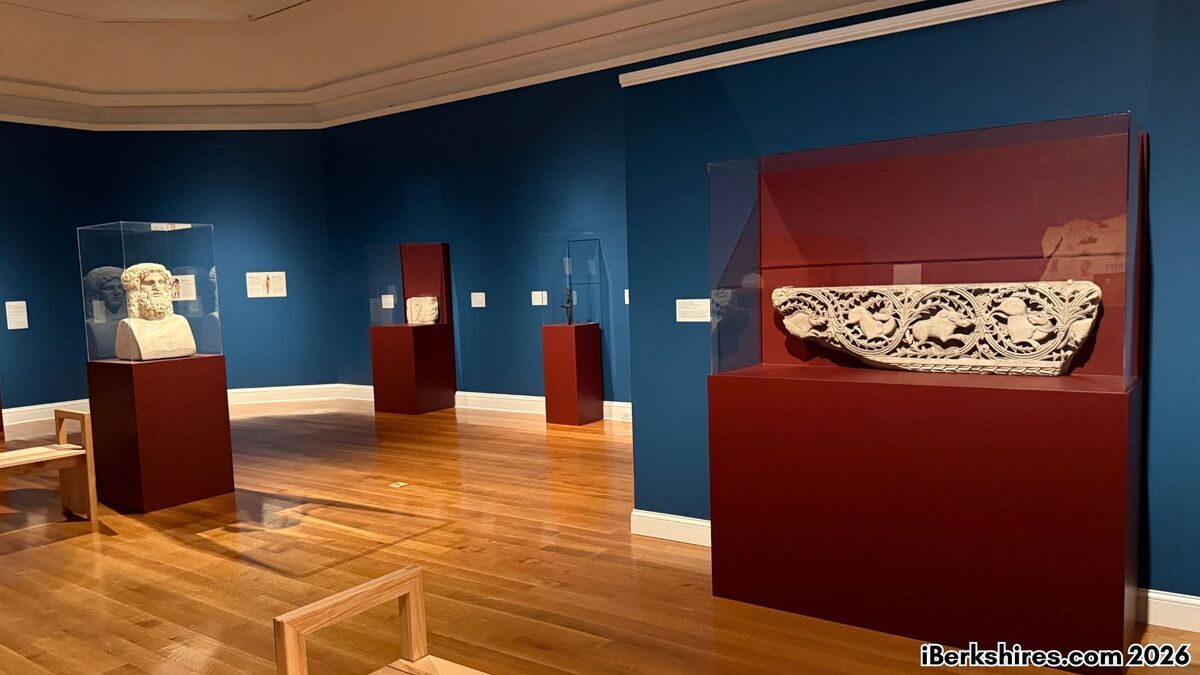
The museum's recent renovation included infrastructure and environmental controls that allow it to host guest exhibitions.
image description
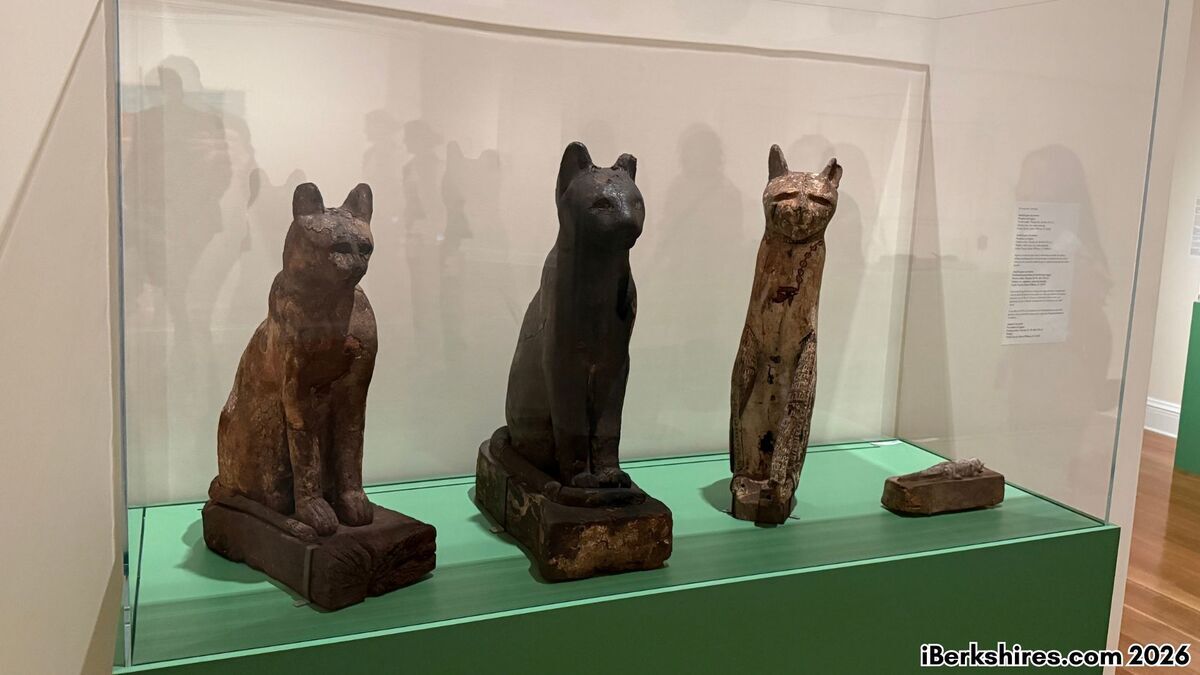
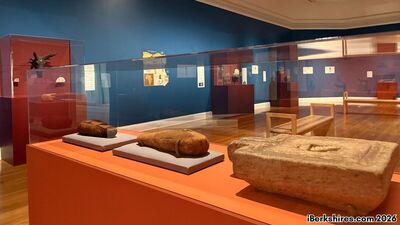
Cat coffins on display as part of the exhibition.
image description
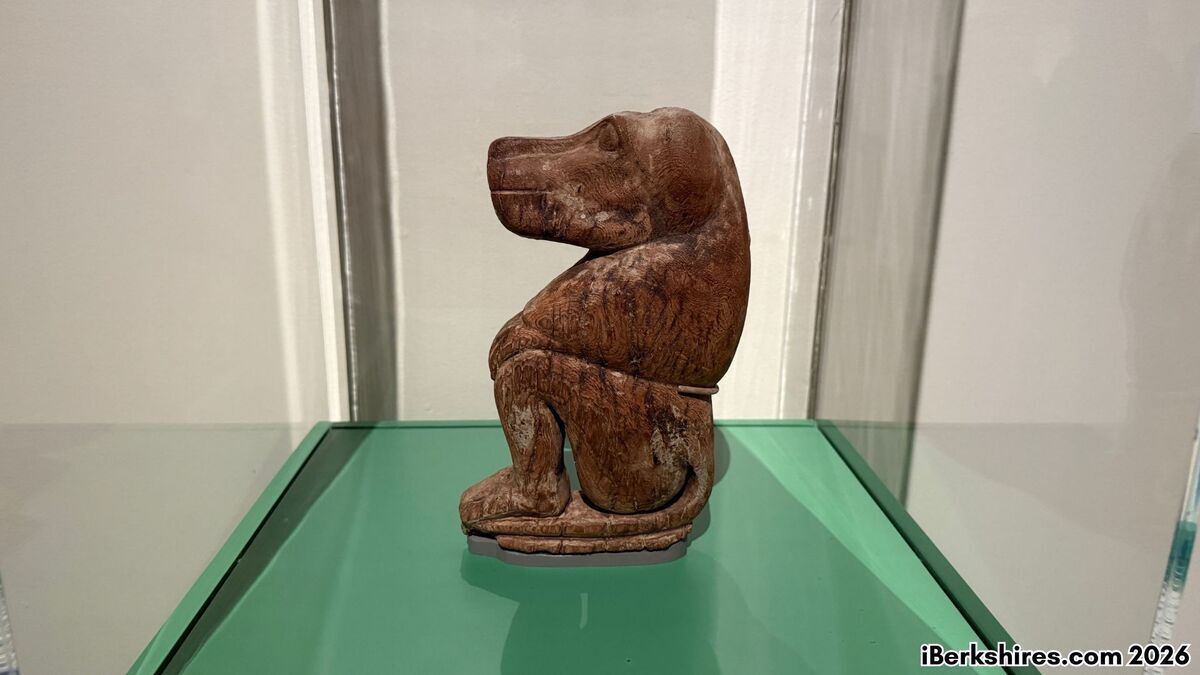
Seated baboon from Egypt's New Kingdom, Dynasty 18-20, circa 1539-1075 BCE.
image description
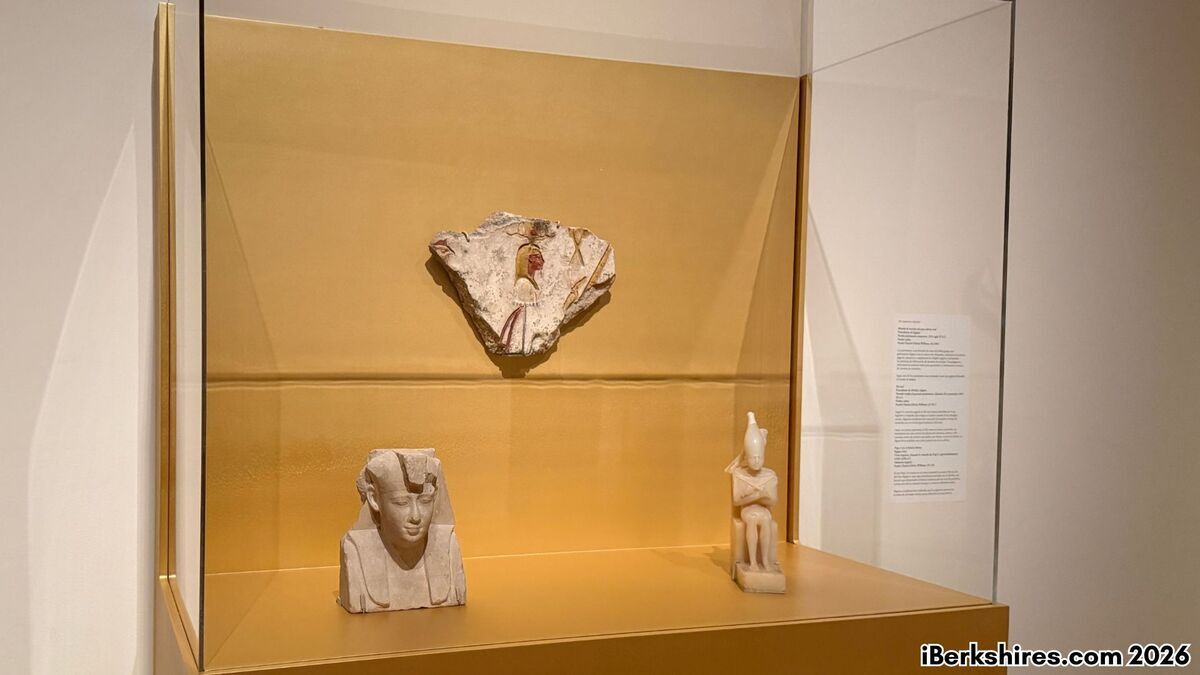
A sculptor's model of a royal head, left, a Royal Ka, and Pharoah Pepi I with a Horus falcon.
image description
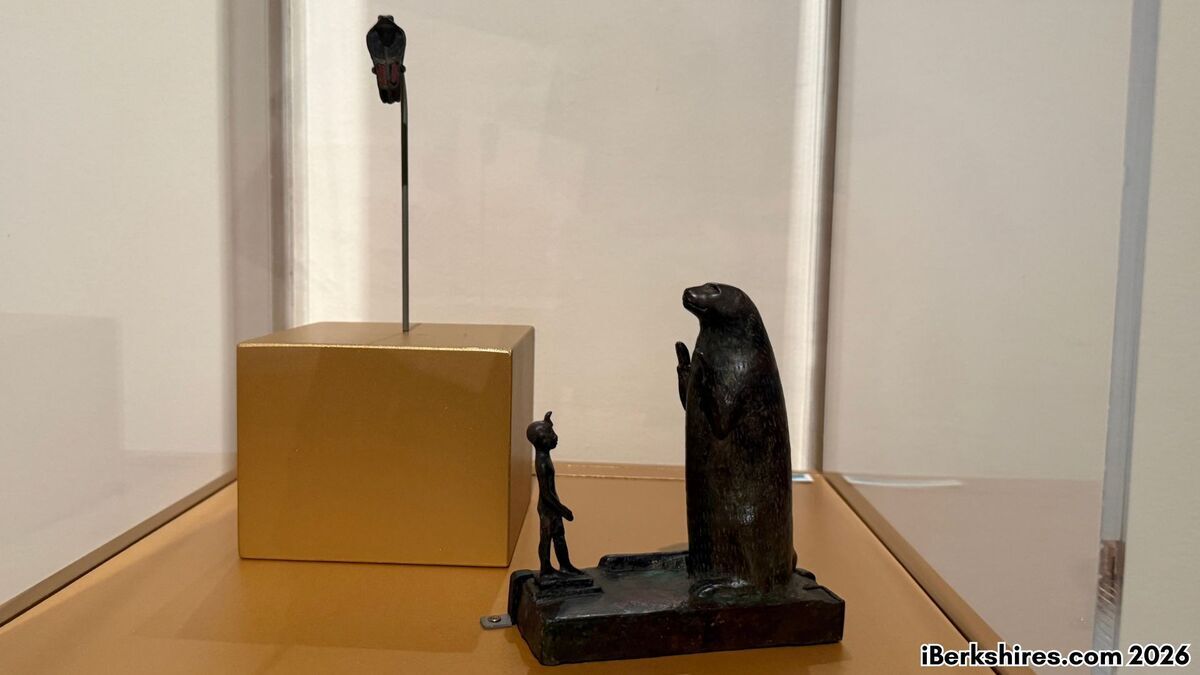
Uraeus, or cobra, left, was the symbol of the Lower Egyptian goddess Wadjet, who protected kings from earliest times; right, a king performs a ritual for an ichneumon, or mongoose.
image description
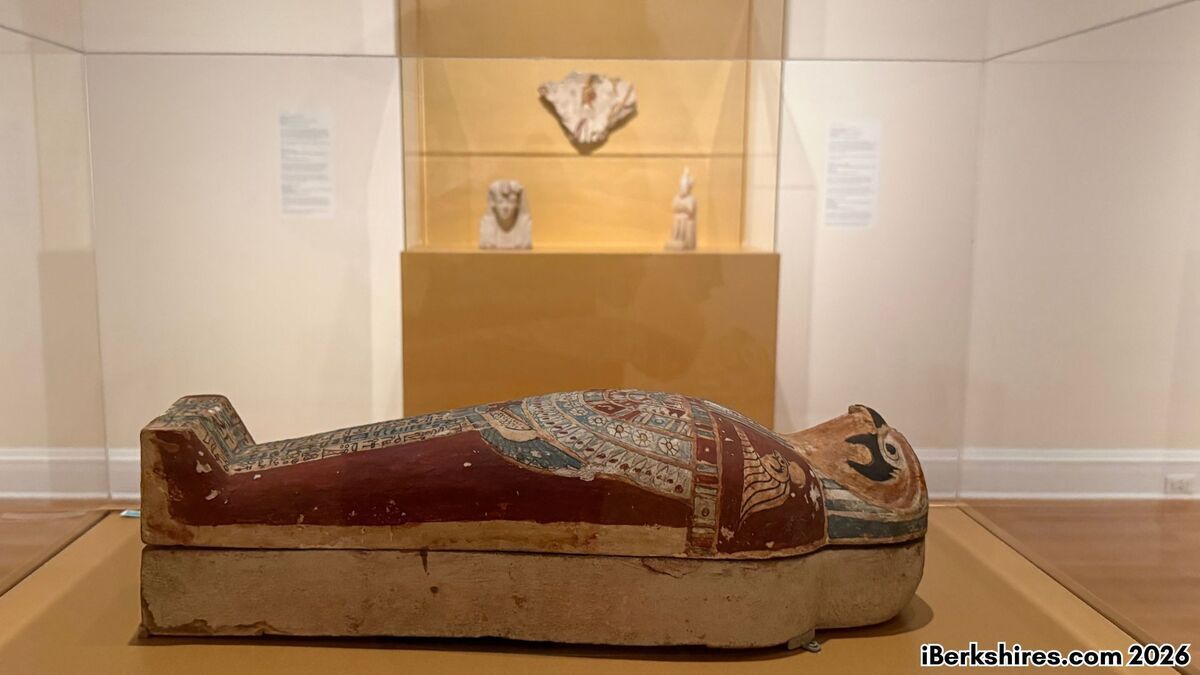
The Corn Mummy shares similar colors and patterns with the coffin of the Berkshire Museum's Pahat relic.
image description
Images of animals and animal-like gods were frequently used in funerary items.
image description
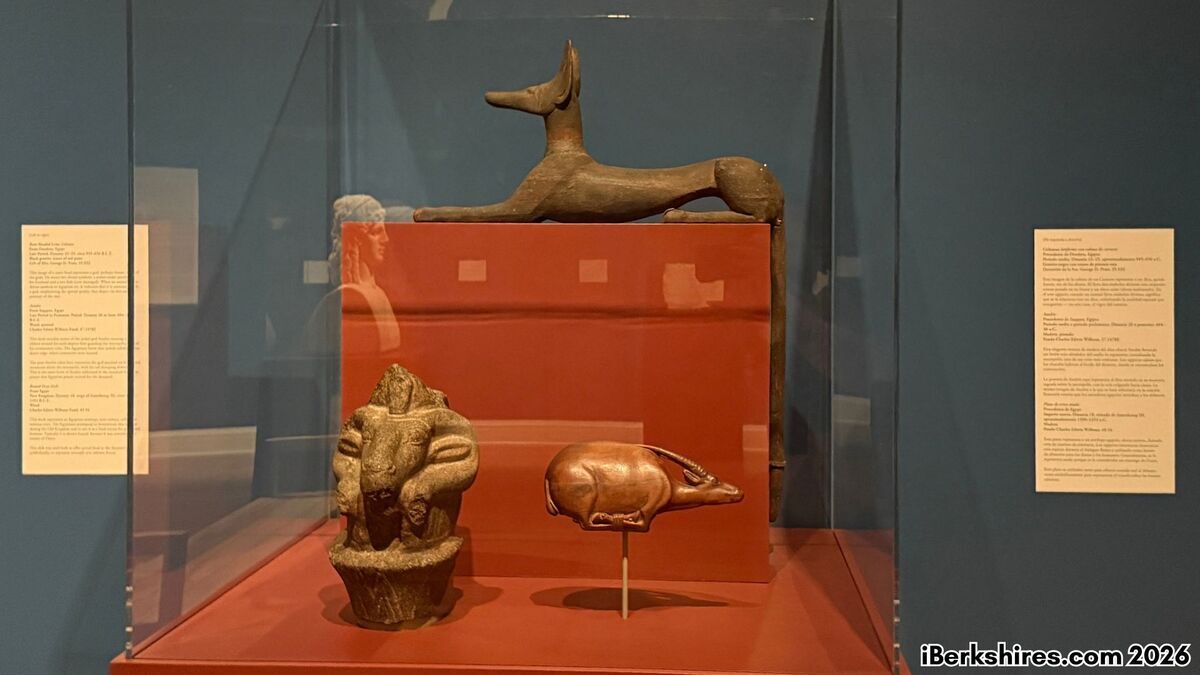
A ram-headed lotus column, a sculpture of guide to the underworld Anubis, and a bound oryx dish.
image description
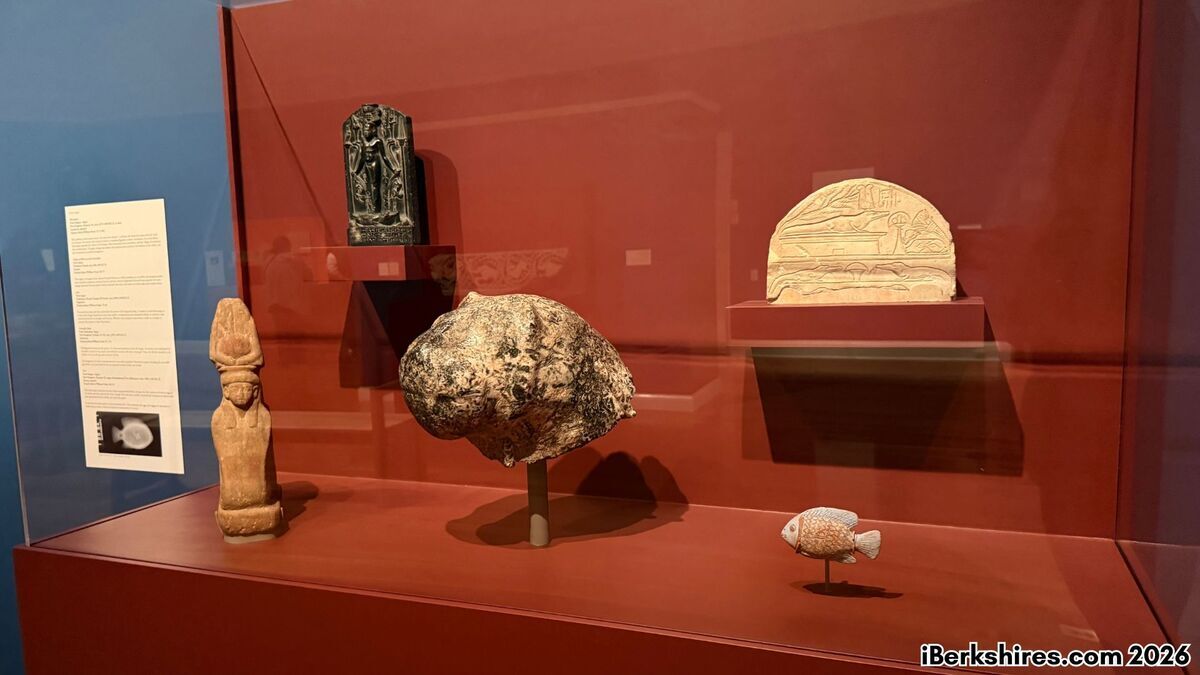
This display has a sculpture of cobra goddess Meretseger, left, a cippus (or stela) of the god Horus standing on crocodiles, a lion, crocodile stela, and a carved fish.
image description
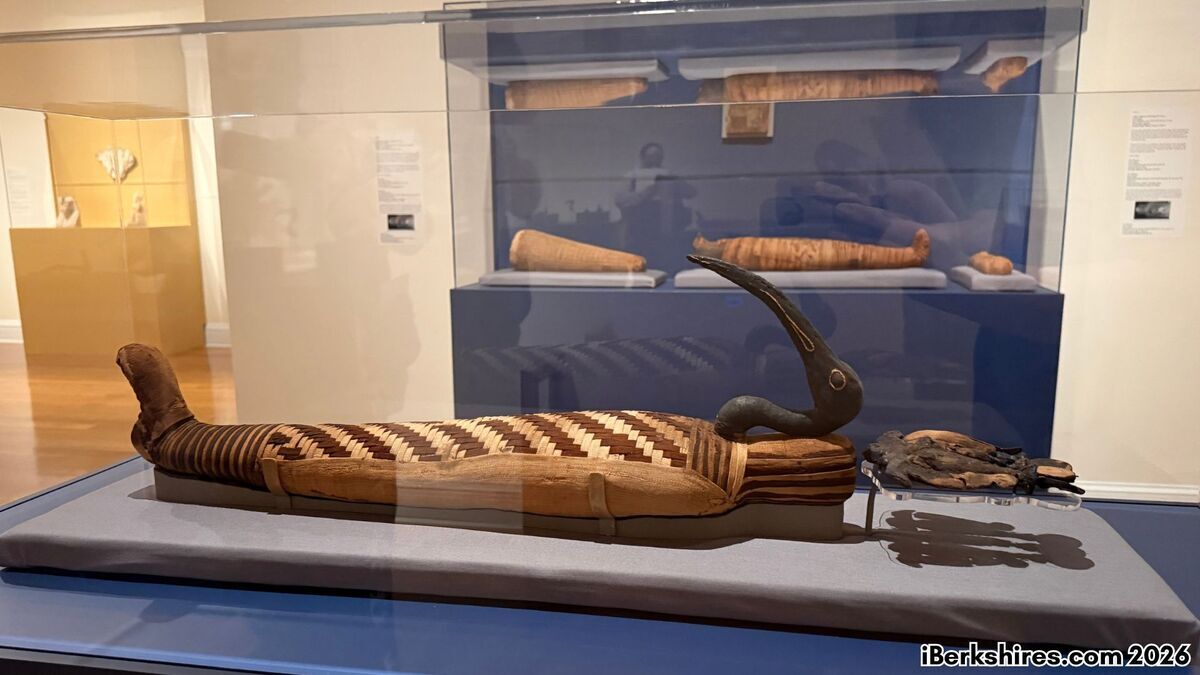
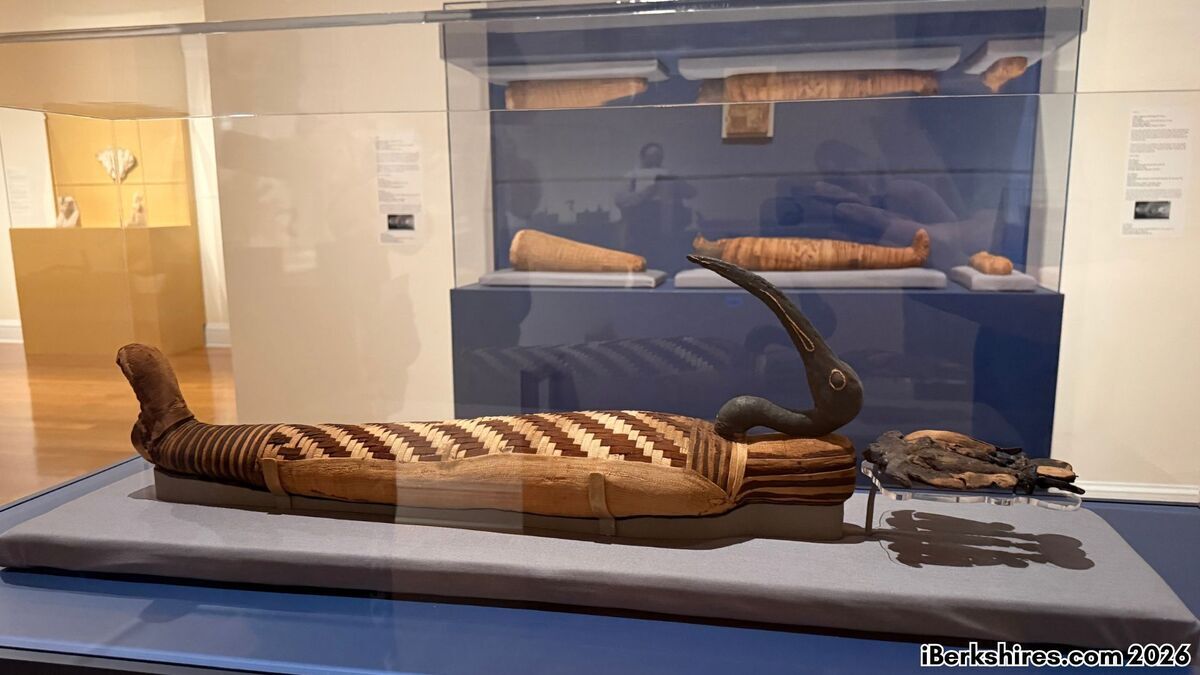
An ibis mummy from the ibis cemetery at Abydos, Egypt.

Berkshire Museum Explores Ancient Egypt With ‘Soulful Creatures’
By Sabrina DammsiBerkshires Staff
Print Story | Email Story
'Soulful Creatures: Animal Mummies in Ancient Egypt' opens Oct. 10 at the Berkshire Museum.
PITTSFIELD, Mass. — Following its multimillion-dollar renovation, the Berkshire Museum is welcoming an exhibition unlike any it has been able to host before.
 
Marking the museum's first major exhibition since its renovation, "Soulful Creatures: Animal Mummies in Ancient Egypt," opening Saturday, Oct. 10, thins the veil between the ever-evolving history of Egyptian culture and society and modern day people. 
 
"The most important thing about history is recognizing people from the past as actual people. Ancient Egyptians are no different than us," said William Dore, the museum's chief curator. "They have different cultures and beliefs and different viewpoints, but you can say the same thing about people today."
 
When audiences experience the exhibit, they will see the humanity in the people of the past, which in turn helps them connect with different views and perspectives around the world today, he said. 
 
Combining archeology with modern scientific imaging, Brooklyn (N.Y.) Museum curators Yekaterina Barbash and Edward Bleiberg designed an exhibit that works to uncover the mysteries behind these objects and the beliefs and rituals that surround them. 
 
"I think something that people kind of misunderstand about history is none of it's ever settled. ... History is a science that is constantly questioned,” Dore said. "It only works if everyone's constantly rethinking things, learning new things ... which is for me super exciting because as much as we know a lot about the ancient Egyptians, there's a lot we don't know.”
 
The installation features dozens of artifacts on loan from the Brooklyn Museum that explores the practice of animal mummification and the role animals played in ancient Egyptian religion. 
 
The museum's education manager has planned numerous school field trips, giving students a chance to explore ancient Egypt close to home.
 
In conjunction with the exhibition, the museum will host a lecture Saturday at 11 a.m. with Barbash, who Dore said is one of the foremost experts on ancient Egyptian mummification. The lecture, included with museum admission, will explore the important role animals played in ancient Egyptian society and their connections to the divine. 
 
According to the museum's website, the talk will examine how Egyptians associated the characteristics of different species — including their strength, speed and fertility — with particular gods and goddesses. Barbash also will explore deities such as Thoth, Sakhmet and Anubis and the beliefs that contributed to the practice of animal mummification.
 
The exhibit humanizes the people and culture of ancient Egypt beyond what modern audiences may have read about or seen in the media, he said. 
 
Visitors will be introduced to the concept that the past and present are interconnected prior to even entering the exhibit, with a pocket gallery outside the entrance featuring modern day animal skeletons. 
 
This gallery draws parallels between how modern-day people preserve animals and fossils for scientific study or display and the ways in which ancient Egyptians conducted their acts of preservation, said Charlie Catacalos, exhibitions manager. 
 
One of the objects that exemplifies this is a fragment that has a "humorous” illustration of a cat serving a mouse on a throne, which is reminiscent of modern day memes, Catacalos said. 
 
Shows like this would not have been possible prior to the museum's renovation because of the infrastructure needed to transport and maintain the objects, including the required lighting and humidity levels, Dore said. 
 
"Now we have that updated state-of-the-art building and institution [so] we can bring more of these expansive opportunities and experiences to the people in the Berkshire moving forward,” he said. 
 
Generations have visited the Berkshire Museum, and Dore said an aspect that is fondly remembered by families is the museum's own mummy, Pahat, an Egyptian priest who died more than 2,300 years ago in Egypt. 
 
Pahat has been part of the Berkshire Museum's collection since 1903, he said.
 
Although they belong to different museum collections, Pahat's coffin and that of the corn mummy, on loan from the Brooklyn Museum for "Soulful Creatures," share similar colors and patterns because they were created in the same place during the same time period, Catacalos said. 
 
That connection allows the exhibition to extend beyond the gallery. After exploring "Soulful Creatures," visitors can follow signs down the hall to see Pahat and compare the two for themselves.
 
"Soulful Creatures: Animal Mummies in Ancient Egypt" is on view at the Berkshire Museum from Oct. 10-Jan. 13. Admission is free for all on Monday, Oct.. 12. For tickets and information, berkshiremuseum.org.

Tags: Berkshire Museum,   historical exhibit,   museum,   
If you would like to contribute information on this article, contact us at info@iberkshires.com.

Free Vaccinations Available Throughout Berkshire County

By Breanna SteeleiBerkshires Staff

PITTSFIELD, Mass. — Fall season is also the flu season, which means vaccine clinics are now available.

The Berkshire Vaccine Collaborative will provide public vaccination clinics in Berkshire communities this fall, including the influenza and COVID-19 vaccines. There are about 49 clinics. 

The collaborative began during COVID-19 to help vaccinate people across Berkshire County. Berkshire Health Systems started the Get Vaccinated Berkshires website and still manages it. The group works with the Pittsfield Public Health Department, Community Health Programs, and the Southern Berkshire Public Health Collaborative.

"The majority of people will always get the flu [vaccine] because, as I said, if you've ever gotten the flu, you will always get a flu vaccine because it's so bad. And just so you know, the flu is already in Berkshire County. It's an early season this year," said Leslie Drager, who is the senior public health nurse at Berkshire Regional Planning Commission.

Drager said last year they issued 2,705 vaccines, with more than 1,100 of them being for COVID-19 and more than 1,500 being flu. In total, they were able to vaccinate 1,669 people in Central and North County, in addition to Pittsfield.

Drager also said she will be carrying three types of COVID vaccines this year, which is in high demand.

"We have a high demand of COVID vaccine, which is awesome," she said. "So we're doing a lot of COVID vaccines. Also, I provide Pfizer, and this year I have Moderna and the Novavax, which I think is real important to get out there because the Novavax, a lot of people want, people with long COVID. So I'm carrying all three vaccines this year, which I normally only carry the Pfizer."

Public health departments also can help people access other vaccines such as for measles or meningitis when they cannot get them through a pediatrician, she added.

Using the website, people are able to get vaccines even if they are homebound by filling out a form.

All public Berkshire Vaccine Collaborative clinics are free of charge, but registrants are asked to provide insurance information, when available, in order to defray costs. The clinics are open to anyone 6 months of age or older, the age group recommended to receive an annual flu vaccine and the latest COVID-19 vaccine.

"I always encourage everybody to wear a short sleeve shirt because it makes it a heck of a lot easier to get at," Drager said. "And children, we do carry the nasal flu, the live virus of nasal flu for kids that are afraid to get needles."

Registration is highly recommended for the clinics. Walk-ins may be accepted depending on the number of vaccine doses available at each clinic, with preference given to those who are registered.

"It's really important. I'm really encouraging vaccinations for the schools, because not only you know if the kids are vaccinated and the teachers are vaccinated, the schools won't have the flu go wild right through it," Drager said. "And of course, the best way to prevent infections: washing your hands. So don't touch your face, and wash your hands."

View Full Story

More Pittsfield Stories