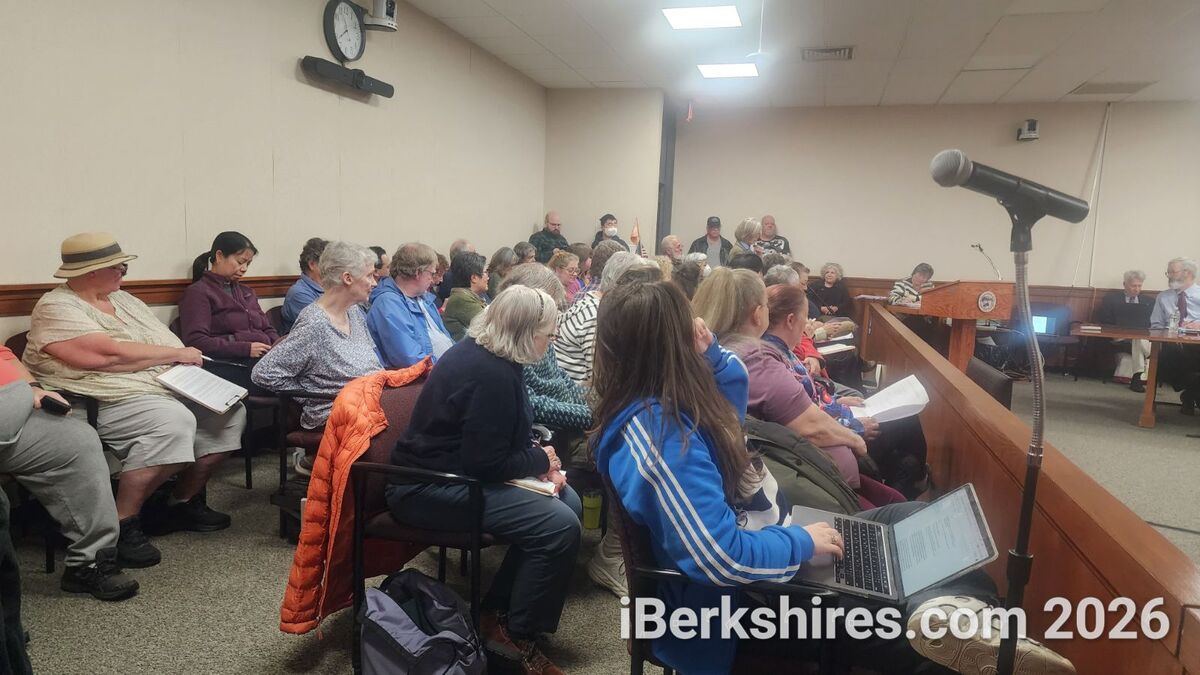
North Adams City Council Hears Housing Authority Grievances
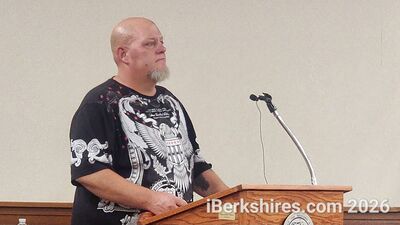 |
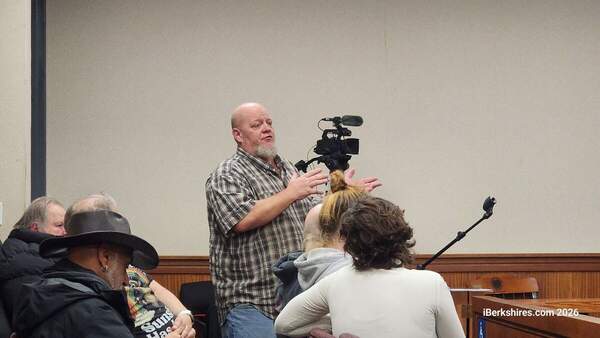
| Corey Fortin, president of the Tenants Association at the Housing Authority, speaks to the City Council. |
NORTH ADAMS, Mass. — Unhealthy odors, drugs, mold, peeling paint, unsecured doors, lack of security and frightened residents.
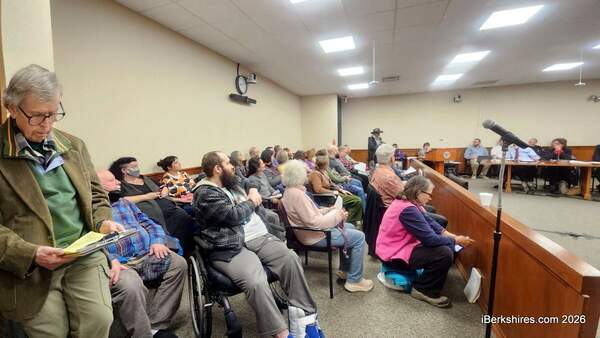
That was the list of grievances that current and former tenants of the North Adams Housing Authority's high rise on Ashland Street laid before the City Council on Tuesday.
"I've stayed quiet long enough. I've been professional long enough. Somebody needs to do something. Damn it! It's getting too bad over there. It's worse than it's ever been. There's more drug people there. There's more dealers there. There's drunks rolling around in there, drinking out front, doing drugs out front," said Tenants Association President Cory Fortin.
"Everybody's pointing fingers at everybody. Let's all get together and do this damn thing. Get it done. I'm sick of it."
Tenants have been speaking out at council meetings about security issues and Councilor Lillian Zavatsky, liaison to the authority, requested time for Fortin to speak. The authority has been in some upheaval lately with the loss of commissioner and the abrupt resignation of the executive director last week.
The association had called for a formal grievance hearing against Jennifer Hohn after she locked their offices. Hohn has not publicly spoken about her resignation. The Housing Authority is meeting on Thursday for "acknowledgement" of the vacancy.
"My paperwork that I put in for my maintenance request, ah, disappeared. We have nothing on record. There's a lot of things that this board, this council, the mayor, everybody needs to look at the big picture," Fortin said, adding that some tenants were worried about attending the meeting because of fears of retaliation. "All I'm asking for is the right support and for this this council, this mayor, and everybody to do what's right."
One major issue he and Jennifer Barbeau, former councilor and liaison to the Housing Authority, had was the composition and uncertified status of the authority's board of commissioner.
Mayor Jennifer Macksey was not following the proper process for appointing a tenant representative, said Barbeau. "We filed a formal neglect of duty last week on multiple violations. Number two, this is an unauthorized board. Through the city clerk's own admittance, for decades, at least a decade, the city clerk's office has not filed a certificate of appointment with the secretary of the commonwealth, this remains an unregistered board."
"You cannot fill openings on fundamentally broken systems," she said.
During hearing of visitors, she read a letter for resident William Lafave, who had lost his personal care services for the fourth or fifth time now.
"He's on many weeks of community services refusing to provide care for him in his apartment, personal care, cleaning, and cooking," Barbeau said. "We heard someone talk about trust earlier, and we've heard someone talk about civil rights. When our Housing Authority cannot maintain a clean environment, and personal care services are refusing to give services, this is a problem."
John Little said he'd moved out of the high rise because he couldn't stand the drug activity and lack of security.
"Now I was a peer, I was over here as a volunteer and also as a council member at the peer recovery center," he said. "All I saw all summer were drug dealers in the center of our town, and they would go from there to the high-rise and back. ... you can't have law and order when the when the police chief's hands are tied and his patrol officers' are tied."
A South Street neighbor said she had "personally experienced" the consequences of the safety surrounding those buildings that were raised by the tenant's president.
"We've had to install camera cameras all around our property just to feel safe in our own neighborhood, our own home," she said. "We have to stop treating these complainants as isolated people. We have a public safety issue that demands meaningful action."
Debra Chalk of Williamstown said she volunteers with the food pantry and Western Mass Labor Action, which takes her to the high rise.
"The first time I went into the high rise, I was pretty appalled by the conditions, by the smell, by the dirt, and I go there twice a week," she said. "I'm only in the building for 20 minutes at a time, but I have just a horrible feeling every time I leave, and I want to cry. I feel like we can do better. It's not a crime to be poor."
It used to be a place people were proud of, Chalk said, and they would show off their apartments. Now she said, take a tour because there's no security. "Go in the elevator and smell it. Go to the seventh floor and walk down the hallways. I don't know how people in there can even breathe."
Zavastky asked if the matter could to referred to Public Safety. The City Council has no purview over the Housing Authority, it is a U.S. Department of Housing and Urban Development funded facility, but Council President Ashley Shade said "given the circumstances where there are health and safety concerns, it would be a great idea so we can monitor the progress on those and make sure that they're being addressed."
Councilor Keith Bona pointed out the council couldn't order the Health Department or public safety so it should also go to the administration. Shade agreed but thought the Public Safety Committee could look at potential ordinances or language that could help the situation, especially the safety concerns.
"I would suggest that the first meeting that we discuss this ... that we bring in health services and law enforcement, and possibly even a member of the Fire Department, just to be in the same room at the same time to discuss these issues," said Councilor Bryan Sapienza, chair of Public Safety.
The motion passed to refer to the committee with a return date of the first meeting in December. Shade told Fortin that some actions could be taken prior to that, such as contacting appropriate city departments.
Fortin had not been able to prepare pictures of some of the issues within the building in time for the meeting and councilors asked that those be forwarded to Public Safety.
Zavastky said she could bring a communication to the next council meeting with bullet points to be referred to Public Safety but Councilor Lisa Blackmer suggested those go straight to the committee since they had already discussed it in council. Councilor Peter Breen thought there should be a tour of the building to see what the tenants had described.
Shade said she would also be formally requesting the commissioners "immediately" grant the tenants association access to its offices.
"I hope you're right that there's an opportunity for change here. I think and hope that there are a lot of eyes in this now, and I really hope that there's some positive action in the right direction," said Councilor Andrew Fitch. "But I'm so sorry that you've been feeling this fight for so long, and I'm so grateful though that you're here tonight."
Tags: Housing Authority,