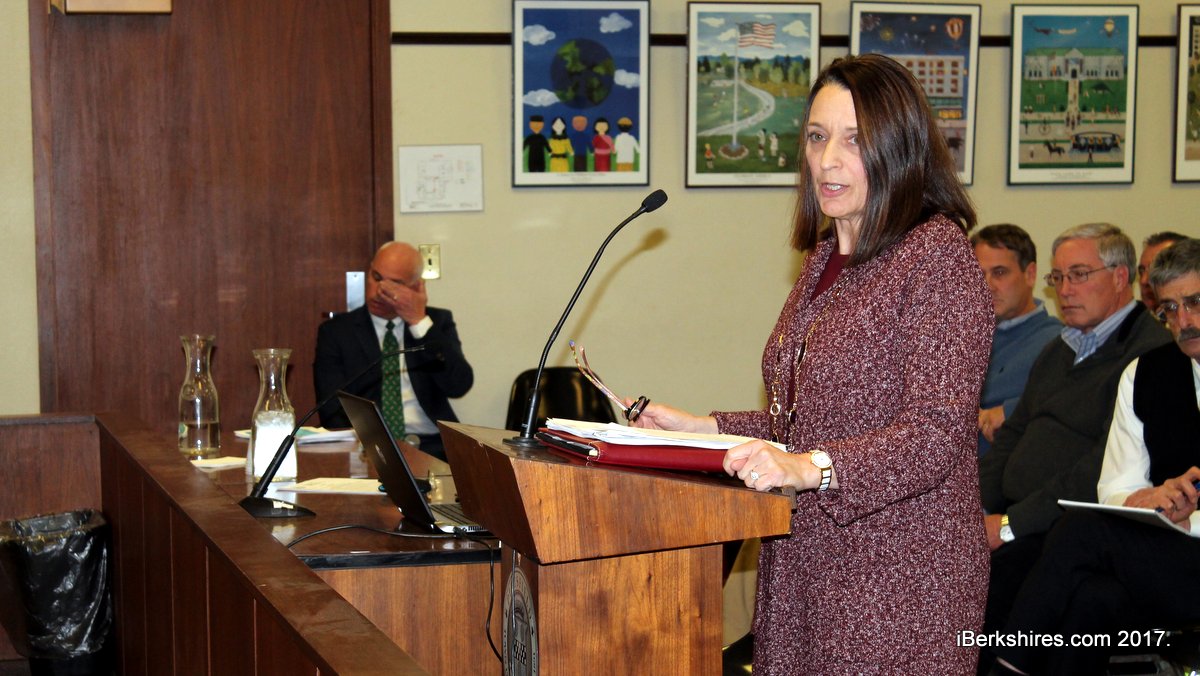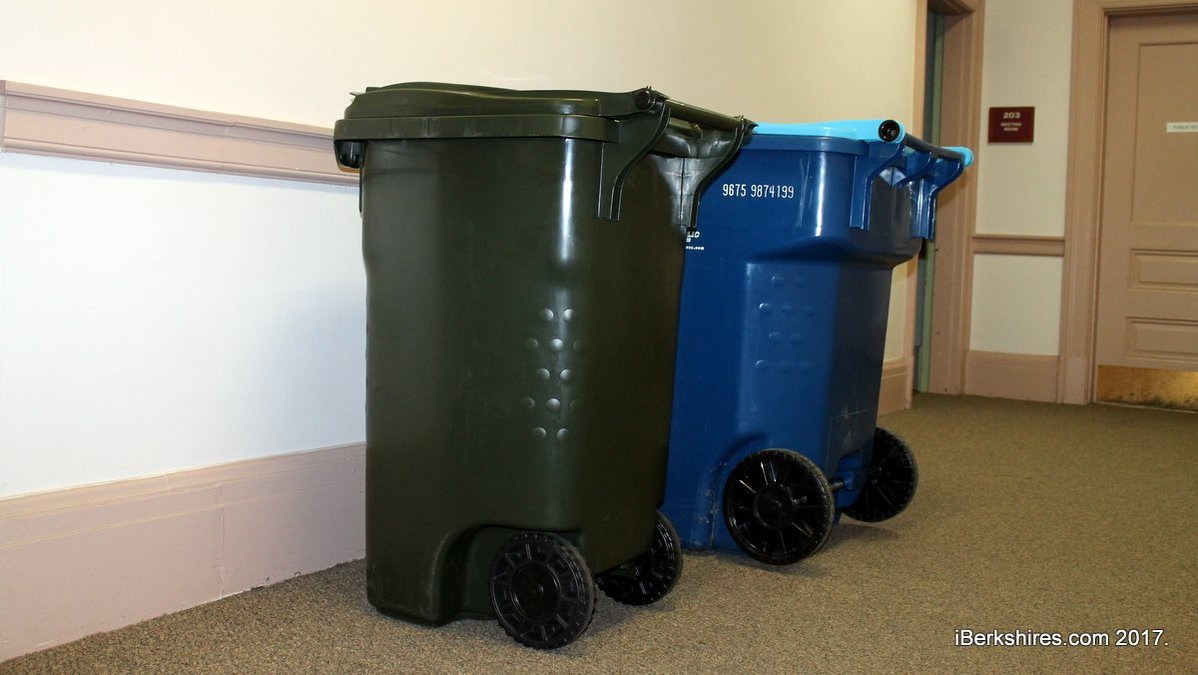
Mayor Linda Tyer said the city needs to look for cost savings in all of its services, and that includes trash pick. She put forth a petition to overhaul the service last month.
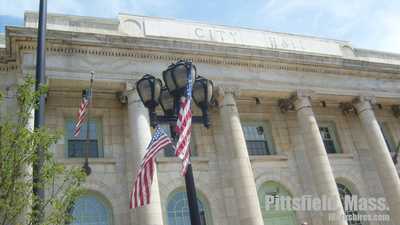
PITTSFIELD, Mass. — Many city councilors are critical of implementing a new trash collection program.
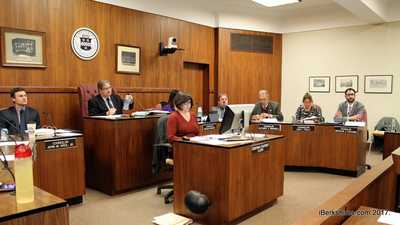
The council debated the issue for a second lengthy meeting on Tuesday. The City Council first fielded the switch from the current curbside trash collection program to a toter system, which the administration says will help lower annual operating costs for garbage collection, at a committee of the whole meeting a month ago.
Before it came up for discussion at the following council meeting, Councilor at Large Kathleen Amuso halted talk with a charter objection, a provision in the charter stopping discussion of a topic for a meeting.
On Tuesday, the City Council spent another 2 1/2 hours digging further into the details with no intent to vote. The issue will now be pushed into the new year when the City Council will feature two new councilors.
Particularly, the City Council wanted more details on the capital cost. Director of Finance Matthew Kerwood presented three options to pay for the upfront costs to purchase the toters. The proposal is currently looking to provide residents with a 45-gallon toter for trash collection and 96-gallon for recycling. Residents will have to purchase overflow bags in order to get rid of anything that does not fit in the bins.
Kerwood said they could borrow the $1.3 million for those toters. The city is looking to purchase 18,000 45-gallon toters at a cost of $574,200; 18,000 96-gallon toters for a cost of $727,020; and 730 64-gallon toter for residents who might want smaller recycling bins. The city has been awarded a $150,000 grant from the state to help with that cost.
In total, that would lead the city to borrow about $1.1 million. He said over a 10-year term at an estimated 4 percent, that would cost the city $145,247 per year. The interest in total would cost $274,000. That scenario does not include the assembly, distribution, and freight costs, which Kerwood said he would not want to borrow and instead use some $280,000 worth of free cash for that.
Kerwood said if the City Council opted to go with the larger 64-gallon toter for trash pickup, the total loan would be about $1.3 million over 10 years for an annual payment of $163,000 and paying a total of $308,000 in total interest. That also does not include a borrowing for the assembly, delivery, and distribution costs, which would come from free cash.
The second option would be to pay for all of it up front. Kerwood said if the city paid both the capital and the freight cost for the 45-gallon and 96-gallon proposal, the $1.3 million would leave the city with $3 million remaining. At the 64-gallon proposal, the city would be left with around $2.8 million.
The city is currently expecting to have a total of $4.4 million in free cash available.
The final option would be to use the city's $425,324 in bond proceeds as part of it. The proceeds are money the city had already borrowed in the past but the projects authorized for the money to be spent on came in under budget. The money has already been borrowed and part of the city's debt payment schedule.
"That is money left over from other borrowings that we currently pay debt service on," Kerwood said.
He suggested possibly using those and free cash for the capital purchase.
He added the difference between the two options -- 64 or 45-gallons for trash -- is $3,600 for collection. But, previously he said the larger the tote for trash is, the less impact it will have on the amount being disposed. The benefit of the program, according to the administration, isn't in the collection costs but in the disposal. The program is eyed to increase the amount of recycling, which in turn will reduce the amount of trash being disposed.
Ward 2 Councilor Kevin Morandi questioned whether the toters should be a priority. He said the City Council just recently opted to hold onto more free cash instead of using it to lower the tax rate. And now, just one meeting later, the administration is considering using that money for trash cans.
"We could have given the residents a break but now we are spending the money on toters," Morandi said.
He cited streetlights that hadn't been repaired, the need to combat crime, and roads being chip-sealed instead of being paved as other priorities.
"Are toters really a priority?" he questioned.
Ward 4 Councilor Christopher Connell, too, cited an array of other areas he felt the city could use the money instead.
"This isn't a need. It is a want," Connell said. "Some of these streets are dark. That is a need. You what else is a need? Sidewalks they can walk on without breaking an ankle."
Council Vice President John Krol cited the 68 school employees who were laid off in the last budget cycle as a way to spend the money. Krol says while the switch in the program can save money annually, the payback on the up-front costs will take seven years.
"I feel really uncomfortable in a fiscal year we let go of nearly 70 positions in our school department. What kind of values does that show in our community then we are willing to put up $1.4-and-change-million dollars for plastic garbage receptacles," Krol said.
Krol said there are other ways to achieve the same ends without the upfront costs.
Mayor Linda Tyer said the school employees who were laid off is exactly the reason programs like the toter system needs to be considered. The annual cost savings with a toter system is estimated to be around $89,000, a number that could increase if more trash is diverted.
"It is offensive to me that we are laying off teachers when we are doing nothing to save money on garbage collection," the mayor said.
Meanwhile, Ward 5 Councilor Donna Todd Rivers said she is supportive of the environmental reasons behind the change. But yet, she is reserved when it comes to the impacts it will have on people's lives. She told stories of how the changes will impact specific residents in her wards on a day-to-day basis. Particularly, she doesn't like that the bulky waste program will be completely eliminated, leaving residents to be mostly on their own to dispose of large items.
The administration is hoping to implement the program in April. Many city councilors said they'd like to see it go to bid. But, it isn't an item that has to be and Kerwood said the timeline for bidding would make it difficult to implement this spring.
"Before we go out to bid, we have to have a program. We have to develop a scope of service," Kerwood said.
Kerwood said a timeline for bidding wouldn't get a contract executed until the end of March. But it isn't until a contract is executed that a hauler would purchase the trucks.
But Councilor at Large Melissa Mazzeo doesn't feel a delay would be a bad thing. Mazzeo suggested slowly implementing the program, with launching a focus on improving recycling first and then bringing in the restriction on trash.
"I think we have to take our time with this. I don't see a rush," Mazzeo said.
A similar idea was expressed by resident Bob Heck, who addressed the council with his plan to take a "training wheels" approach to it. He, too, suggested implementing the recycling portion of it first and following up with the trash later. He said that isn't the ideal way to handle it, but he said he fears the entire program will be defeated by the City Council as currently presented and nothing will happen.
"We cannot just let this die again like we did 11 years ago and eight years ago," Heck said.
The City Council will take it up again in January after a new City Council is in place. Incoming Councilors Earl Persip and Helen Moon were both in the audience for the lengthy debate on Tuesday.
Health Director Gina Armstrong doesn't see the enforcement of new trash regulations becoming a difficult task. The Board of Health is currently in charge of enforcing nuisance issues regarding trash already. Armstrong brought up some areas of concern about the proposed toter system regulations, but overall said it will keep the city cleaner.
The City Council has begun a lengthy debate over changes proposed for the curbside trash pick up program. Mayor Linda Tyer has put forth a plan to switch to a toter system, which is seen as a way to increase recycling, reduce costs to the city, and combat blight. The city would provide a 45-gallon tote for trash and a 96-gallon tote for recycling.
A proposal to overhaul the curbside trash pickup system is heading to the City Council. Mayor Linda Tyer has put forth a request to move to a toter system, with which residents will be provided a 45-gallon tote for trash and a 95-gallon tote for recycling. Those totes allow for Republic Services to use trucks with automated arms.
Board of Health Chairman Jay Green sees proposed changes to the city's trash collection system as a way to fight blight. An internal working group has been working on the details of moving to an automated toter system for trash collection all summer. The plan is to provide city-issued totes - a 35-gallon one for trash and a 95-gallon one for recycling - to residents. Those totes will allow for Republic Services, the company who contracts with the city to collect the rubbish, to use trucks wit
The City Council approved a $156.4 million operating budget and $22.4 million in capital borrowing. The $156,429,586 for the city and enterprise operations was approved Tuesday and is $39,168 less than the budget preliminarily approved.
The city's proposed budget does not include changes to the trash pickup system. But, Mayor Linda Tyer has identified it as a priority. In February the Resource and Recovery Commission endorsed a plan to give households a 35-gallon tote for trash and as much as a 95-gallon tote for recycling. Those totes will then allow Republic Services to switch to automated trash pickup. It would be the third time the City Council has attempted to make such a switch, both times in the passed it failed to ga
A proposal to change the way residential trash is collected is heading to the City Council. The Resource and Recovery Committee on Wednesday passed a favorable recommendation on Ward 3 Councilor Nicholas Caccamo's petition to switch to a totter system. The committee's plan is to give all households a 35-gallon tote for trash and as much as a 95-gallon tote for recycling. Those totes will then allow Republic Services to switch to automated trash pickup.
Covanta is expected to remain open now that the City Council has granted the waste to energy facility $562,000 to help with capital repairs. The council on Tuesday approved the expenditure from the Pittsfield Economic Development Fund, which was created in part of the settlement with General Electric years ago, to help the company replace a boiler, and comply with state regulations to enclose the area recyclables are sorted. The money is part of what officials called a "three-legged stool" wi
The group looking at a possible overhaul of the city's trash collection is putting nearly everything on the table. The Resource Recovery Committee met for its second thing this month in its ongoing look into changing the way the trash system operates. Currently, the city has a curbside pick up model in which Republic Services collects all of the trash and brings it to Covanta, where it is burned to make energy to sell to Crane & Co. The recycling is transported from Covanta to a recycler who
The city is once again considering changing the way curbside trash is collected Ward 3 Councilor Nicholas Caccamo has filed a petition to require the use of a toter system. Instead of piling up an unlimited amount of garbage on the side of the road, residents would be given two bins — one for recyclables and one for waste. Residents would be restricted to one bin full of each per week.
If you would like to contribute information on this article, contact us at info@iberkshires.com.
Your Comments
iBerkshires.com welcomes critical, respectful dialogue. Name-calling, personal attacks, libel, slander or foul language is not allowed. All comments are reviewed before posting and will be deleted or edited as necessary.
No Comments
BRTA Focuses on a New Run Schedule
By Breanna SteeleiBerkshires Staff
PITTSFIELD, Mass. — The Berkshire Regional Transit Authority is still working on maintaining its run schedules after dropping the route realignment proposal.
Last Thursday's meeting was Administrator Kathleen Lambert's first official meeting taking over the reins; retiring director Robert Malnati stayed during a transition period that ended last month.
Lambert is trying to create a schedule that will lessen cancellations. There was a two-hour meeting the week before with the drivers union to negotiate run bids and Lambert is working with the new operating company Keolis, which is taking over from Transdev.
The board spoke about anonymous emails from drivers, which Lambert said she has not seen. iBerkshires was not able to see those letters, but has received some.
"They were lengthy emails from someone describing themselves as concerning BRTA employee, and there was a signed letter from a whole group of employees basically stating their concerns. So, you know, to me, it was a set of whistleblowers, and that, what my understanding is that this really triggers a need for some type of process to review the merits of these whistleblowers, not going to call them accusations, but basically expressions of concern," said member Stephen Bannon.
A letter iBerkshires received spoke of unhappy drivers who were considering quitting because of decisions being made without "input from frontline staff," frustration and falling morale, and the removal of the former general manager shortly after Lambert came in.
Lambert said it's difficult to navigate a new change. She also noted many drivers don't want to do Saturday runs and it has been hard negotiating with drivers on the new runs.
"I would like you all to keep in mind that the process of change is super difficult. Transdev has been here for 20 years, and some of these drivers have never known any other operating company, the way some of the operations have been handled has been archaic," she said. "So getting folks up to speed on how a modern transit system works is going to be painful for them. So I don't want to say that I'm unsympathetic, because I am sympathetic, but I am trying to coax people along with a system that's going to seem very strange to them."
The board spoke about better communication between them and Lambert, citing cooperation will be best moving forward.
"There's just a lot of stuff in the air right now, and there are a lot of fires to put out to make this a coordinated effort. And if we don't keep our communications open and be straightforward, then you get blindsided about how you know the input that you could get from us about your position, and how you know what's going on in your direction, and we get blindsided. And I think that we have to make sure that this is a collaboration," said member Sherry Youngkin.
"Both sides have responsibilities, because in the long run, this advisory board is going to have to make decisions as to how we brought forward and if we've gone forward in a fair and helpful way. And I think that's hopefully what everybody is looking for also."
Transdev and Keolis held a three-day recruiting event interviewing almost 40 candidates and offering jobs to eight, but only three stayed on to start training. Lambert said it was disappointing but she will keep trying to retain more people.
In her first report to the board, she noted that ridership dipped a little over 10 percent, but still remains higher than last year, adding that was because of cancellations of services because of the lack of drivers.
Like the last meeting, some of the advisory board members were torn over the start of the Link413 service, worried that the start of the service took drivers away and the numbers of riders are low.
Lambert, however, said the ridership has doubled from last month.
"As I've spoken before, we have, generally, a six-month adoption for brand-new service before you can really go in and evaluate, are you being successful based on the grant that my predecessor wrote along with the team for PBTA and RTA, we are ahead of schedule, which is pretty good, so I'm hoping that will continue to improve," she said.
Member Renee Wood said the board never approved the service, adding the only thing she could find in the minutes was a vote to accept the equipment. She said it was supposed to be put on the agenda to discuss.
"The Link413 service has been three years in the making. It's been a grant that was accepted and has been working with our partners, PVTA and FRTA, to put into place. So I don't have the entire history of how that process worked, but it's been three years in the making, and did we not understand that once we accept that grant that we were going to put in new service?" Lambert said.
The board discussed if Title VI, the Civil Rights Act, was followed with an accurate review and accurate amount of time for public comment period on the service changes and if its attorney should review if the grant conditions were properly followed.
Lambert said changes had the 60-day comment period included in the proposed route realignment packet, giving the opportunity for the community to respond to that as well but will look into the legality of the situation with their attorney.
The Berkshire Regional Transit Authority is still working on maintaining its run schedules after dropping the route realignment proposal. click for more
The town election is less than a month away and, unlike recent ones, all open seats are uncontested, with even a vacancy remaining on the Planning Board.
click for more