Editor’s note: This article was prompted by the recent acquisition of the former H.W. Clark Biscuit Co. mill complex on Ashland Street by the city of North Adams, as reported by The Advocate on April 22.
NORTH ADAMS — The ghostly structures of the former Clark Biscuit Company on Ashland Street have been acquired by the city of North Adams and will be rehabilitated in ways that have not yet been determined.
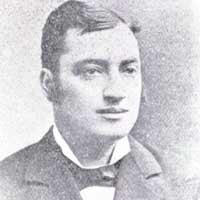
In order to understand the business that provided employment to scores of local people during its existence, one must go back in time to the beginning of the 20th century, when H. W. Clark was one of the most prominent and generous men in the community that he loved dearly. He had little schooling by today’s standards and he began working as a bookkeeper in a grocery store at the age of 15. But, when he died in 1935 at the age of 83, he had amassed a fortune of close to a million dollars.
The man and his son, Herbert B. Clark became the most generous benefactors that the city of North Adams has ever known. The Clark family, for whom the town of Clarksburg is named, were early settlers there and could trace its ancestry back 400 years to England. “H.W.,†as he was known throughout the valley, went to early school there and when he had finished, his father sent him to Comer Commercial College in Boston. He received his diploma at the age of 15. Upon his return to the area — his family having relocated to North Adams — he became bookkeeper at a retail-wholesale outlet operated by John Leroy.
The young bookkeeper didn’t stay put very long in those early days, and two years later he left Leroy’s employ to become a partner of Orson Dalrymple in a variety store at the corner of Main and Holden streets. When he was 19, he left to become a partner of Charles Ketchum in a Braytonville grocery store.
When he was 21, H.W. formed a partnership with his first employer, Leroy and Stephen Fairchild, when a wholesale grocery business became available on Holden Street. In this same year, he married Ella Brayton, who had come to this area from Hartford, N.Y. to teach school. The couple lived at various times on Cherry and Eagle streets before they built the Church Street mansion where they would celebrate their 50th wedding anniversary in 1926 with a lavish party with more than 400 guests in attendance.
In or about the year 1876, H.W. brought his brother-in-law into his wholesale business as a partner. By this time the location on Holden Street had become strapped for space, the Hoosac Tunnel had been completed, and trains were operating on schedule in both directions through town. H.W. bought land near the depot at the corner of State Street (now called American Legion Drive) and built, of brick, the largest building at that time in North Adams. Because its shape conformed to the configuration of the two streets, it was known locally as the “Flatiron Building.†This structure would house the H. W. Clark Wholesale Company for the next 88 years under the direction of three generations of Clarks.
It was not only in North Adams that H.W. Clark made a success of the wholesale business. He bought a building supply business, the C. T. Brigham Company and moved it to Pittsfield. He brought in C. E. Winchell, who had sold a successful general store in Stamford, Vt., and turned over the responsibility of operating the Depot Square business to him. He bought a business in Keene, N.H., and extended it to the town of Athol, Mass. He established a line of groceries and dry foods under their brand names, “Greylock’†and “Goldflower.†When chain stores began bringing pressure on local grocery stores, the Clark enterprises introduced the “Nation Wide†plan for promotion and advertising.
H. W. Clark dabbled in other businesses, most of which were short lived due to his inability to devote much of his valuable time to them. He bought the Canedy-Whitman Shoe manufacturing business on Ashland Street in partnership with J. M. Canedy, and the two men ran it for five years. But the venture proved to be a disappointment and it was liquidated. H.W. retained ownership of the building, however, and it would later prove to be invaluable when he began the bakery enterprise.
As the 19th century wound down, Clark began the Hygea Ice & Cold Storage business across Depot Square on Morris Street from the wholesale business but shortly thereafter discontinued this operation, using the building instead for his Berkshire Beef company and the H. W. Clark Produce Company dealing in wholesale fruit and dairy products. He built a building in Pittsfield for the manufacturing of cigars. But none of these ventures had the “master’s touch,†and he was forced to let other people operate them. If they didn’t succeed, he sold them to people who he knew could operate them. Else he would liquidate them.
It was in 1899 that H. W. Clark launched against great odds that it would succeed his venture into the bakery business. It was strictly his idea and his alone. He began the business in an abandoned shoe factory on Lincoln Street near the Hoosic River (this location is now the parking lot behind the Big Y market). The venture was an instant success despite competition from the likes of the National Biscuit Company and others. At the same time, he began a similar operation in the defunct shoe factory building that he owned on Ashland Street.
It wasn’t long afterwards that Herbert B .Clark, H.W.’s son, made his appearance in his father’s businesses, he having graduated from Williams College in the class of 1903. The younger Clark was put in charge of the wholesale company after a brief apprenticeship in the “ins and outs†of the business. This would be the business that he would be in for the rest of his life. It left his father to concentrate on the bakery business that was treating him so generously.
The bakery business proved to the Clark family that it “could make it†in the manufacturing field as well as in wholesaling. All went well until the fateful day of July 7, 1923, when, in the late evening, the Lincoln Street plant was swept by a disastrous fire that left only the walls standing. H.W. was in Boston on a business trip. He hurried home, met with his management team and it was decided to rebuild — but not on Lincoln Street. Instead, the entire bakery operation would be centralized at the Ashland Street plant.
The 90 employees thrown out of work by the fire would work a night shift there in the old shoe factory until a new plant could be built next door. The completion of the steel and concrete building that remains today was not finished until 1920. Why there was a seven-year interval between the fire and the completion of the new plant is unclear, but it can be supposed that World War I and the unavailability of construction materials was the reason.
In 1928, with his health declining, it was H.W.’s decision to sell the business — but not to a national chain. Rather, he decided it would be sold to Alex R. Patrie of Providence, R.I., who was an independent operator like himself. One condition of the sale was that the Clark name be retained and that Clark would remain as president. And so it was that a business that was begun with a capitalization of $25,000 would end with assets of three-quarters of a million dollars and a million dollars’ worth of business a year.
H.W. Clark did not devote his entire life to just business of his own. He still found time to be a director of the Berkshire Mutual Fire Insurance Company of Pittsfield and of the Bigheart Oil Company of Oklahoma. He became a director of the North Adams National Bank and served as such for 27 years until he was succeeded by his son, Herbert B. Clark, in 1923. In 1933, during The Great Depression, when the national bank moratorium took place, H.W. was asked to return, accepted, and was a director of the bank until his death. In 1900, he was elected a trustee of the North Adams Savings Bank and in 1927 was elected as its president, a position he held for seven years. He was a member of the first City Council when the city was chartered in 1896. H.W. was on the advisory board for the construction of the new Drury High School (1916-1917) on East Main Street.
No story about the elder Clark would be complete if mention were not made of the man’s generosity toward the city that he served so well — and which so well served him — throughout his lifetime. He was especially generous with his time and money to institutions he held dear, such as the First Baptist Church, where he was a deacon, chairman of the board of trustees and Sunday school superintendent. He made very large contributions to the church, and special gifts alone exceeded $50,000. He endowed the YMCA with like amounts. He was named president of the North Adams Hospital in 1909. He insisted that all bills there be paid on time, and if funds were not readily available, he paid them privately out of his own pocket. He built the $30,000 service building in 1912. He built the H.W. Clark Nurses Home — the bill for which was $110,000, and he added another $10,000 for its upkeep.
In failing health for several years, the end came on Good Friday, April 19, 1935, at his home on Church Street. His funeral was on Easter Monday. He is interred in the Clark family mausoleum in Southview Cemetery.
Roger W. Rivers, a longtime member of the North Adams Historical Society, was a combat correspondent for the 13th Air Force in the Pacific during World War II.
If you would like to contribute information on this article, contact us at info@iberkshires.com.
Your Comments
iBerkshires.com welcomes critical, respectful dialogue. Name-calling, personal attacks, libel, slander or foul language is not allowed. All comments are reviewed before posting and will be deleted or edited as necessary.
No Comments
Dalton Considers Digitization of Records
By Sabrina DammsiBerkshires Staff
DALTON, Mass. — The town is exploring digitizing its records to improve documents organization and accessibility, while reducing the need for physical storage space.
Digitization and storage is an issue that the town encounters, more often than they would like, and has become increasingly apparent through the ongoing work of the Stormwater Management Commission, Chair Thomas Irwin told the Select Board in April.
"[The commission has] repeatedly struggled to determine what documents exist, access past commission records, and identify a secure searchable location for records we continue to generate," he said.
Currently, the town's Municipal Separate Storm Sewer System (MS4) documents are primarily stored on a Google documents account managed on a Berkshire Regional Planning Commission computer and, to a lesser extent, the stormwater management webpage, Irwin said.
"For obvious reasons, this is concerning. As Dalton moves toward full MS4 compliance, both the number and the size of these records will increase," he said.
He estimated that the stormwater commission alone will initially store at least 50 documents, but the issue extends farther than this department.
"Recently, the Planning Board spent many hours searching for the east of the pond drawing and the 1992 land court decision related to Crane and Company, Petricca Industries Inc., and the Town of Dalton," Irwin said.
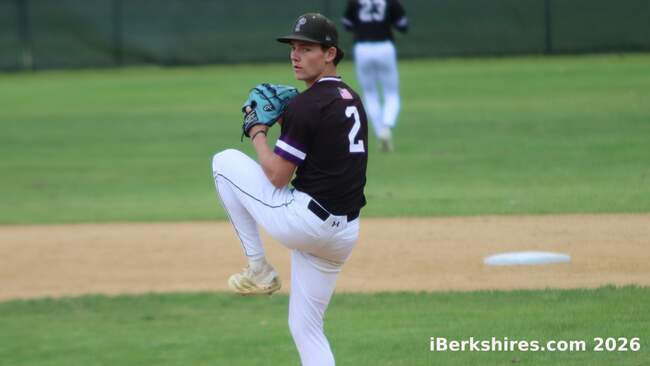
Cassidy Flynn scattered five hits in a complete-game effort in the circle as Lenox upset top-seeded Hoosac Valley, 3-2, in the quarter-finals of the Division 5 State Tournament. click for more
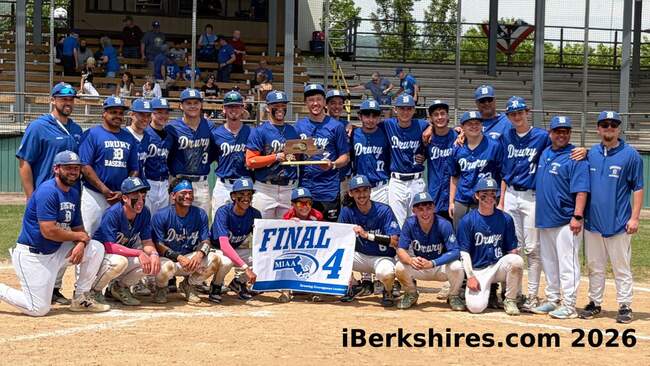
Brayden Durant struck out seven and walked one in a complete-game effort on the mound Saturday to pitch the Drury baseball team to a 6-0 win over Keefe Tech in the quarter-finals of the Division 5 State Tournament at Joe Wolfe Field. click for more
Jason Codey struck out 13, walked two and allowed just an infield single as the Generals earned a 7-1 win over Wahconah to claim their third straight regional title. click for more
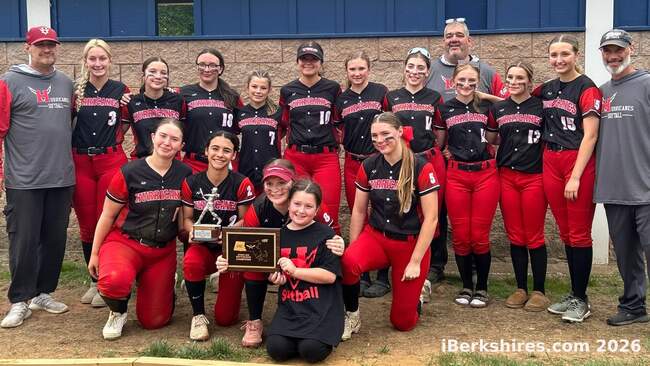
Gracelyn Wright struck out eight, and Genevieve Lagess went 3-for-5 with four runs batted in as the Hurricanes beat Monson, 17-3, to claim their first Western Mass title in four years. click for more
For the boys, Ward Bianchi helped lead the way with a win in the shot put and a second place in the javelin as the Mounties finished 16 points ahead of runner-up Pittsfield (pending the results of the pole vault, which were unavailable at 11 p.m. Friday night). click for more