STOCKBRIDGE - Forty years ago, Norman Rockwell immortalized a young girl's courageous walk to school escorted by four, armed U.S. Marshals following the Supreme Court's Brown v. Board of Education landmark ruling in 1954 ordering the integration of public schools. The six-year-old girl, Ruby Bridges, was the first African American child to enter a formerly all-white school in the history of the American South. Inspired by the story of Ruby Bridges, Norman Rockwell painted his now iconic illustration, "The Problem We All Live With," for "Look" magazine. On June 5, at the opening reception for a new exhibition at the Norman Rockwell Museum, Ruby Bridges will encounter the original Rockwell painting that was based on her extraordinary experience.
The exhibition "Hometown Hero, Citizen of the World: Rockwell in Stockbridge" will be on view from June 5 to October 31, 2004 at the Norman Rockwell Museum. It represents a rich selection of Rockwell's finest work at the culmination of his career and includes fascinating ephemera from the last 25 years of Rockwell's life in Stockbridge, Massachusetts. It is the final exhibit in a critically acclaimed three-part series organized by the Museum about Rockwell's life, art and the communities in which he lived.
"As an elder statesman, hometown hero, and citizen of the world, Norman Rockwell's paintings helped us make sense of a turbulent world. The artwork from the last 25 years of Rockwell's life is utterly remarkable for its compassion and insight into a changing society, and is especially amazing when one considers the personal challenges Rockwell faced in his own life at the time," says Museum Director Laurie Norton Moffatt.
The exhibition, containing more than 60 original artworks, is divided into five parts: "Rockwell and The Post: 1953 to 1963," "Space, Race and Society," "Our Town," "Beyond the Studio," including travels sketches from trips Rockwell took to India and Russia, and "Anatomy of Murder In Mississippi." There are 16 paintings from private and public lenders, including the National Air and Space Museum, Smithsonian Institution; the Washington County Museum of Fine Arts; the Columbus Museum of Art; the Berkshire Historical Society; the Collection of the Stockbridge Library Association; and the Collection of Mr. and Mrs. John H. Fitzpatrick. The exhibition contains rarely seen paintings such as "Mermaid" (1955), "The Oculist" (1956), "Red Sox Locker Room" (1957), "Easter Morning" (1959), "Window Washer" (1960), and "The Connoisseur" (1962), among others.
Rockwell was born in New York City but spent the first 27 years of his professional life in New Rochelle, New York. In 1939, Rockwell moved his family to Arlington, Vermont, intending to make it his permanent home. But in 1953, Rockwell and his wife Mary relocated 60 miles south to the town of Stockbridge, in the Berkshire Hills of western Massachusetts, where he lived until his death in 1978. In Stockbridge, Rockwell produced 38 "Saturday Evening Post" covers from 1953 to 1963, and then turned his talents toward illustrations that dealt with American social issues and other topics that interested him, such as space travel. During this time, he tackled subject matter for such publications as "Look" magazine that were weighty and controversial, including racial discrimination, poverty, desegregation, and the Vietnam War. As he grew older, Rockwell's painting became more introspective and self-revealing.
"I grapple with the whole concept of how much choice there was on Rockwell's part in choosing his subject matter during his career," says the exhibition's curator who is also the Museum's Curator of Norman Rockwell Collections, Linda Szekely Pero. "He was given an entirely new forum at Look that enabled him to tap a different part of his personality. He even pitched story ideas to Look. So much happened during this turbulent time, and Rockwell's concern for world peace was paramount. This is also the most well documented period of Rockwell's life. In the Museum's archives we have nearly everything from the last 25 years of his life," says Szekely Pero.
Rockwell embraced his new community and made his neighbors famous, if only in their own town, on his Post covers and Boy Scout calendars. Norman Rockwell said of his town, "I just love Stockbridge. I mean, Stockbridge is the best of America, the best of New England." From his small studio overlooking Main Street, he viewed passers-by on their daily errands.
Stockbridge, with a population of 2,100, provided new faces and fresh inspiration for Rockwell. But in the summer of 1959, Mary, his wife of 29 years, died suddenly of cardiac arrest. The following summer Rockwell joined a local sketch class-good therapy for a man descending into depression. That winter, mustering his spirits, he painted "Triple Self-Portrait" for the February 13, 1960 cover of the Post-the first of eight issues to carry a serialized version of his autobiography. "University Club" and "Window Washer," both painted in 1960, were typical of Rockwell's many "youth and old age" theme pictures, contrasting the active energy of youth with the stolid respectability of age.
In Stockbridge, Rockwell was not as sequestered as he was in Arlington. The town, a half-day's drive from New York or Boston, was filled with second-home owners who enjoyed the area's rich cultural offerings such as Tanglewood, the summer home of the Boston Symphony Orchestra, Jacob's Pillow Dance Festival, and the Berkshire Theatre Festival. Rockwell's consciousness was broadening and his chance to rid himself of the art intelligentsia's claim that he was old-fashioned was on the horizon. In 1961, the "Post" published Rockwell's "Golden Rule." A group of people of different religions, races and ethnicity served as the backdrop for the inscription "Do Unto Others as You Would Have Them Do Unto You." Rockwell was a compassionate and liberal man and this simple phrase reflected his philosophy. Having traveled all his life and been welcomed wherever he went, Rockwell felt like a citizen of the world, and his politics reflected that value system.
In 1963, Rockwell decided to break with the "Post." Almost immediately he began work for "Look" magazine. He was now free to focus on subjects he felt deeply about-racial discrimination, poverty, and the rights of Americans to know the reasons for its government's choices. Leaving behind his much-loved storytelling scenes, Rockwell threw himself into the documentation of social issues with empathy, courage and masterful skill. Controversial subject matter might not have suited his fans, but Rockwell had an opportunity to make a difference and did. His first assignment for "Look" magazine was a two-page illustration of a six-year-old African American schoolgirl being escorted by four U.S. Marshals to her first day at an all-white school in New Orleans. Ordered to proceed with school desegregation after the 1954 Brown v. Board of Education ruling, Louisiana lagged behind until pressure from Federal Judge Skelly Wright forced the school board to begin desegregation on November 14, 1960.
In the 1965 painting "Murder in Mississippi," he illustrated the murder of civil rights workers Michael Schwerner, Andrew Goodman, and James Chaney in Philadelphia, Mississippi. The anatomy of this particular work presents an illuminating journey through Rockwell's process. Notes were compiled on the physical traits of the three men in their early twenties. Rockwell's son, Jarvis, was one of the models who posed for the painting. Rockwell's studio, usually bathed in north light, was darkened with shades, and spotlights were brought in to create a nighttime effect. Blood-human blood, at Rockwell's insistence-was procured from a concealed source and applied to a shirt that represented the shirt Michael Schwerner was wearing when he was killed.
Rockwell wore the shirt for the posing, probably not wanting to ask another model to wear it. Unlike his usual habit of working on five or six projects at a time, he ignored his other commissions while working on "Murder in Mississippi." The result was an intensive five-week session in which he produced charcoal preliminaries, an oil color-study, and the large 53-inch x 42-inch final painting. Rockwell later received word from Look's art editor that they were using his color study rather than the final painting. Three years later, Rockwell reflected that by the time he had finished the painting, "all the anger that was in the sketch had gone out of it."
In an interview later in his life, Rockwell recalled that he once had to paint out an African American in a group picture since "The Saturday Evening Post" policy dictated showing African Americans only in service industry positions. Freed from such restraints, Rockwell seemed to look for opportunities to correct the editorial prejudices reflected in his previous work. "The Problem We All Live With" and "Murder in Mississippi" ushered in that new era for Rockwell.
In the years that followed, Rockwell reported on John F. Kennedy's Peace Corps program and the race to space, depicting the moon landing before and after it actually happened. In 1967, he illustrated a status report on the desegregation of America's suburbs, and that fall began work on "The Right to Know." Growing dissent against the war in Vietnam fueled Rockwell's powerful political statement on the right of American citizens to know the reasons behind its government's actions.
Then 74 years old, Rockwell worked "from exhaustion to exhaustion," he said, escaping from his work, when possible, for energy-reviving vacations. In 1961, he married Molly Punderson, who shared his love of travel. The couple visited more than 18 countries from 1963 to 1974. When Rockwell left behind his painting supplies to ensure he would rest, he invariably picked up new supplies on his trip. These quick, loose travel sketches provide a record of his brief and carefree interludes but, because of their sporadic nature, they only scratch the surface of the kind of artist Rockwell might have been had he left the magazine and advertising world earlier.
Despite declining health and mental confusion, Rockwell accepted a commission to paint the July 1976 cover of "American Artist" magazine, celebrating America's bicentennial. That summer, a Stockbridge parade and celebration honored the hometown hero. Now unable to walk the two-dozen steps to his studio, Rockwell used a wheelchair. If unable to make it himself, he asked for help from one of the nurses now in residence around the clock. With the onset of dementia and the effects of emphysema resulting from years of pipe smoking, he could no longer do the work that had so completely and passionately driven his life. In 1978, at age 84, Rockwell died at his home.
This exhibition has been generously sponsored by BerkshireBank. For over 150 years, BerkhireBank and its employees have sponsored the Berkshire Community through education, human services and the arts. BerkshireBank is proud to continue the tradition by supporting "Hometown Hero, Citizen of the World: Rockwell in Stockbridge."
Special Events for "Hometown Hero, Citizen of the World"
The Norman Rockwell Museum is celebrating its 35th Anniversary Season with a series of special programs and events. The opening reception for "Hometown Hero, Citizen of the World" on June 5 at 6:30 p.m. will feature special guest speaker Ruby Bridges, who, at age six, was escorted by four, armed U.S. Marshals to school in New Orleans on November 14, 1960. She was the first African American child to enter a formerly all-white school in the history of the American South. It has been 50 years since the United States Supreme Count handed down its landmark decision ordering the integration of public schools in the famous Brown v. Board of Education ruling. Rockwell painted "The Problem We All Live With" while in Stockbridge. It was the first painting the Norman Rockwell Museum purchased for its collection. Ruby Bridges, whose true story was the inspiration for Norman Rockwell's famous 1964 painting, "The Problem we all Live With," is a nationally known lecturer and educator. Following the presentation, Ms. Bridges will sign copies of her books. Tickets are $50 ($35 for museum members). Lavish hors d'oeuvres, desserts, and beverages will be served. Call 413.298.4100, ext. 221, for reservations and information.
Special Programs
This summer the Museum will extend its hours to 7 p.m. on Thursday evenings in July and August and will offer a series of special programs on those nights at 5:30 p.m., "Rhythms and Change," a performance and lecture series about the changing American scene during the 1960s and 1970s. Admission is $6 for members, $12 general public.
On Saturday, July 31, from 10 a.m. to 3 p.m., the Museum will host a Stockbridge model's reunion day with gallery talks by Rockwell's models, music, art activities and print signings by the models.
This summer, the Museum is a sponsor of and is the host site for Housatonic River Summer 2004. A festive family day in celebration of the river will be held on August 14 from 10 a.m. to 5 p.m., with art classes, nature workshops, performances and much more.
35TH ANNIVERSARY EXHIBITION SCHEDULE:
"Norman Rockwell's 'Willie Was Different'"
June 5 through August 6, 2004
Norman Rockwell's original illustrations for his only children's picture book, "Willie Was Different," is the charming tale of a wood thrush with a magical gift for music. In the story, Willie experiences the trials of genius and the satisfactions of true friendship.
"Sculpture Now: In and By the River"
June 12 through October 31, 2004
An outdoor sculpture exhibit installed on the Museum's grounds and on the Housatonic River's banks, of original works by nationally and internationally known artists that explore the past, present, and future of the river.
"ReViewed: Artists' Books Inspired by 'The Berkshire Review'"
July 15 through September 6, 2004
In this exhibition, artists inspired by a selection of essays featured in the 2003 edition of "The Berkshire Review," a collection of fiction, non-fiction, and poetry by regional authors, have created art in book form in a variety of and artistic styles and media, from fabric arts to translucent scrolls. Works by Lesley Ann Beck, Randi Bentley, Charles Bonenti, Linda Baker-Crimini, Marie-Claude Gitoux, Susan Hardcastle, Mary Kate Jordan, Mary Natalizia, Nicole Peskin, Douglas Truth, and Darlene White will be included. The exhibition will be on view at Linwood House, the elegant "Berkshire Cottage," located on the Museum's grounds.
"Housatonic River Reflections"
August 13 through September 19, 2004
The Upper Housatonic Valley is noted for its scenic landscapes and traditional New England towns. Writers, artists, and vacationers have visited the beautiful region for over 150 years, making it one of the country's leading cultural resorts. The region encompasses 29 communities in the hilly terrain of western Massachusetts and northwestern Connecticut. Housatonic River Reflections features works inspired by the river and its surroundings by contemporary regional artists. The exhibition will include award-winning pieces from two juried exhibitions sponsored by the Sheffield Art League, as well as works by other artists noted for their affinity for the region's landscape.
"Norman Rockwell's 323 'Saturday Evening Post' Covers"
September 25, 2004 through January 23, 2005
For nearly 50 years, millions of Americans brought Norman Rockwell's art into their homes - enjoying his popular Post covers from the comfort of a favorite armchair - and helped make his images part of the fabric of American life. This exhibition of original "Saturday Evening Post" cover tear sheets features each of Norman Rockwell's illustrations, created between 1916 and 1963, for the venerable publication.
"The Way Things Work: The Art of David Macaulay"
November 13, 2004 through May 30, 2005
Author and artist David Macaulay has demystified the workings and origins of everything from simple gadgets to elaborate architectural structures. A favorite with readers of all ages, this Caldecott Medal-winning artist is the subject of this exciting exhibition that takes an in-depth look at Macaulay's artistic process and extensive body of work, including "The Way Things Work," "Castle," "Cathedral," "City," "Mill," "Ship," and "Mosque."
Norman Rockwell Museum is open daily. General public admission is $12 for adults, $7 for students, and free for visitors 18 and under (four per adult). Kids Free Every Day is a gift to families from Country Curtains and the Red Lion Inn. On Wednesdays from November to May, senior citizens are admitted at half-price. The Museum is open daily, from 10 a.m. to 5 p.m., May through October; from November through April, weekday hours are 10 a.m. to 4 p.m., and weekend/holiday hours are 10 a.m. to 5 p.m. Gallery tours are available daily, beginning on the hour. Antenna Audio Tour of select paintings from the Museum's permanent Norman Rockwell collection is available. Rockwell's original Stockbridge studio, located on the Museum grounds, is open May through October.
For more information, the public is invited to call 413-298-4100, ext. 220. Visit the Museum's Web site at www.nrm.org.
If you would like to contribute information on this article, contact us at info@iberkshires.com.
Your Comments
iBerkshires.com welcomes critical, respectful dialogue. Name-calling, personal attacks, libel, slander or foul language is not allowed. All comments are reviewed before posting and will be deleted or edited as necessary.
No Comments
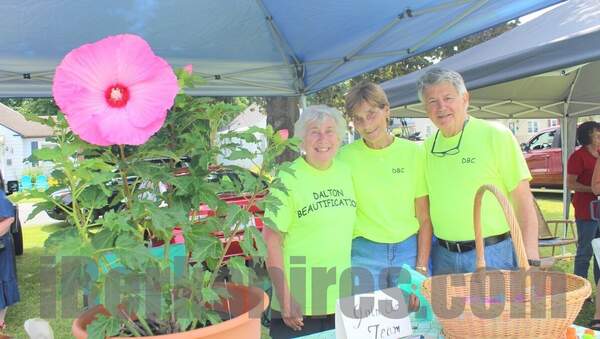
Dalton Day Returns This Saturday
By Sabrina DammsiBerkshires Staff
DALTON, Mass. — The town's popular Dalton Day festival is returning this weekend after a year's hiatus.
The event will kick off this Saturday at 11 a.m. and runs until 4 p.m. in the field in front of the Senior Center.
The community celebration was established in 2023 by the Cultural Council in an effort to increase resident participation at town meetings while also showcasing the area's welcoming, diverse, artistic and sporty atmosphere. In 2024, the event brought together 300 residents.
"The primary mission of Dalton Day is to foster a strong sense of community, build civic pride, and bring residents together through a shared celebration of local culture, music, and food," said Jeannie Ingram, Select Board member and cultural council chair, and Lori Venezia, executive assistant to the town manager.
The event provides an accessible and free platform for "civic education, community bonding, and supporting local businesses, artisans, makers, and culture more broadly," they said.
The festival strengthens the fabric of the town both civically and economically by connecting grassroots organizations with residents, fostering a shared sense of belonging, and providing free, family-friendly entertainment.
It also serves as an opportunity for community members to meet with local officials and a couple of state officials. State Sen. Paul Mark and state Rep. Leigh Davis will be coming from Beacon Hill to speak at the event.
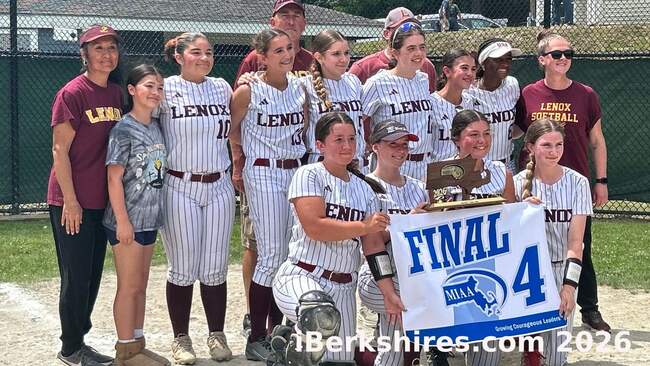
Cassidy Flynn scattered five hits in a complete-game effort in the circle as Lenox upset top-seeded Hoosac Valley, 3-2, in the quarter-finals of the Division 5 State Tournament. click for more
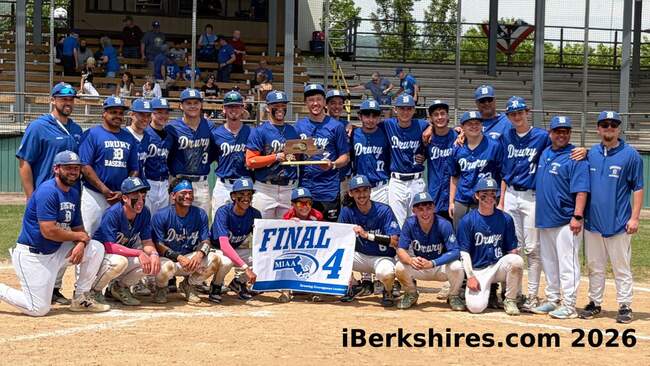
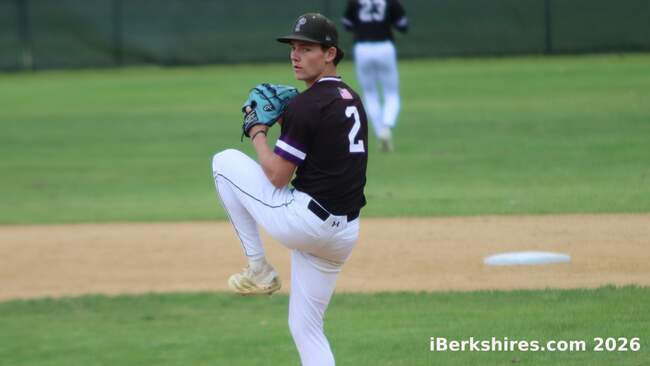
Brayden Durant struck out seven and walked one in a complete-game effort on the mound Saturday to pitch the Drury baseball team to a 6-0 win over Keefe Tech in the quarter-finals of the Division 5 State Tournament at Joe Wolfe Field. click for more
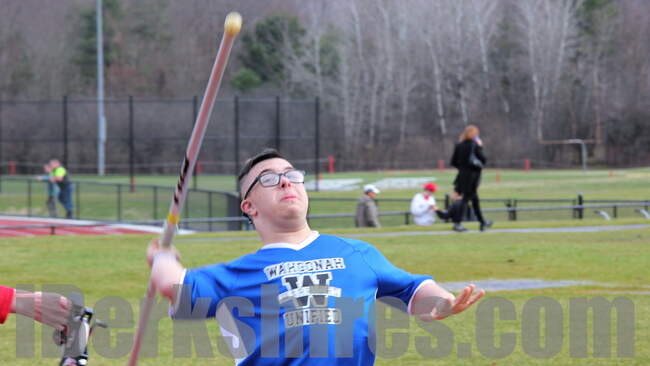
Jason Codey struck out 13, walked two and allowed just an infield single as the Generals earned a 7-1 win over Wahconah to claim their third straight regional title. click for more
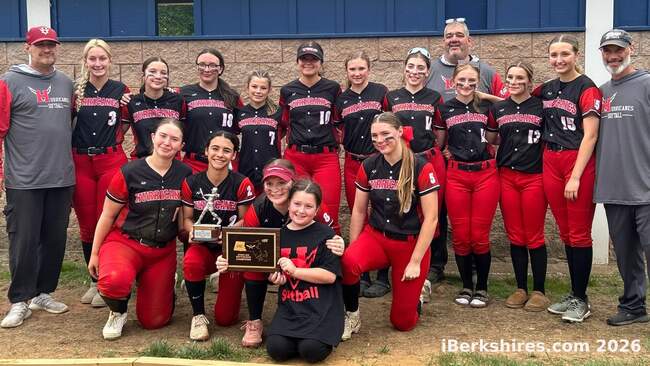
Gracelyn Wright struck out eight, and Genevieve Lagess went 3-for-5 with four runs batted in as the Hurricanes beat Monson, 17-3, to claim their first Western Mass title in four years. click for more