In Depth With Tyler Fairbank: "It's All Doable"
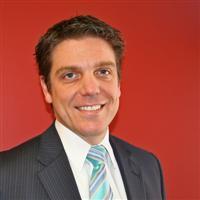 |
| Berkshire Economic Development Corporation President Tyler Fairbank |
"It's all doable," said Berkshire Economic Development Corporation President Tyler Fairbank. "If everybody takes on little pieces, then it all knits together."
The Building Of The Blueprint
The BEDC was an integral member of a collaboration that spent about two years gathering and evaluating the Berkshires economy as both a whole and the parts of its sum. Members of a Berkshire Strategic Project Steering Committee examined the regions' business venues, dubbed "clusters," such as plastics, hospitality and tourism, chemical products, construction, education, and more.
A "creative cluster" was established from various sources that included business but also brought in numerous arts, including visual arts, performing arts, media and new media.
A Berkshire Creative Economy Project examined the creative cluster and focused on the arts and arts impacts on the region.
The "strategic" and "creative economy" projects are the components that make up the blueprint.
Keeping The Economic Eggs Out Of One Basket
And the blueprint is a place from which to grow; more launch pad than end result, Fairbank said during a March 21 interview at the iberkshires.com downtown North Adams office.
There is no single magic bullet that will generate economic growth through the region, but that is likely a positive, Fairbank said.
During decades past, the North Adams economy was buoyed almost solely by the Sprague Electric Co., while in Pittsfield, the General Electric Company provided the basket that held the workers' monetary eggs.
Both companies downsized dramatically beginning during the 1980s; Sprague is no longer a measurable part of the region's economy and GE Plastics, a remnant of Pittsfield's formerly mammoth employer, is at risk of leaving the city.
But there has been an emergence of smaller businesses that involve a diverse spectrum including retail, high-tech manufacture, design, health, education, and other industries, Fairbank said.
Heading Back To The HeyDay
A diverse economy is making gains, Fairbank said, and produced employment numbers from 1989 to 2004 that substantiate his assertion.
In 1989, there were about 70,044 people working in the Berkshires and by 1990, the number was down to 65,000. Things didn't improve during 1992; that year, about 60,000 Berkshire folks were working, according to the data.
And throughout about a five-year span, Berkshire region unemployment levels peaked at 11.2 percent.
Fast forward to 2004, when the employment numbers showed 65,137 Berkshire folks were holding down jobs, and while precise numbers for 2005 and 2006 were not at hand during the interview, Fairbank said they did show an upward employment trend.
"We're heading back to the heyday," he said. "And we don't have any large employers now. It's all the smaller, eclectic companies."
Career Ops
The Berkshire economy hosts success stories that don't make the daily headlines, he said, and noted businesses such as Pittsfield's Hi-Tech Mold and Tool.
"Here's a business that works in the shadows," he said. "You don't hear a lot about them. But they've added space and they've added jobs."
In North Adams, the Morrison Berkshire firm employs about 60 people and operates two shifts, he noted.
And while much media focus illuminates the region's arts and cultural growth, "the largest contributor to the Gross Regional Product is still manufacturing," Fairbank said.
Most of the region's manufacturing and plastics firms are part of the industry's cutting edge in several key areas.
"These are real career opportunities," Fairbank said. "And the kids that are here need to know that these are real opportunities for good jobs and good wages."
And as the economy is diverse, so are the strategies that will fertilize the employment, education, and business landscapes and catapult the economy to new heights, Fairbank said.
"The key thing, the golden thread, is that there is no one nugget, no one thing this region can do. There are about 20 things this region can do."
From Concept To Action
And momentum is building to get the blueprint from concept to action, Fairbank said.
The Berkshire Chamber of Commerce, the Berkshire United Way and the Northern Berkshire United Way are collaborating to create a mechanism to define and track progress. Distinct arenas such as the regional business climate, which examines the cost of doing business as well as the cost of health care, the environment and balanced development and land use, innovative capabilities, such as accessibility of high-speed Internet, new business starts and the sustainability of new business, population shifts, measurements of personal income, the employment rate and average wages are all part of the package to be continually reviewed and documented by the three groups.
The BEDC is handling regional marketing, and Fairbank said that the Berkshire County Regional Employment Board has asked to meet with him during early April.
The BCREB is interested in tackling three blueprint "actions" that involve workforce development. Part of that work could involve finding and securing funding for employment-related trainings that improve the skills of the region's workforce, Fairbank said.
"It's this kind of activity that hits the person on the street," he said and added that the tangibles become apparent to the region's workforce when "they are part of a workplace training program that's available because there was a [blueprint]."
Education, Employment, And Wages
One element was a constant in the strategy and creative economy facets of the blueprint: education.
Fairbank said that most employers, regardless of specific industry, bemoaned a lack of an educated workforce. Fairbank pointed out that most of the workers affected during the job evaporation of the early 1990s were not highly-educated individuals but were people who earned good wages, in part because of union-negotiated contracts with companies such as GE and Sprague.
When asked specifically about what the current group of employers are willing to pay their employees, and how those wages would stack up when compared to the costs of higher education and paying off any education-generated debt, Fairbank suggested speaking directly to regional employers.
However, to attract and sustain a strong economic foundation, a trained, educated workforce must be in place, he said.
Key to a successful education strategy is the Berkshire Compact, he said.
"We really felt that the Berkshire Compact has done such a fabulous job that we wanted to support the Berkshire Compact," he said. "We have to integrate the work of the compact."
What About The Current Workforce?
He acknowledged that currently, "a vast majority" of the Berkshire region workforce is aged 35 years old and older, and many did not receive computer or other information technology education during their public school education years.
He also acknowledged that a significant population of the current workforce will be ineligible to receive Social Security retirement benefits until they reach age 70, which means that a person now aged 50 may have 20 years of employment ahead.
Fairbank urged those in that category to investigate education and training options offered by entities including the Berkshire Community College, the Charles H. McCann Technical School secondary education programs, and specific programs that are available at the Massachusetts College of Liberal Arts.
"The incumbent workforce, the existing workforce, is going to rely on BCC, McCann, MCLA," he said.
Depending on specific circumstance, some workforce members may be able to attend daytime programs such as what is offered at McCann, while others may require evening or weekend courses, such as what is offered at BCC or MCLA, Fairbank said.
The need for education is more mandate than option, he said.
"That is why we are very much advocating for the bricks and mortar for things like the Science building at MCLA and improvements at BCC," he said.
Getting Into Xpansion
The blueprint vision looks to the future while certain blueprint actions should generate benefits during it's first year, Fairbank said.
For example, as part of a Berkshires marketing campaign, "we have been promoting the plastics industry," he said.
From that effort, a March issue of Business Xpansion Journal, an industry trade magazine, included the Berkshires plastics industry as a significant part of an article titled "Plastics: On A Higher Mission."
And the same magazine published a separate story which had a strong focus on Massachusetts, he noted.
"This whole plan happens when we do many things well," Fairbank said.
Angels Among Us
He noted that the blueprint recognizes the significance of pending projects such as the Mohawk Theater in North Adams as critical to downtown development. The Colonial Theater renovation in Pittsfield is an example of the impact of such projects, he said.
"And there are other layers of bricks that build downtown communities," he noted.
An internship program that includes interviewing college seniors to "find out where they want to go" is kicking off, with Fairbank working to assemble packets to be given to college seniors.
Plans to launch an "angel network" that would assist specific entrepreneurial proposals with start-up monies are moving forward, Fairbank said.
Premise And Promise
A critically integral blueprint endeavor is working to help Berkshire residents - the people whose lives will be most impacted - become familiar with the blueprint's history, it's premise, and it's promise, Fairbank said.
"We have worked on this for the past two years," he said. "We were thoughtful about making sure we had representation throughout the county."
Fairbank noted that the steering committees included Massachusetts Museum of Contemporary Art executive Director Joseph Thompson, state Rep.Daniel Bosley D-North Adams, North Adams Mayor John Barrett III, Pittsfield Mayor James Ruberto, Michael Supranowicz of the Berkshire Chamber of Commerce and BEDC, and MCLA President Mary Grant.
The Berkshire Blueprint is likely not "perfect" and its' many components are not "cast in stone," Fairbank said. There are actions that will likely benefit region residents to some degree over the next year, with more benefits generated as time passes and actions are accomplished, he said.
The blueprint is ambitious, and relies on regional involvement at all levels for success.
"But if we take on a little more each year, that's how we get it done," Fairbank said.
The Berkshire Blueprint, the Berkshire Strategy Project and the Berkshire Creative Economy Project documents are available in their entirety for on-line viewing and download at a www.berkshireedc.com Internet web site.
The Business Xpansion Journal article "Plastics: On A Higher Mission" may be viewed on-line at a www.bxjonline.com Internet web site.
Information about the Berkshire Economic Development Corporation is available at a www.berkshireedc.com Internet web site.