Greenhouse Gas Program Passed by Senate
 |
Passage by both chambers will secure the state's current and future participation in the Regional Greenhouse Gas Initiative.
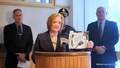
"This bill provides actionable measures for directing industry towards more sustainable practices," said Sen. Benjamin B. Downing, D-Pittsfield. "The passage of this legislation will be a clear sign of the commonwealth's commitment to preserving and repairing our environment. I am glad to count myself among the supporters of this bill."
Gov. Deval Patrick signed the agreement last January, entering Massachusetts into a nine-state coalition plan starting in 2009 to reduce carbon-dioxide emissions from larger power plants in the New England and mid-Atlantic region. Seven governors have signed the agreement.
Under RGGI, participating states will stabilize carbon-dioxide emissions at current levels from 2009 to 2015, and then proceed with a 10 percent reduction by 2019.
The agreement establishes a carbon dioxide "cap and trade" program that sets limits on total emissions permitted from certain power plants in an effort to reduce emissions. It also requires power plants to hold "allowances," or a right to release one ton of carbon dioxide, to cover their emissions.
Emissions allowed under the cap will be divided into individual permits and allocated by each state to the power plants. This is the nation's first regional cap-and-trade system for greenhouse gas emissions and has been heralded as a model for other states and the development of national climate-change policy.
Power plants without sufficient allowances to cover emissions can either reduce their greenhouse gases or purchase allowances from other power plants that have successfully reduced their emissions without maxing out their allotted allowances.
All sales will be completed through a regional market auction. Proceeds will be deposited into the RGGI Auction Trust Fund. Allowance auctions will be conducted by an independent entity assigned by the state Department of Environmental Protection and the Executive Office of Environmental Affairs.
The auction fund will be used to protect municipalities whose property tax receipts might be reduced because of RGGI. It will also be used to promote energy efficiency and conservation, and also to promote renewable energy technologies.
Former Gov. Mitt Romney had opted out of the agreement in 2005; making the initiative law would remove its implementation from the governor's office.
The measure now moves to the House of Representatives for further consideration.