New Booster Seat Law Takes Effect In Massachusetts
Print Story | Email Story
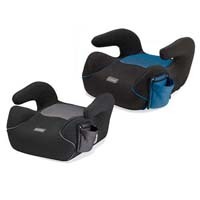
Thursday ushers in a new era in child passenger safety in Massachusetts as a new booster seat law takes effect ninety days after Governor Deval Patrick signed the legislation. For the past several years, AAA Southern New England has been the primary proponent of this law, which requires booster seats for children up to their eighth birthday, or until they reach 4 feet 9 inches in height--whichever comes first.

“Parents are bombarded with health and safety messages regarding their kids,” says Arthur Kinsman, Director of Government Affairs for AAA Southern New England. “Their priority filters tell them that if a warning is not a law, the potential is not life-threatening. Nothing could be further from the truth when it comes to properly securing our kids.”

Studies show nine out of ten parents believe that if they adhere to their state’s current child passenger safety law, they’ll be taking the necessary steps to protect their children. “Previously, parents were given a false sense of security by following the letter of the Commonwealth’s law, and, in the process, unknowingly endangering their children,” said Mr. Kinsman. “Finally the law has caught up to best practice.”

"With the booster seat law going into effect, now is a great time to remind parents that booster seats save lives. Often, a seat belt alone is not enough to protect a child, or is even harmful because the child is not big enough to wear the seat belt properly. Booster seats help solve this problem," said Representative Michael Costello, Chair of the Joint Committee on Public Safety & Homeland Security. "This is a simple, inexpensive way that parents can protect their children while they are driving."
  

According to AAA, height is the best indicator of when a child can be safely buckled in an adult safety belt, because the booster seat raises up a child so that the seat belt is properly positioned across a child’s lap and chest. The age cutoff is important because it prevents smaller adults from being subject to the law.

"The purpose of this law is to save children’s lives," says Senator Steven A. Baddour, (D-Methuen), the bill’s sponsor and Chair of the Joint Committee on Transportation. "We must continue to educate parents about how they can protect their kids in the case of an accident – something I think any parent would do if they truly knew of the risks involved without booster seats."

Booster seats are available in some department stores for as little as $15, and for parents facing financial hardships, free booster seats are available through the Massachusetts Executive Office of Public Safety and Security/Highway Safety Division. For more information on free seats, Massachusetts residents can call the Child Passenger Safety Hotline at 1-877-392-5956, or TTY 1-617-725-0261 (for the hearing impaired,) or log on to www.mass.gov/child safety seats. 

The fine for violating the new law would be $25 per child. Forty-three states and the District of Columbia have booster seat laws in place.

If you would like to contribute information on this article, contact us at info@iberkshires.com.

Berkshire Towns Can Tap State Seasonal Communities Resources

BOSTON — Governor Maura Healey announced that 18 additional municipalities across Massachusetts have been designated as Seasonal Communities, opening up new tools, support and grant funding to help them manage seasonal housing pressures. 
 
Created as part of the historic Affordable Homes Act signed into law by Governor Healey in 2024, the Seasonal Communities designation was designed to recognize Massachusetts communities that experience substantial variation in seasonal employment and to create distinctive tools to address their unique housing needs. The law also established the Seasonal Communities Advisory Council (SCAC).  
 
The Affordable Homes Act identified several communities to automatically receive the designation, including:   
  • All municipalities in the counties of Dukes and Nantucket;   
  • All municipalities with over 35 percent seasonal housing units in Barnstable County; and   
  • All municipalities with more than 40 percent seasonal housing units in Berkshire County. 
  •  
To identify additional communities, the Executive Office of Housing and Livable Communities (HLC) reviewed available data, specifically focusing on cities and towns with high levels of short-term rentals and a high share of second- or vacation homes.
 
In Berkshire County, Egremont, Great Barrington, Lee, Lenox, New Marlborough, Richmond, Sandisfield, Sheffield, West Stockbridge and Williamstown have been designated. 
 
"Our seasonal communities are a vital part of Massachusetts' cultural and economic fabric, but they're also home to essential workers, families, seniors, and longtime residents who deserve a place to live year-round," said Governor Healey. "That's why we're committed to supporting these communities with innovative solutions like the Seasonal Communities designation to meet their unique needs, and I'm thrilled that we're offering this opportunity to 18 additional communities across the state. Everyone who calls these places home should be able to live, work and grow here, no matter the season." 
 
As with the statutorily identified communities, acceptance of the designation for municipalities is voluntary and requires a local legislative vote. HLC will open an application for newly eligible communities that haven't accepted the Seasonal Communities designation to request consideration. 
 
The Affordable Homes Act created several new tools for communities who accept the Seasonal Communities designation to be able to:  
  • Acquire deed restrictions to create or preserve year-round housing 
  • Develop housing with a preference for municipal workers, so that our public safety personnel, teachers, public works and town hall workers have a place to live 
  • Establish a Year-Round Housing Trust Fund to create and preserve affordable and attainable housing for year-round residents 
  • Create year-round housing for artists 
  • Allow seasonal communities to develop a comprehensive housing needs assessment 
  • Permit tiny homes to be built and used as year-round housing 
  • Permit year-round, attainable residential development on undersized lots 
  • Increase the property tax exemption for homes that are the owners' primary residence 
 
View Full Story

More Berkshire County Stories