image description

North Adams City Council Accepts Insurance Report
By Tammy DanielsiBerkshires Staff
Print Story | Email Story
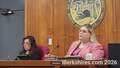
NORTH ADAMS, Mass. — The City Council formally accepted the findings of the Scanlon & Associates report at its meeting Tuesday night.

The move was not surprising since the majority of the councilors have sat in on the Finance Committee meetings with the mayor, business manager and the city's administrative officer.

The financial report, commissioned by Mayor Richard Alcombright, showed the city had failed to adequately to fund its share of the self-insurance trust to the tune of nearly $2 million over the last several years.

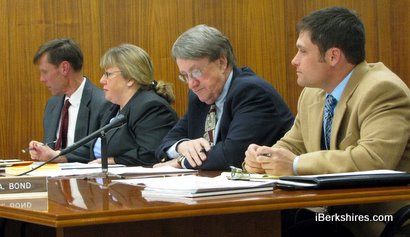
The Finance Committee, made up of Chairman Michael Bloom, Alan Marden and David Bond, recommended the council not only accept the report but urged the mayor to follow state statute and appropriately fund the Medical Trust Fund going forward. It also recommended the city review its procedures for handling "runouts," or claims that fall beyond the fiscal year they are accrued in.

The council approved all the recommendations with little comment.

The recommendations came from the latest Finance Committee on Monday, a lengthy discussion several councilors described as "interesting." (iBerkshires normally attends but blanked on this one).

 For Those Just Tuning In
• North Adams Researching Insurance Claims

• Report: North Adams Underfunded Insurance Trust by...

• North Adams Needs $396,000 to Fund Insurance Trust

•North Adams Insurance Bill at $500K

The Scanlon report

Councilor Keith Bona said he was disappointed in the failure to determine how the city came to underfund the account in the first place during the last administration. (Then Mayor John Barrett III has said the account was properly funded. There is no indication that any claims were not paid or any money diverted, but the city's full share of the premiums were not budgeted to the account).

"There really isn't a clear answer why it was done the way it was done," he said. "You came right out and asked the city treasurer and the answer we got was 'I don't know.'"

The account will be fully funded in this fiscal year using monies from various accounts. The mayor is negotiating with the public unions on a settlement for the past two years (the report goes to 2007) but Bloom cautioned the even a 50 percent settlement could be devastating.

"This negotiation is being carefully presented with the understanding the city is already under incredible financial strain because of the proposed cuts in state aid and a major decrease in projected local receipts and lack of available funds from city reserve accounts," said Bloom.  

The city will have to look at its excess tax capacity, a meals tax, sewer fee or other fees to meet its commitment or face "expensive legal action" by the unions or the Department of Revenue.

In other business:
  • The council appointed Christopher Gelinas and Gregory Onorato as permanent police officers.
  • Approved a resolution by submitted by Councilor Michael Boland recognizing the efforts of the MCLA Center for Service and Citizenship and the city of North Adams. The resolution referred to a community day being planned and based on a service day instituted by the college 18 years ago. The scope of the volunteer effort is being widened; more information can be found at NorthAdamsIdeas.com and iBerkshires will have more information as the day approaches.
  • Heard a communication also by Boland on the development of a Youth Commission.
  • Approved a resolution supporting the funding of the regional library system submitted by Councilor Gailanne Cariddi.
  • Approved a sewer connection request by Jeffrey Lincoln for Lot 17 Morris Drive, Clarksburg. The Clarksburg Selectmen approved the request at its meeting two weeks ago. The Hoosac Water Quality District must also OK the connection.
  • Renewed secondhand licenses for Jeffrey Hudson's operation of Hudson's at 1112 Mass MoCA Way and for Timothy Randall's operation of Sanford & Kid at 160 Houghton St.
Resolutions are below.
North Adams City Council Resolutions 4_13_2010
If you would like to contribute information on this article, contact us at info@iberkshires.com.

Why the Massachusetts Art Community Is Worth Continued Investment

By James BirgeGuest Column
How do we quantify the value of art on society and culture? Even eye-popping figures, like the $100 million estimate for the jewels stolen from the Louvre, or the record auction last fall that saw a piece by Gustav Klimt sell for more than $236 million can't fully account for the value of the history, stories, and emotions behind the creations themselves. But beyond that, there is a measurable financial, cultural and social benefit of the arts that is often taken for granted. 

Closer to home, arts and cultural production in the Commonwealth of Massachusetts totals nearly $30 billion annually, representing more than 4 percent of the state's economic output, according to the Mass Cultural Council. All told, more than 130,000 jobs are spread across the commonwealth creating a vibrant and thriving artistic community for us all to enjoy. 

Despite the obvious impact, these figures are under threat. A recent survey by MassCreative compiled recent federal cuts to the National Endowment for the Arts, the National Endowment for the Humanities and the Institute of Museum and Library Services and identified 63 grants canceled and $4.2 million in grant funding rescinded across New England so far this year. 

The dollars, of course, are important. But they also only scratch the surface on what they bring to the community. Today, we risk losing part of the culture and identity many now take for granted. 

While others choose to look past these less tangible, but just as vital benefits, we're doing the opposite. Massachusetts College of Liberal Arts is all in to ensure the next generation retains their access to works of art, while also being empowered to create themselves. 

Last fall, MCLA officially broke ground on the new Campagna Kleefeld Center for Creativity in the Arts, which will serve as a new hub for the campus and the local community for arts programming. When complete in fall of 2027, our students will benefit, but so will all of Berkshire County and artists in the surrounding area. 

This exciting new facility is just one of the many forthcomings our region can enjoy in the coming years. Just a few miles away, anticipation builds for the Fall 2027 anticipated opening for the Williams College Museum of Art. Years in the making, the museum likewise grows from an enduring commitment to the arts, both in curriculum and in practice. Exciting times are also underway for the Clark Art Institute with the construction of a new facility to house a collection of 331 works of art, including paintings, sculptures, drawings and other works. Their wing is scheduled for completion in 2028. And listeners will no doubt enjoy the sounds and melodies from Mass MoCA Records, the latest endeavor to foster creativity and artistic pursuits through music launched in October as well. Of course, many are also awaiting the reopening of the Berkshire Museum anticipated this summer, after a tremendous renovation process to rejuvenate the experience for visitors. 

So much time, energy, and yes, dollars, have already been invested in taking these facilities from ideas and sketches and making them reality. But they represent much more than new buildings. They represent new opportunities to cultivate and accelerate the thriving arts community in Massachusetts and the northern Berkshires. 

Art, regardless of the medium, is a reflection of who we are, where we've been, and what we aspire to be. It can be inspired by hopes or fears and chronicle collective triumphs as well as tribulations. The goal of art is not only to document history, but to inspire those positioned to change it and to feel something new or even to provoke us to revisit our own assumptions or misconceptions. 

As unfathomable of a number as $30 billion can seem, boiling down the impact to any number inherently discounts the unknowable downstream effects our graduates will bring to the community and the broader world after they leave our institutions. Likewise, rescinding $4.2 million now removes a huge chunk of that growth potential.  

Justification for making these investments today when simply boiled down to dollars and cents still places us on solid ground strictly from a financial perspective that forgoes all of the intangible, but no less valuable, benefits as well.  

The arts are still worth our support. And our community will be richer for it. 

James Birge, PhD, is president of Massachusetts College of Liberal Arts in North Adams.  


View Full Story

More North Adams Stories