Berkshire Scenic Railroad Rides Coming To An End
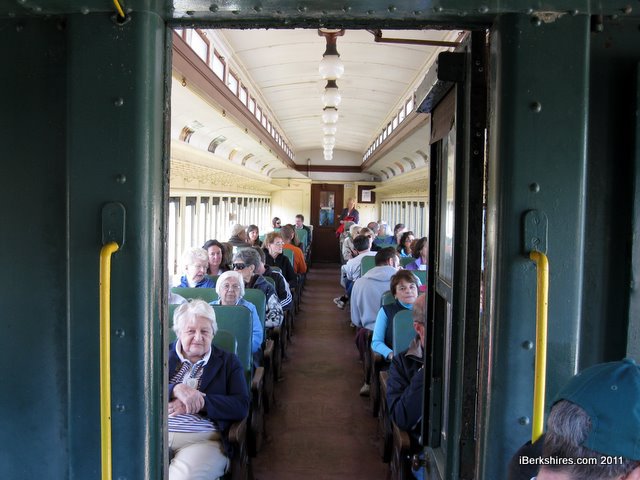 More than 16,000 people traveled the scenic rail to Stockbridge and back. |
An easement that would allow the popular scenic train rides from Lenox to Stockbridge on the Housatonic Railroad Co. line has not been renewed, leaving the museum sidetracked.
Berkshire Scenic cannot use the freight line without the state Department of Transportation. MassDOT says Housatonic won't negotiate; Housatonic officials won't say why the train rides are "no longer possible."
"Their response has been that it is not possible to run the trains and we don't know why," Pamela Green, the museum's events manager and attorney, said last week. "Up until this recent development we always had a great relationship with the Housatonic."
Use of the tracks dates back to 2002, when MassDOT secured an easement to operate on the track and in turn granted the Housatonic Railroad $3 million to maintain them. The state then picked the Berkshire Scenic Railroad, established in 1985, to operate passenger rail on the tracks. In 2010, the state and Housatonic renewed the agreement and again Berkshire Scenic Railroad was chosen to operate.
Housatonic spokesman Colin Pease said the company did not want to release the details of why it is no longer negotiating.
"The easement with the commonwealth and the operating agreement with Berkshire Scenic Railroad expired on December 31, 2011. Housatonic Railroad has determined that continued operation by Berkshire Scenic Railway on Housatonic-owned track is no longer possible," Pease said in a statement last week.
MassDOT Press Secretary Sara Lavoie said on Wednesday the state has tried to negotiate with the railroad company but to no avail.
"MassDOT has been working diligently to bring both the Housatonic Railroad and the Berkshire Scenic Railroad to the table to negotiate a continuation of the easement that has existed for nine years. At this time the Housatonic has made it clear to us that it is unwilling to negotiate," Lavoie said in a statement.
"MassDOT values the public-private relationship it had with the Housatonic and has offered letters of support for the railroad's two most recent federal TIGER grant applications. MassDOT is supportive of the non-profit work of the Berkshire Scenic group and recognizes the Scenic as a significant tourist asset for the region."
Green said the nonprofit operates "in the black" every year and has never been cited for a safety violation that could lead to Housatonic's reluctance to continue the operation. Lavoie's statement echoed that sentiment.
"For MassDOT, safety is our No. 1 priority. No evidence of safety violations with the Berkshire Scenic's operation has been presented to us. We are disappointed that we have been unable to reach an agreement," Lavoie said.
It was about this time of the year in 2010 when the state and Housatonic finalized the extension, so the lack of agreement did not initially worry the museum until Housatonic issued the "definitive" statement, Green said.
She added that the museum has been in communication with the railroad urging it to finalize the easements.
"The last time they were communicating more with us," Green said. "We are a little bit powerless in it though. All we want to do is make it available to the public."
The museum owns the former Lenox railroad station and will offer short rides on its own property but the 90-minute trips to Stockbridge that had become a major part of the operations will be gone.
Meanwhile, Housatonic Railroad is still eyeing about $200 million in federal and private funds to revive passenger rail service from Pittsfield to Danbury, Conn.
Tags: passenger rail, railroad, railway,