Pittsfield Bar's License Suspended After Police Raid
 |
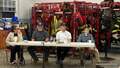
"This has been nothing but a troublesome bar," opined board Chairman Carmen C. Massimiano Jr., following presentations from both the Pittsfield Police and attorney Peter Sullivan, who spoke on behalf of Hermann Alexander's owner Mitchell Grossjung.
Police Lt. Michael Grady told the board the April 27 search warrant raid followed an extensive six-month investigation by members of the Pittsfield Police and Berkshire County Drug Task Force.
"The investigation revealed that the bar served as a retail center of cocaine distribution, where not only customers could purchase cocaine from a number of cocaine dealers, but also a place where these dealers could be resupplied with cocaine," said Grady.
According to Grady's report, Grossjung and his employees "allowed the drug dealing to occur, assisted in the distribution of cocaine, and used the drug while they were working at the bar."
Grady stated that many of the alleged cocaine traffickers they believe have operated out of the tavern have been identified as members of the "Bloods" street gang. Multiple methodologies were used in gathering information about alleged drug activities inside the establishment, including purchases by undercover informants, photo and video surveillance outside, and wiretaps of suspected cocaine dealers. Photos of other violations, such as patrons drinking outside the bar as well as urinating from its steps, were provided to the Licensing Board, and police say they have more photo and video evidence of drug transactions taking place directly in front of its doors.
Evidence gathered lead to a search warrant issued by Berkshire Superior Court, during which police found plastic packaging they claim are indicative of cocaine sales. Corners of plastic bags that local law enforcement refer to as "dealer blowouts," which are used to hold small amounts of cocaine, were allegedly found on the floor and hidden within bathroom ceilings.
Though no cocaine was seized from the location itself, Grady said separate raids at the homes of alleged cocaine dealers believed to be operating out of the bar yielded seizures of more than 160 grams of cocaine.
At the time of the raid, Grossjung was only charged with gambling violations relating to cash payouts from two video poker machines in the establishment, though Grady said the "investigation is ongoing, and additional charges will be forthcoming."
Photos of other violations, such as patrons drinking outside the bar as well as urinating from its steps, were provided to the Licensing Board.
|
"None of these controlled cocaine purchases are alleged to have taken place directly from Mr. Grossjung," he said.
Sullivan noted that Grossjung had only recently taken over operation of the bar from his father, almost exactly one year prior to the raid. "No one is disputing that the activity there under dad was less than commendable," Sullivan said, and that Mitchell Grossjung was "attempting to change the culture" there, but that this would take time.
The board said because of the bar's checkered past, it was hard to look leniently on the infractions being reported. They are not limited to the cocaine dealing but also include, police allege, the aforementioned gaming violations as well as patrons drinking outside and the sale of store-bought alcohol at the bar.
"This establishment has not been without prior issues," said board member Robert Quattrochi, indicating that the owners had been before the board for violations each year for the past four.
"This is not a bar that has been abused," said Massimiano, adding that the "city has made every effort" to work with the business.
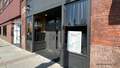
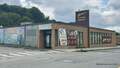
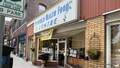
The Lyman Street establishment has been a source of frequent law enforcement issues and previous warnings by city authorities. Previous owner Glenn Grossjung, Mitchell's father, was frequently brought before the Licensing Board to discuss violations. In March 2008, the bar was the site of a non-fatal shooting incident stemming from a fight that broke out earlier at Pepe's (now known as Johnny's Beach Club) on Wahconah Street. A video of taken of the victim, Jeffrey Paris, immediately after the shooting briefly went viral on YouTube before being removed by its poster.
About a year ago, the Licensing Board approved a transfer of management and stock from the elder Grossjung to his son Mitchell, at which time Massimiano told him, "This is not a place unknown to us. There is a lot to take care of."
Since then, the bar was cautioned by the board in November 2011 for a fight that occurred outside around 2 a.m., at which time the younger Grossjung was cautioned about the need to "run a tighter ship."
The Licensing Board voted unanimously to impose a 60-day suspension on the bar, which has continued in operation since the April 27 raid. The board expects that continued investigation by local law enforcement and the state Alcoholic Beverages Control Commission will yield additional information and may result in a more permanent determination.
Tags: drugs, licensing board, liquor license, raid, suspension,