Halfway Through SNAP Challenge, Berkshire Delegation Raising Awareness
|
William "Smitty" Pignatelli has already begun rationing his supplies. |
PITTSFIELD, Mass. — Halfway through the SNAP challenge, the Berkshire delegation is surprised with the amount of discussion it has triggered.
"If there has been any surprises, it is that I didn't expect to hear the personal stories," said state Rep. Tricia Farley-Bouvier on Thursday. "It makes it more real and brings it close to home. These are people I consider my peers who have experienced hunger."
The county's four state representatives - Farley-Bouvier, Paul Mark, Gailanne Cariddi and William "Smitty" Pignatelli - and state Sen. Benjamin Downing teamed up this week to take the challenge.
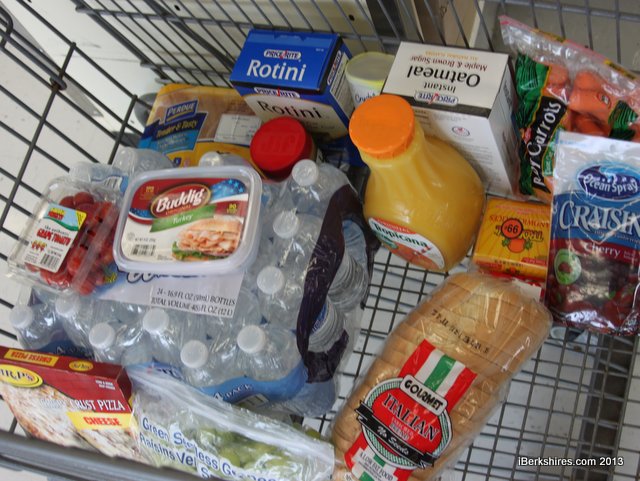
This week the Legislators are eating only on the average Supplemental Nutrition Assistance Program (formerly food stamps) disbursement in an attempt to shine light on poverty issues.
Farley-Bouvier shopped for a family of five with a budget of $127 while the others shopped for themselves on a budget of $31.50. On Monday they all shopped for the week and with only those provisions are going about their work week.
"The biggest challenge is thinking that I'd like to have something else but knowing that I can't," said Cariddi.
On Thursday, she was running late to a meeting outside of the state house so she hadn't had a chance to finish eating. By the time she started on her way back, she felt like she couldn't even walk because she grew to be so hungry.
Another challenge for all of the politicians is finding time to cook the meals.
"Right now I don't know when I am going to get home and normally I would eat something on the road," Mark said. "It's been harder with the time constraints but it wasn't so bad having the food itself last."
While the mission was to spread awareness, both Mark and Cariddi said they learned a bit more about themselves already. Mark is now well aware of the amount of money he spends dining out and Cariddi has rediscovered her cooking skills.
"It's refreshing in my mind that I can cook. It is just finding the time to prepare and finding the time to clean the kitchen afterward," Cariddi said.
Before this week, each Legislator never concerned themselves with rationing their food or planning meals days ahead.
"I've never thought so much about food in my life," said Pignatelli. "But this little gesture we're making is what people go through every day of the year."
But their struggles are paying off, they said, because it is spreading the awareness they hoped to create.
"This has sparked a conversation and that was our goal going into this," Downing, who is running low on cereal and expecting to eat oatmeal to finish out the week.
Each member of the delegation has been hearing from people through Facebook, Twitter and on the street about the issues. From other struggles with poverty to difficulty eating healthy while on the benefits to more control of the program, it has gotten people talking.
Downing said that the problems caused by hunger and poverty extend into educational and health systems and they are hearing about those problems too.
Every where they've gone - particularly meetings with hors d'oeuvres or other snacks are being served - a conversation inevitably arises.
Cariddi, who used part of her allotment on a share from a Community Supported Agriculture farm, said she is even explaining what CSAs are to her colleagues from the city.
"Its helping people come to understand some of the terminology," Cariddi said.
On Monday their week will be over and they can go back to their regular lives but they will know a little bit more about the issue.
"It's been a real learning experience," Downing said. "You realize pretty quickly how razor thin the margin is."