MassDOT Lays Out Plan For MassPike Tolls
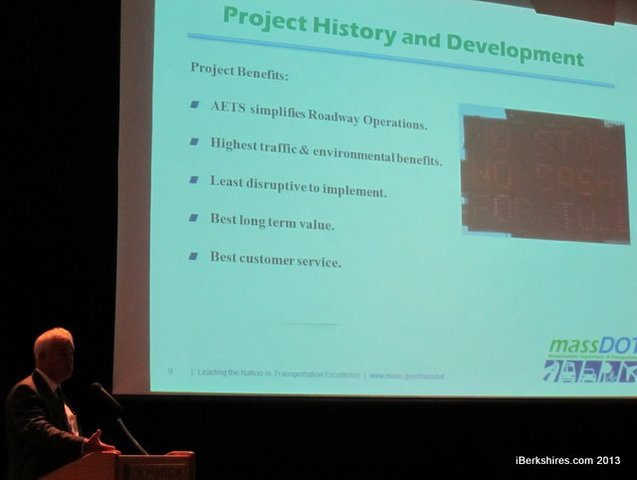
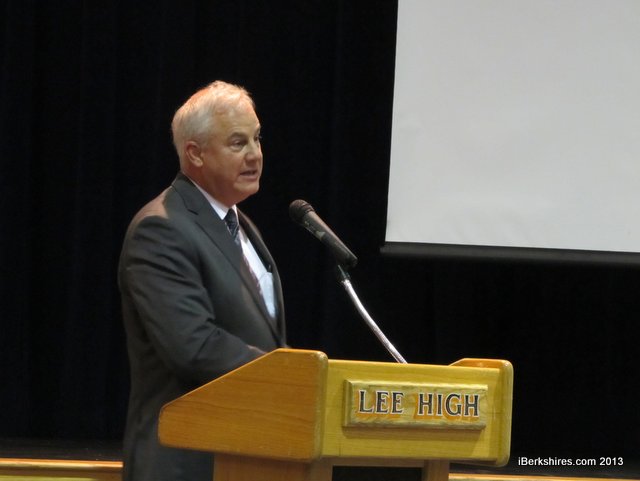 MassDOT Highway Administrator Frank DePaola explained the tolls to a small crowd at Lee High School on Tuesday. MassDOT Highway Administrator Frank DePaola explained the tolls to a small crowd at Lee High School on Tuesday. |
LEE, Mass. — Jennifer Thompson works in the operating room of Baystate Medical Center so getting to work on time is important.
It doesn't make sense for her to use any road other than the Massachusetts Turnpike to commute from the Berkshires.
When the tolls are reinstated between Exits 1 and 6 on Oct. 15, she's going to have to pay a few bucks every day. She, along with many others on Tuesday, told state Highway Administrator Frank DePaola that she would like some type of discount.
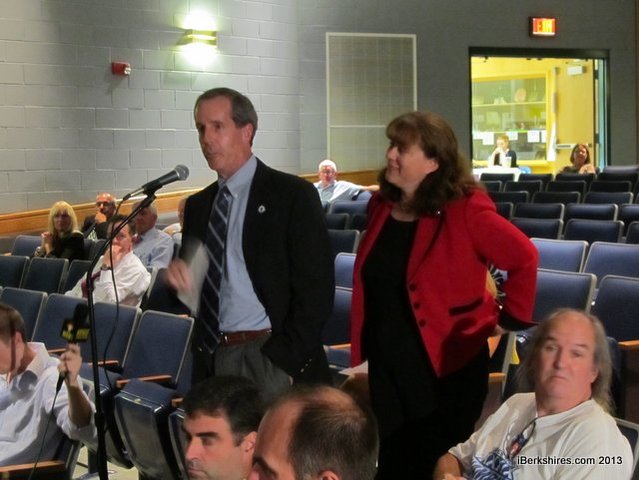
"I agree with [Reps.] Smitty [Pignatelli] and Tricia [Farley-Bouvier] about a discount for people like me," Thompson said at one of two public hearings the state is holding about the tolls. "I need to get there. I need to do my job."
She was one of a dozen local residents at Lee High School who came to share their opinion on the tolls.
According to DePaola, the reinstatement of tolls will generate an additional $12 million in revenue — all earmarked for improvements to the MassPike between exits 1 and 14. That money will be added to the $18 million currently budgeted for repairs in that section — bringing a total of $30 million each year.
DePaola said there is more than $160 million in backlogged capital improvements, including 113 miles of resurfacing at a cost of $11 million, $9 million in guardrail improvements, $123 million in bridges and $30 million in drainage culverts that are deteriorating under the road.
An engineer estimated that the state needs to invest $45 million in each of the next five years to really dig into the backlogged work, he said. DePaola says he is working with the Legislature to find an additional $15 million each year to follow the engineer's recommendation.
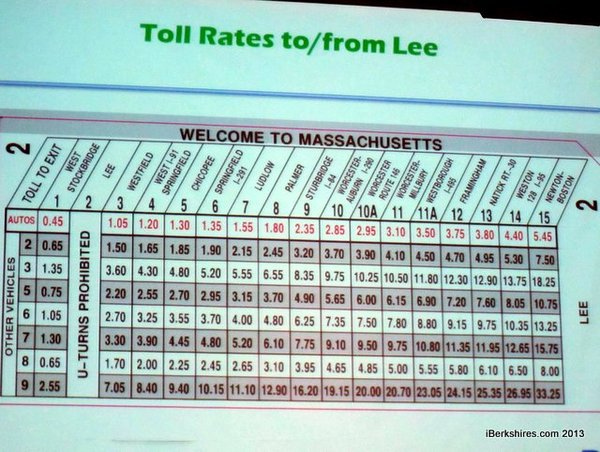
But for now, DePaola is in the process of proposing the rate structure for the tolls and he is currently looking to bring them back to the 1996 level, when the tolls were removed.
"We feel it wouldn't be fair to factor in an increase," he said. "We're just going back to the way it was when they were removed."
But there are a lot of people like Thompson who live here while working in other parts of the state who will have to pay. Led by Pignatelli, many are callng for a discount for Berkshire residents.
"My concern is with the people who live in the Berkshires and need to travel outside of the Berkshires," Pignatelli said. "We've become a very mobile society."
Larry Ward, of Dalton, says the turnpike is a "lifeline" for his job in construction when work can be in any part of the region and Arlene Schiff of Lenox takes the MassPike to her work in West Springfield.
Pignatelli says his office has drafted legislation that would provide a discount but he asked DePaola to consider doing that administratively. DePaola says the only resident discounts on highways were created by an act of the Legislature but he will work with Pignatelli to craft that law.
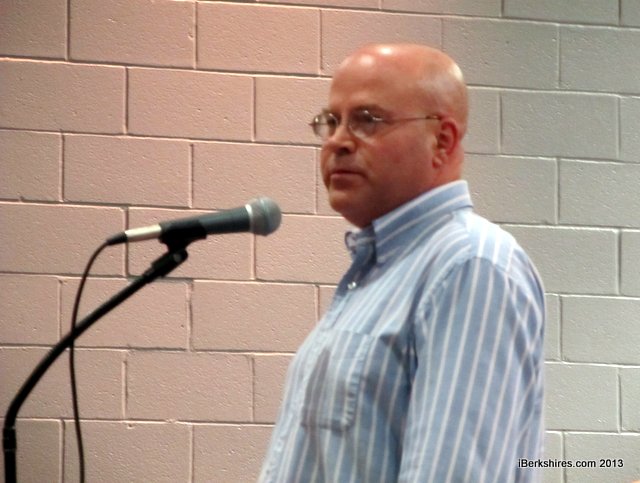 A dozen or so residents attended the hearing. A dozen or so residents attended the hearing.
|
Discounts seemed to be the only major concern for local officials. Berkshire Regional Planning Commission Executive Director Nathaniel Karns said county planners have been wanting the tolls back to address the failing infrastructure since 2003.
"Just look at the rust on the bridges and it is easy to tell that we've got some significant issues," Karns said, adding that the 60-year-old bridges have lasted "longer than they expected to."
Since toll revenue can be spent on any project from the New York border to Exit 14, other residents voiced concern that the funds won't end up being spent on repairs to this part of the state.
"Tolls collected here in Lee could fund work in Marlborough. However, what we are trying to demonstrate here and at the meeting in Springfield is that there is far and above enough need for investment just in the segment between 1 and 6 that the equivalent of all of the dollars we collect will be invested back into this segment of road," DePaola said. "People can be assured that the vast amount of dollars they spend in the coming years will be invested back into these roads."
Others, however, questioned if the funding could come from somewhere else.
"We don't trust you. We've heard these stories before," said Great Barrington resident Patrick Fennell. "There are a lot of things that can be cut to save $12 million without having to do this."
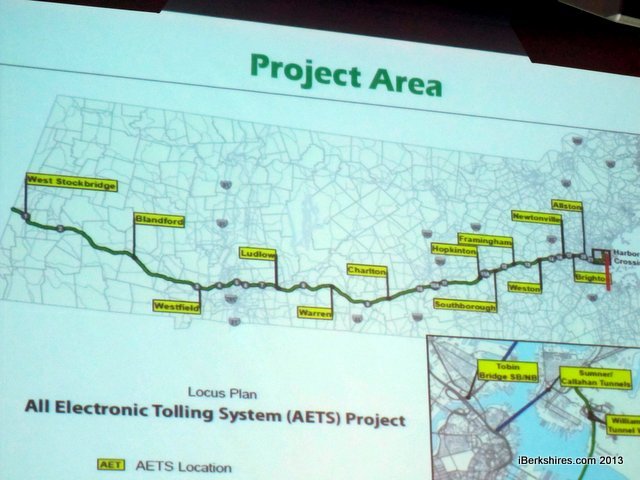
The tolls between Exits 1 and 6 return on Oct. 15 but in a separate procurement, the state is looking to change the locations of the tolls as well.
DePaola said the plan is to eventually install automated systems above the roadway. The systems will read transponders from those who sign up for EZ Pass or just photograph the driver's license plate and bill them later. In the farthermost west area, there will be tolls at Exit 1, in Blandford and between Exits 4 and 5, he said. That change is expected in July 2016.
"We are also advancing a project to change the way we collect tolls on the highway," he said. "When we implement that the toll locations will be different. There will not be tolls at the entries and exits. The tolls will be measured on the straightaways."
Tags: MassPike, state officials, toll road,