North Adams Hospital Installs New MRI Scanner
Print Story | Email Story
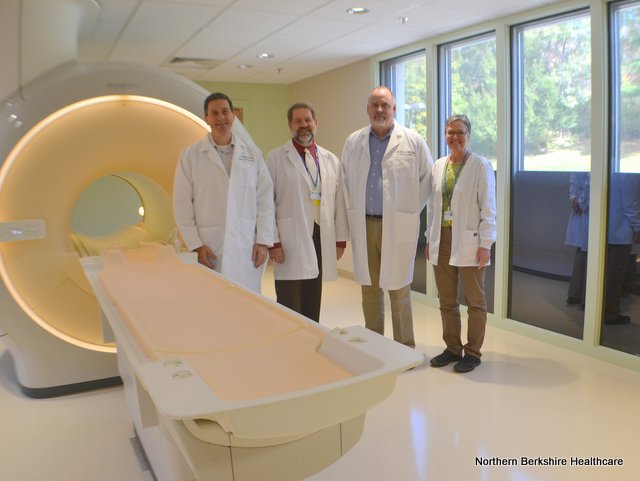
NARH Chief of Radiology Dr. Jeffrey Bath, left, lead technologist William Bourbeau, radiologist Dr. Brian McElaney and technologist Ann Connors with the recently installed large-bore MRI unit.

NORTH ADAMS, Mass. — North Adams Regional Hospital has installed the region's first large-bore high field magnetic resonance imaging (MRI) unit.

The Philips Ingenia system is designed to perform high-quality MR scans with a high level of patient comfort. The large-bore design makes Ingenia less confining than other MRI systems, and can reduce exam time.

The community is invited to an open house to learn more about the new unit on Wednesday, Nov. 6, from 4 to 7 p.m. at the hospital. The open house will include free refreshments and raffles.

"We're very excited to introduce this new service to the region," said Dr. Brian McElaney, a radiologist at NARH who is leading the MRI project. "The Ingenia MRI incorporates break-through technologies designed to deliver exceptional image clarity, and the wide opening can accommodate patients of varying size and physical condition. It is a more attractive option for many people. I expect that many patients will find this a better experience."

The unit can accommodate weights up to 550 pounds.


"The Ingenia image quality is excellent and it's fast," said McElaney. "The Ingenia gives our radiologists and referring physicians access to the high-quality images they need to make informed diagnoses for many different problems. Our patients will experience fast, quality exams in a comfortable environment."

NARH constructed an addition to its Medical Imaging Department to house the new unit, which was installed on Sept. 16. The new addition features large windows looking out onto a wooded area nearby. NARH began performing scans with the Ingenia on Oct. 7.

MRI technologists include Bill Bourbeau and Ann Connors, both of whom are registered in MRI by the American Registry of Radiologic Technologists. Both have more than 20 years experience in the field.

To learn more, visit www.nbhealth.org or call the NARH Medical Imaging Department at 413-664-5279.


Tags: medical,   NARH,   
If you would like to contribute information on this article, contact us at info@iberkshires.com.

Letter: Williamstown Should Adopt Ban on Sewage Sludge Land Application

Letter to the Editor

To the editor:

This year, Williamstown Town Meeting will be considering whether to adopt a new bylaw that would prohibit the land application of sewage sludge or sewage sludge-derived products (biosolids). The ban would apply to land application of sludge and biosolids to farmland as a soil amendment or to home gardens where store bought compost may contain biosolids. The intent of this bylaw is to protect farmland, water sources, food crops and ultimately animals and people from PFAS contaminants.

PFAS are per- and polyfluoroalkyl substances, a group of "forever chemicals," and are linked to health issues like cancer, liver damage and immune system dysfunction. They enter wastewater systems through residential, commercial and industrial sources. Conventional treatment processes are largely ineffective at removing them. As a result, PFAS pass through treatment systems into surface waters or accumulate in sewage sludge/biosolids.

Most states and the federal law have been slow to regulate this activity. The EPA's January 2025 Draft Sewage Sludge Risk Assessment identified human health risks associated with land-applied biosolids containing as little as 1 part per billion of PFAS and yet federal law does not yet impose limits on PFAS in biosolids.

A growing number of states are adopting a range of regulatory and monitoring strategies. Maine is the only state so far to impose an outright ban on land application of biosolids from wastewater treatment plants, while Connecticut has banned the sale of biosolids containing PFAS for land application. In New York State, at least two communities, Thurston and Cameron, have banned the land application of biosolids.

At this time, we don't know of any farms in Williamstown that currently use biosolids. But we also don't know the future of the farms in our community. Biosolids can also be found in some commercially bagged compost. While this bylaw would not ban the sale of these products, we hope it will raise awareness and encourage our residents and local vendors to find biosolid-free products for use.

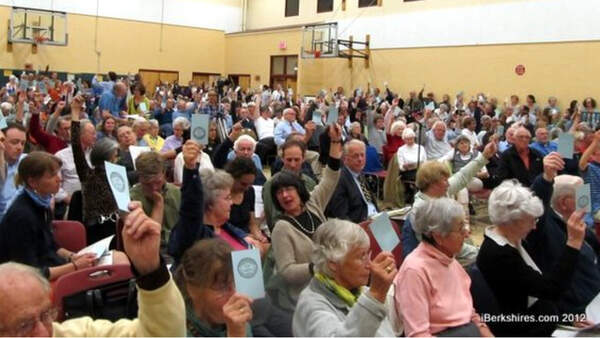
Let's keep our lands safe for our children and future generations. Williamstown's Select Board, Agricultural Commission, and the Board of Health recommend adoption of this article. We hope you will support this article on May 19, 7 p.m. at the town meeting at Williamstown Elementary School.

Stephanie Boyd
Sharon Wyrrick

Williamstown, Mass. 


View Full Story

More Williamstown Stories