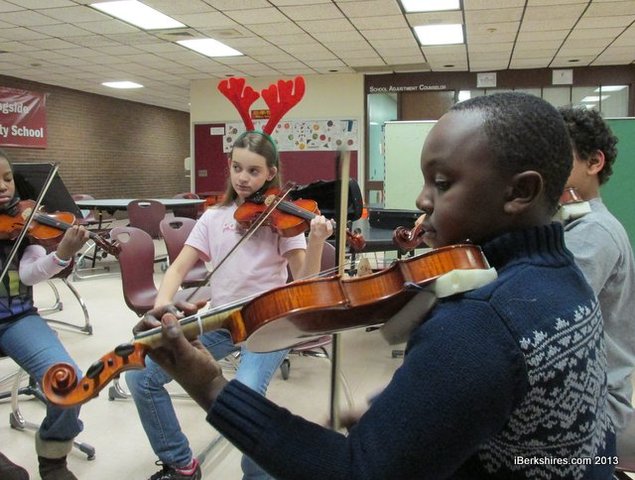
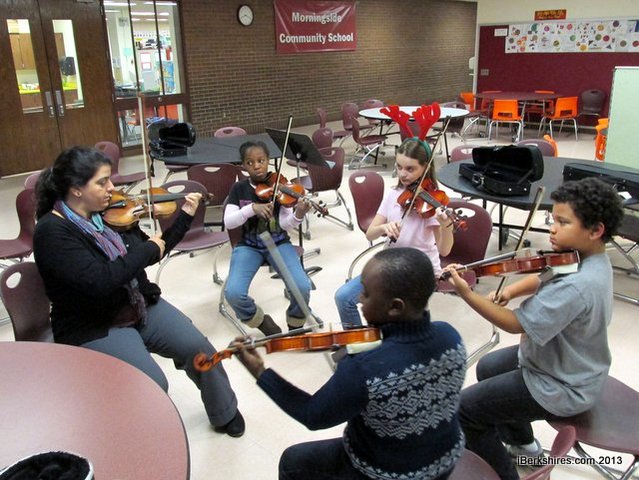
Pittsfield After-School Program Instills Pride Through Music
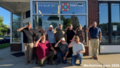
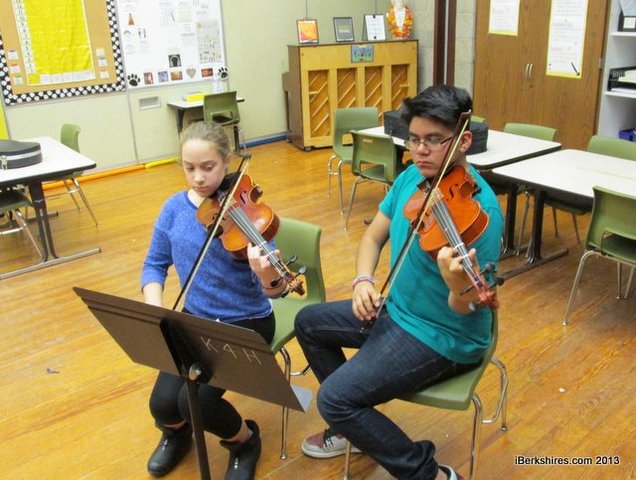
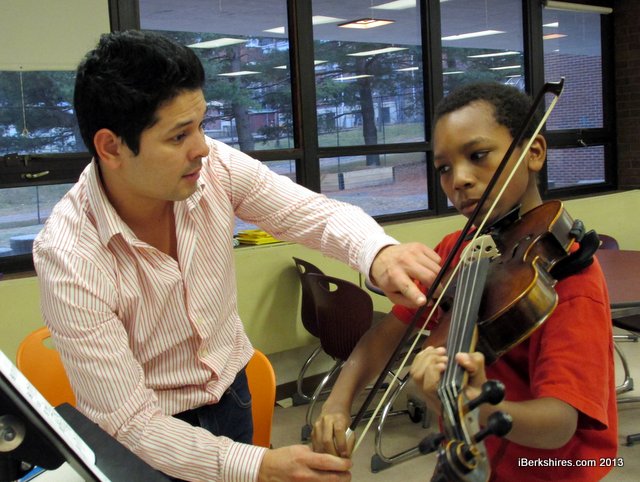 Jorge Soto, on the left, is one of three people who went through the el sistema program and are now teaching music to students at Morningside. Jorge Soto, on the left, is one of three people who went through the el sistema program and are now teaching music to students at Morningside. |
PITTSFIELD, Mass. — Music can change the world.
That's what the directors of Berkshire Children and Families' Kids 4 Harmony program believe.
The program, in its second full year, is free, after-school music lessons for the children in Grades K-7 and its goal is to change the families, the community and the city for the better.
"The whole idea is that it is strengthening families and the community," said Alicia Stevenson, the program's artistic director. "These kids are going to be stronger in every way."
Five days a week, for two hours a day, the students learn string instruments. The teachers are demanding and ask a lot of the children — they ask them to "strive for musical excellence," according to teacher Simon Brown.
The idea is to get children dedicated to music, show them where that dedication could take them and, in the end, it will instill a sense that hard work at anything will pay off, Brown said. In just a short time, the students can see their improvement and are getting better and better alongside their peers, he said.
"Anyone can pretty much do anything and our program shows that," Brown said. "If we didn't demand the best playing, the best posture, it would undermine the social aspect."
Nine-year-old Leila Paredes said teachers certainly do ask a lot. But because of that, the program is more fun each year.
"I think it's amazing. It's getting more advanced and it's more fun when it gets more advanced," she said prior to her lessons on Tuesday.
Paredes is one of 16 students in the advanced class and one of about 50 overall in Kids 4 Harmony. The directors are hoping to build the program more and have a full orchestra in a few years.
Currently, students are learning stringed instruments but directors want to expand into other instruments in the future, which could raise the debate among the beginners to a new level.
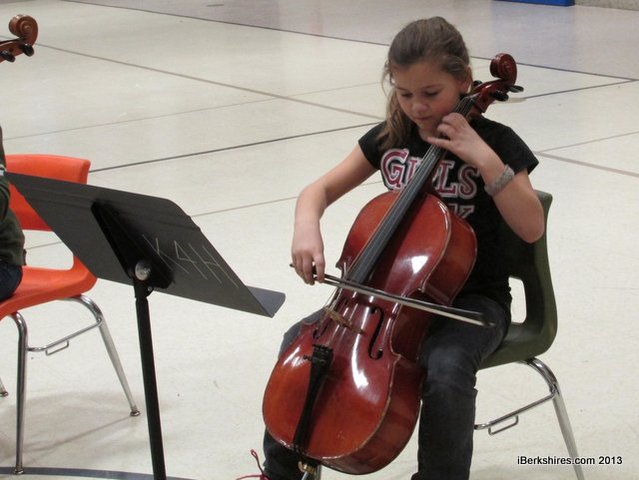
First-grader Jason Sosa prefers the cello because of its low sounds and the notes while 7-year-old Jayniyah Bedford prefers the violin.
"I like the higher sound so I picked the violin. It sounds better," Bedford said.
Third-grader Natalie Mendez votes for the cello saying, "it's cool. It has low and high strings" and "it's a nice big instrument." While first-grader Bella Maisonneuve likes them both, she leans toward the cello.
"I just like instruments so much," Maisonneuve said.
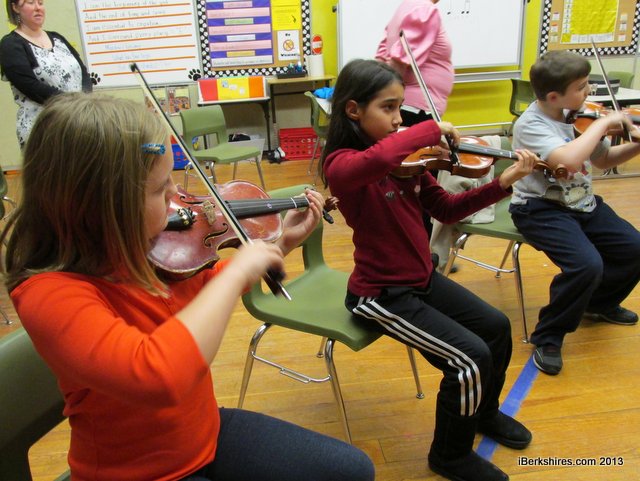 The students are broken into classes by skill level. The students are broken into classes by skill level. |
For the teachers, it isn't about the instruments. It is about giving the students something to have pride in and something to strive for. The program is based on the Venezuelan "el sistema" program that formed more than 30 years ago and now provides free lessons to more than 500,000 students. That program focused on providing the lessons in poor socioeconomic environments.
"Its a social movement," said Jorge Soto, a Wheaton College music teacher who helps with Morningside's program twice a week.
Soto went through the Venezuelan program starting when he was 9 years old. He came from what he says is one of the most dangerous neighborhoods in his city and if it wasn't for music, his whole life could have been different.
"Anything could have happened if it wasn't for music," Soto said, adding that he spent much of his childhood hanging out with friends from conservatories instead of those in his bad neighborhood. "I feel very lucky."
Leaving Venezuela at the age of 21 and earning his master's degree, Soto is still part of the el sistema program but this time, conducting and teaching. A private donor earmarked funds to bring Soto and two others who went through el sistema to the school.
"We're trying to pass on what we did in Venezuela to the students and the teachers here," Soto said.
The Morningside program has partnered with other el sistema groups and have done recitals in Boston, at Harvard University in Cambridge, and the children can perform with some of the biggest names in the field. The recitals often include "side-by-side" opportunities for the children to perform with members of conservatories. Meanwhile, the teachers are trying to connect the students with local music programs to continue their craft.
"We're trying to give the kids many opportunities," said Stevenson.
Its that opportunity that caught 10-year-old Azaiyah Bedford's attention. He remembers seeing his brothers play at the Berkshire Museum and wanted to do it too. So he joined. While it may have been the limelight that attracted him, it is his friends in the program that have kept him there.
"It's fun because I know everyone," he said.
As more and more children are discovering the program, directors are having trouble keeping up. Stevenson said there are currently 18 people on the waiting list but the organization doesn't have the resources to incorporate them. She hopes next year the waiting list will be eliminated. Additionally, the school is seeing more and more students school-choice into Morningside to be part of it, she said.
Kids 4 Harmony is currently funded by private donors with music shops gifting or providing significant discounts on rental equipment, families donating old instruments and private donations.
"Right now it's been through private philanthropy," said Nikki Lother, special assistant to the president at Berkshire Children and Families — the organization heading the program.
Kids 4 Harmony was brought to Morningside by Berkshire Children and Families as way to become more proactive in helping children and the community.
Tags: after school programs, Morningside, music,