Three Resign From Williamstown Affordable Housing Committee
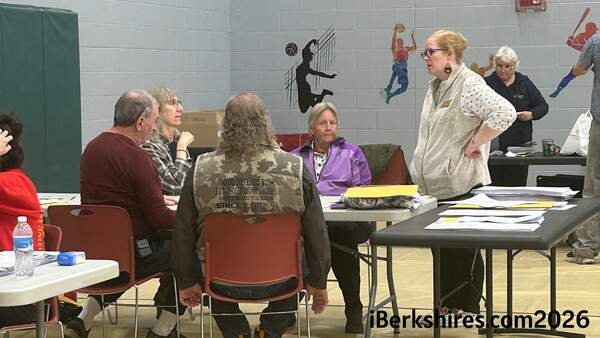
 Affordable Housing Committee members, from left, Cheryl Shanks, Catherine Yamamoto and Charles Bonenti each tendered a resignation this week. |
WILLIAMSTOWN, Mass. — Two days after the Board of Selectmen declined to follow the recommendation of the Affordable Housing Committee on the development of two town-owned properties, three members of the committee have submitted their resignations.
Chairwoman Catherine Yamamoto, Vice Chairman Charles Bonenti and Secretary Cheryl Shanks each have resigned their positions on the committee, Town Manager Peter Fohlin informed the remaining five committee members in an email on Thursday.
Shanks sent her resignation to Selectmen Chairwoman Jane Allen in an email time-stamped 10:15 Tuesday evening, while the board's meeting was still in session. Allen said Thursday night she received copies of letters from Yamamoto and Bonenti dated April 17.
Allen said neither Yamamoto or Shanks specified a reason for their departures, but Bonenti directly cited Tuesday's Board of Selectmen vote.
" 'The Board of Selectmen's decision on April 15 to reject the unanimous recommendation of the Affordable Housing Committee to fully develop two town-owned sites ... is in my opinion timid and short-sighted,' " read Bonenti's letter, as read by Allen in a Thursday telephone interview. " 'It is a decision the town will regret. Since I cannot support it, I cannot in good conscience continue serving on the Affordable Housing Committee.' "
Allen said she appreciated all the service all three departing members of the committee gave to the town.
"Charles has been working on affordable housing perhaps the longest, although Cathy and Cheryl have worked for a long time, too," said Allen, who has sent replies to all three resigning members but has not had a chance to speak with any of them.
"You know, because you go the meetings, the commitment they made and the time and energy that goes into it."
Shanks' resignation was effective immediately, according to her email, Allen said. Effective immediately also are Shanks' resignations from the Williamstown Historical Commission, the Mobile Home Rent Control Board and the position of fence viewer.
Both Yamamoto and Bonenti gave an effective date of April 25.
Yamamoto, the recipient of the town's 2013 Faith R. Scarborough Community Service Award (largely for her work on the affordable housing issue) also resigned from the town's Affordable Housing Trust.
A week ago Thursday, the AHC unanimously recommended the Selectmen enter into negotiations with Boston's Arch Street Development on a plan to build subsidized housing on two brownfield sites: 59 Water Street and 330 Cole Ave.
On Tuesday night, after a lengthy deliberation that included testimony from Yamamoto and Bonenti, the Selectmen voted 3-2 to choose the only other proposal the town received from its request for proposals to develop the sites.
Instead of picking the two-site plan that proposed up to 85 units of housing that the AHC favored, the Selectmen went with a proposal that only uses the Cole Avenue site and proposes up to 46 units of housing.
On Wednesday, Yamamoto issued a statement on behalf of the committee praising the chosen development team (the Women's Institute for Housing and Economic Development and Berkshire Housing), thanking the Board of Selectmen for its "careful attention to the issue" and affirming the committee's commitment to work toward a successful development.
At Tuesday's meeting, both Yamamoto and Bonenti told the Selectmen that while the committee was impressed with the Women's Institute/Berkshire Housing proposal, the panel recommended the Arch Street plan because it maximized a scarce resource — buildable land near town water and sewer.
"We know the people at Berkshire Housing and the Women's Institute," Bonenti said on Tuesday. "I've known [BHDC CEO] Elton [Ogden] for more than 20 years. It's hard to go against people you know you can trust. Arch Street, an equally reputable firm, could provide more fully for the town's current and future needs.
"[Arch Street's proposal] fully utilizes the scarce resources we have left for affordable housing. We will be happy in the years to come that we provided affordable housing where we could for future generations.
Bonenti also argued that the Women's Institute/Berkshire Housing conceptual drawing of a single, three-story building would not be in keeping with the character of the Cole Avenue neighborhood.
"I don't see that as a family housing model," he said.
Attempts to reach the three resigning members of the committee and the senior remaining member of the committee, Van Ellet, were unsuccessful Thursday night.
Tuesday's vote marked the second time in seven months the Selectmen went against the board-appointed Affordable Housing Committee.
Last summer, at the request of the AHC, the Selectmen submitted a formal request to the town's Conservation Commission to consider releasing all or part of the town-owned Lowry and Burbank properties to use the land for the development of affordable housing.
But four weeks after making that request, the Selectmen voted to withdraw it on Aug. 12, 2013.
In the last few weeks, members of the Affordable Housing Committee have repeatedly referenced the idea that the Cole Avenue and Water Street sites were the only places left where the town would allow subsidized housing.
Fohlin's email to the remaining committee members asked them to continue the AHC's work.
"Forty-six units of much needed affordable housing is far from a reality at 330 Cole Avenue, and much work remains to be done," Fohlin wrote. "The need for neighborhood outreach by trusted members of our community is clear. We all want this new housing to lift up the neighborhood and the town. Both support and oversight of WIHED/BHDC will be necessary to assure the best possible outcome for future residents of 330 Cole Avenue. Community support for multiple funding sources will be crucial. You who have dedicated years of your life to affordable housing know as well as I the challenges we have chosen for ourselves."
Allen, one of three members of the five-person Board of Selectmen to vote against the recommendation of the Affordable Housing Committee, said it was a difficult decision and that Fohlin's letter to the remaining committee members was "outstanding."
"I think we have important work to do on affordable housing," Allen said. "If those members are willing to stay on and work on it, it would be great."
Tags: affordable housing, resignation,