BMC Closes on North Adams Hospital Property
 Berkshire Medical Center is now the owner of the former North Adams Regional Hospital and its campus. |
NORTH ADAMS, Mass. — Berkshire Medical Center closed on the bankrupt properties of Northern Berkshire Healthcare on Friday.
BMC, as outlined in the bidding process through U.S. Bankruptcy Court two months ago, paid a total of $4 million — $3.4 million for the hospital campus and NBH's fixed assets and $600,000 for the Northern Berkshire Family Practice building.
The Pittsfield-based medical center, part of the Berkshire Health Systems family, has been operating an emergency satellite facility at the former North Adams Regional Hospital since May.
While North County residents have advocated for the restoration of a full-service hospital, BMC officials have consistently stated that any further services are largely dependent on the results of a health-needs report.
"We are awaiting the release of the Stroudwater report, which will be part of Berkshire Medical Center's decision-making process as we move forward with the future use of the former NARH property through the establishment or restoration of services that are financially sustainable over the long term," BMC spokesman Michael Leary said on Tuesday.
The survey by health consultants Stroudwater Associates, being funded through the Federal Office of Rural Health Policy, Health Resources and Services Administration, is expected to be released soon.
"We're very pleased with the work Stroudwater's done, in particular in the way that they've gone about the process to really involve a lot of the community," Secretary of Health and Human Services John Polanowicz said at last week's opening of an assistance center for those left jobless by the health system's closure.
State health and Stroudwater representatives have been meeting with shareholders, from businesses to medical services, including a public forum, to gather input.
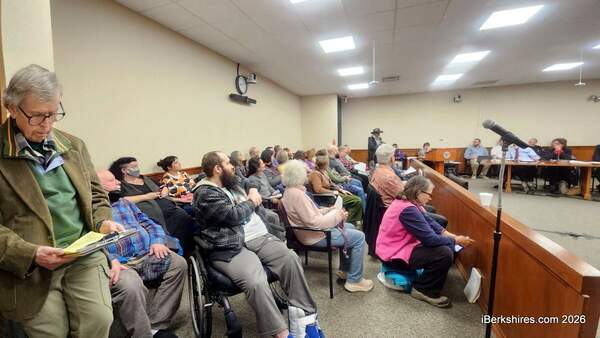
One or more public information sessions are planned at the completion of the survey. The hospital advocacy group that's been meeting weekly is asking the report be made available prior to any Stroudwater sessions to give people time to digest it.
There's concern the report will be a fait accompli — supporting strategies already embraced by BMC.
"It's very important that this report not be seen as a report for BMC," said James Gander, a representative with the Massachusetts Nurses Association, last week. "There is going to be a lot to discuss."
The group presented Polanowicz on Wednesday with a letter requesting the wide dissemination of the report as soon as possible.
The secretary took the request under advisement and indicated he would like to confer with Berkshire Health Systems President David Phelps.
His comments created some confusion last week over BMC's role in the survey; while BMC was a participant, the survey was commissioned by the Department of Public Health State Office of Rural Health in partnership with the Massachusetts Hospital Association, according to information provided by HHS.
Polanowicz said BHS had been a great partner in stepping in to provide emergency services and will continue to be a significant factor in medical services delivery.
"They are going to use the results of that Stroudwater survey to really scope out what kinds of services are going to be here," he said. "I don't know if it will be a full-service hospital but they will be looking at the kinds of services."
Mayor Richard Alcombright expected the report to be "very thorough and reflective" in offering guidance on what is needed and how to provide it.
"This is not going to be a stagnant, sit-on-the-shelf report," he said.
The mayor declined, however, to back a resolution approved by surrounding towns calling for the restoration of the hospital until seeing what Stroudwater recommended.
BMC stepped in two months after the hospital's abrupt March closure to provide 24-hour emergency care. In addition to what is being called "BMC North," the health system has expanded Berkshire VNA & Hospice by hiring NBH's visiting nurses, and has assumed responsibility for the Northern Berkshire Family Medicine and Northern Berkshire OB/GYN practices.
"We most recently restored outpatient imaging services, and have in the past two weeks expanded the availability of MRI scanning at the Northern Berkshire campus from three days per week to four days per week, Mondays through Thursdays," Leary said. "We are continuing to seek federal licensure for restoration of mammography testing, which we expect to achieve in the fall."
Whatever BMC does provide — a full-service or a smaller entity on par with its 25-bed Fairview Hospital in Great Barrington — it has to be able to survive in the new health care matrix.
"One of the critical things is that whatever services are provided here, they're sustainable," said Polanowicz.
Tags: BMC, health care, health center, NARH,