Clark Unveils 'Whistler's Mother' on Saturday
|
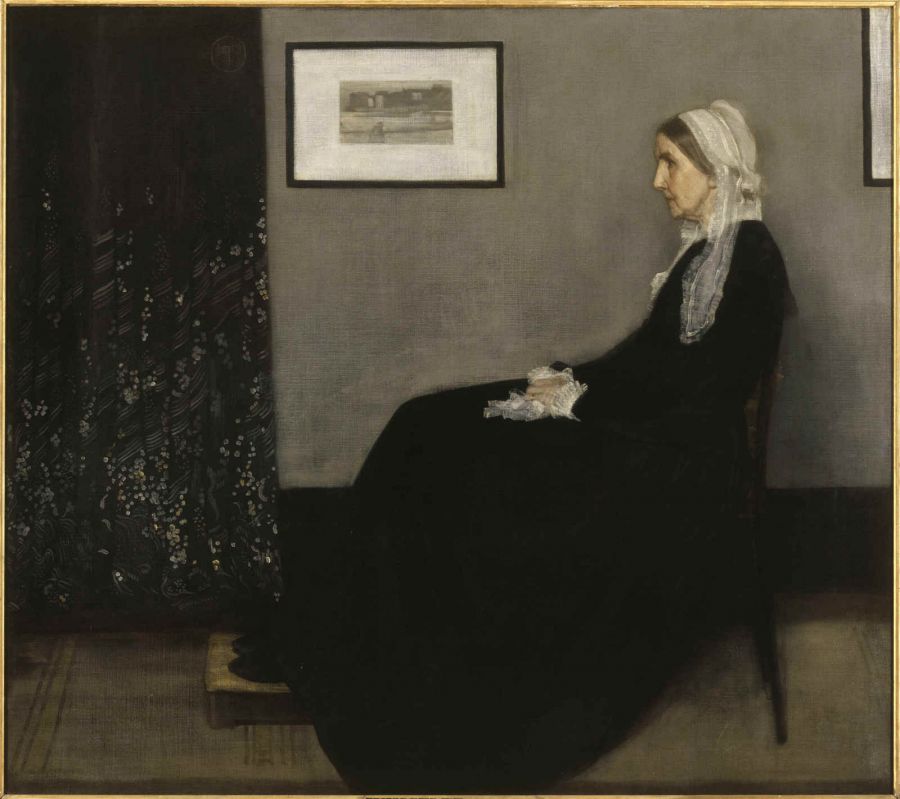
'Arrangement in Grey and Black, No. 1 (Portrait of the Artist's Mother)' by James McNeill Whistler is seen in this image courtesy of the Clark Art Institute. |
He got something better.
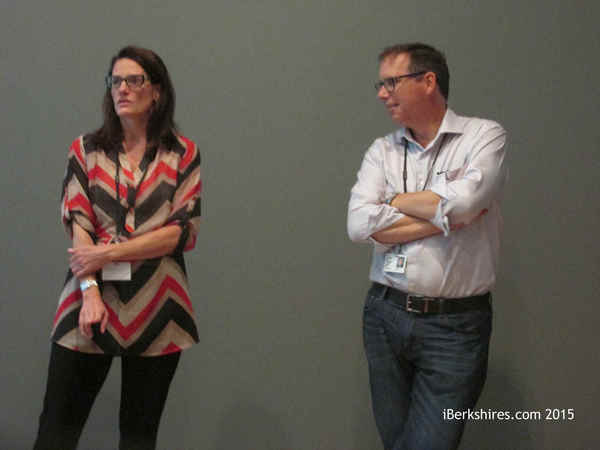
The retitring director on Thursday morning met with the media to talk about "Whistler’s Mother: Grey, Black, and White," which opens at the Clark on Saturday, July 4.
The show is centered on James McNeill Whistler's "Arrangement in Grey and Black, No. 1 (Portrait of the Artist's Mother)," as the work was formally titled, and puts the iconic painting in an historical context.
Conforti wanted that context to play out a little differently when the show was conceived for the Lunder Center at Stone Hill.
"We wanted this exhibition about the influence of 'Whistler's Mother' in terms of American popular culture," Conforti said against the backdrop of the massive (64-by-57 inch) portrait on loan from Paris' Musée d’Orsay. "I envisioned cookie jars and memorabilia, and it would be a shock to go from ['Whistler's Mother'] to that. That's all I did, and all of a sudden the show comes up and it's the most beautiful show I've seen at Stone Hill."
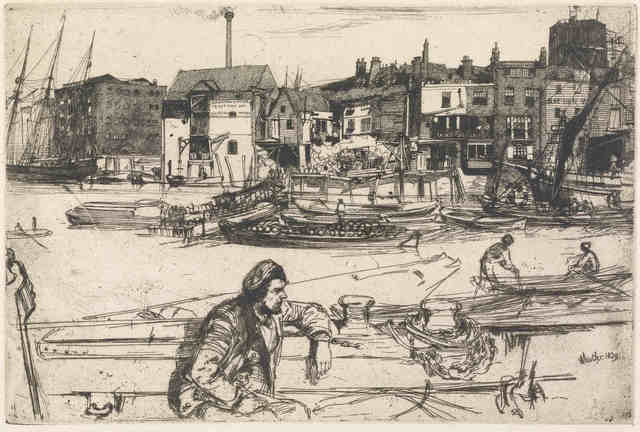
Curated by Manton Curator of Prints, Drawings and Photographs Jay Clarke with assistance from Carey Powers and Ashton Fancy, "Whistler's Mother" devotes nearly half of the Lunder Center space to two works: "Arrangement in Grey and Black," which dominates the space, and "Black Lion Wharf," an etching on paper on loan from the Lunder Collection at Colby College.
"Black Lion Wharf" is significant because it is the Whistler work depicted in the background of "Whistler's Mother." "Whistler's Mother" is significant because, well, it's "Whistler's Mother."
Painted in 1871 by the American expatriate, it became a national sensation on this side of the Atlantic when it came here on loan at the height of the Great Depression in 1932.
"Remember, that was a time of great instability in the world," Fancy said. "This painting came to be seen as a symbol of American strength and stability and American values."
How that symbolism arose and changed over time is the subject of the third of three rooms across the hall from the centerpiece "Arrangement in Grey and Black" gallery.
The other two rooms exhibit lesser known portraits by Whistler and small prints depicting his surroundings in London called "nocturnes."
Both the nocturnes and, later, a panel with comments from 1930s Museum of Modern Art Director Alfred Barrr, explain that, for Whistler, works like "Arrangement in Grey and Black" were less about the subject than the form.
“By using the word ‘nocturne’ I wished to indicate an artistic interest alone, divesting the picture of any outside anecdotal interest which might have been otherwise attached to it," Whistler said. "A nocturne is an arrangement of line, form and colour first."
In another quote, Whistler puts the form/subject dichotomy this way: "To me it is interesting as a picture of my mother; but what can or ought the public do to care about the identity of the portrait?”
Today, everyone knows Anna McNeill Whistler, depicted so memorably in her black mourning garb and white cap. But as Clarke reminded her audience on Thursday morning, knowing the image is not the same as experiencing the original.
"When we took it out of the crate ... of course we knew what 'Whistler's Mother' looked like, but to be in front of this painting is a completely different experience when you see it up close," she said.
The Clark is open daily in July and August from 10 a.m. to 5 p.m. Admission is $20, free for members, children under 18 and students with valid ID.
Tags: Clark Art, Williamstown,