Alumni Keep Memory of Long Closed Lenox Boys School Alive
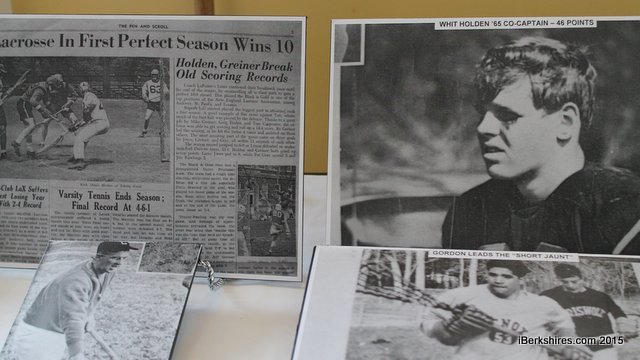
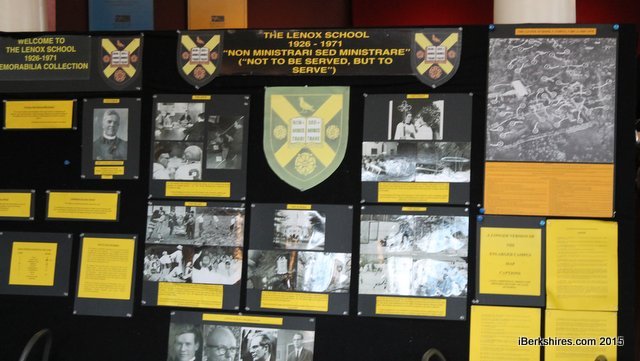
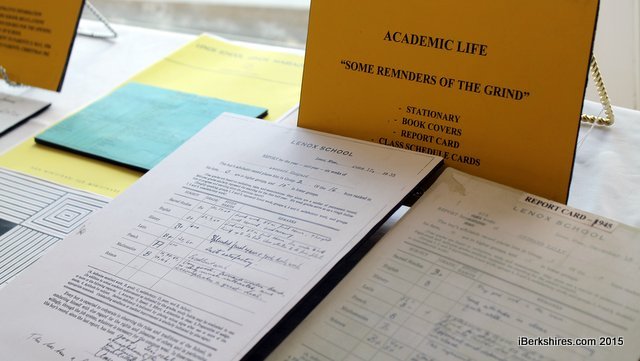
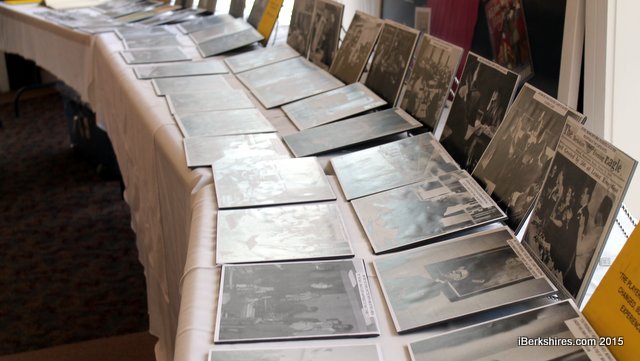
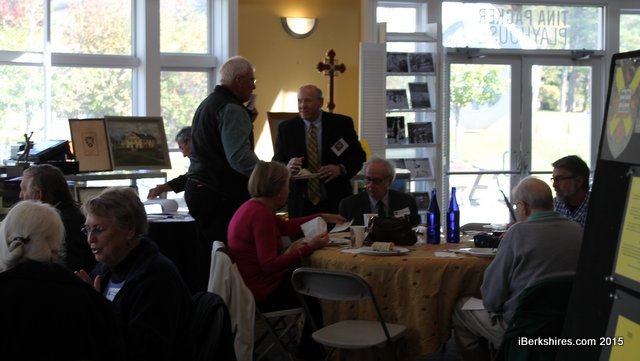
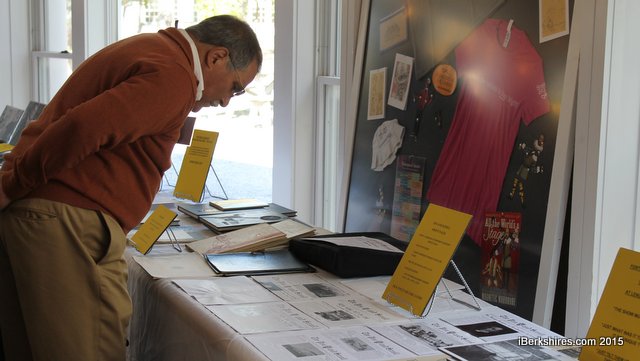 Graduates can browse an array of items saved from the school including editions of the school newspaper, photos from plays, and other reminders of students' time there. Graduates can browse an array of items saved from the school including editions of the school newspaper, photos from plays, and other reminders of students' time there. |
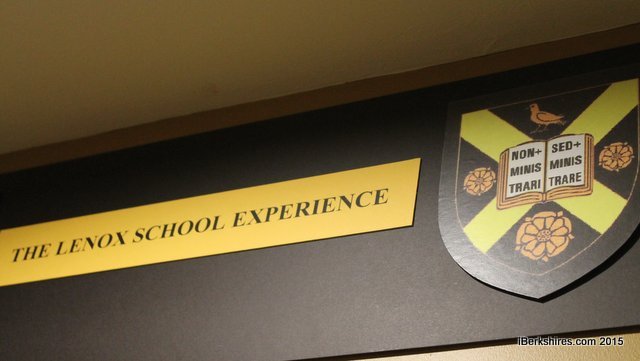
That's Latin for "not to be served, but to serve," a motto instilled in hundreds of young men who attended the former Lenox School for Boys.
That principle continues to live on even though the school closed 45 years ago.
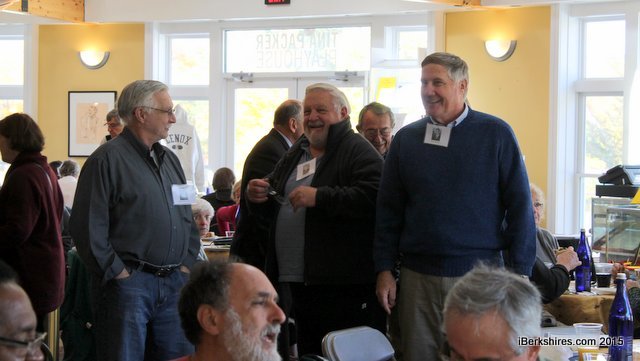
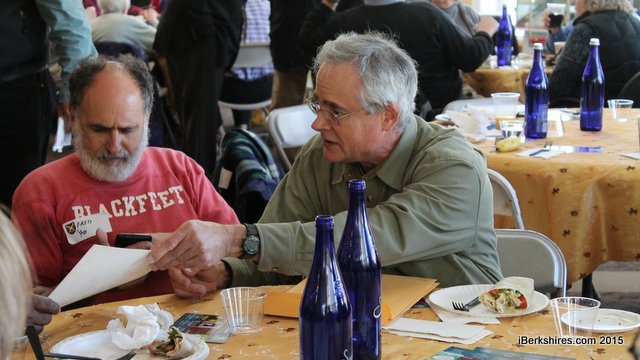
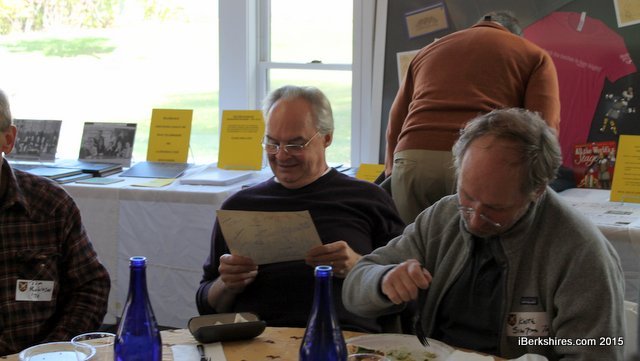
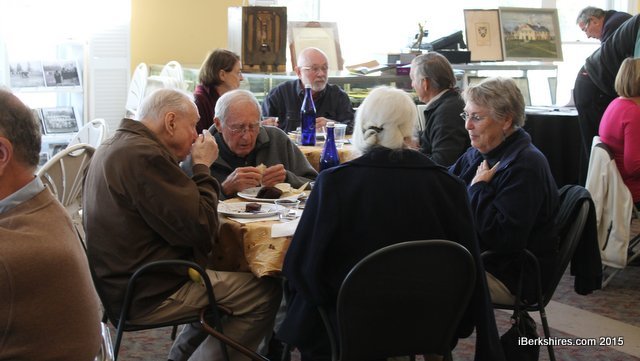
On Saturday, 115 people attended the annual alumni reunion dinner, the largest total since an alumni association was formed to preserve the memory of the all-boys boarding school.
"That camaraderie we developed transcended time. We have that strong sense of what we called the 'Lenox School experience.' Many of us followed different pursuits but all of us have this same reverence for what was provided to us while we were here," Lenox School Alumni Association President Bob Sansone said on Saturday during a luncheon among graduates and their families.
"I think the common bond of that was the masters and the instruction we got when we were here that went beyond the academic. We lived with these people. That was our family,"
The school was founded in 1926 by the Episcopal Church of New England. A study performed by St. Mark's determined that there were not enough education options for boys from modest families.
"The upper-class boys had good options but there was nothing good for boys from families of modest means," Randy Harris, the association's historian, said.
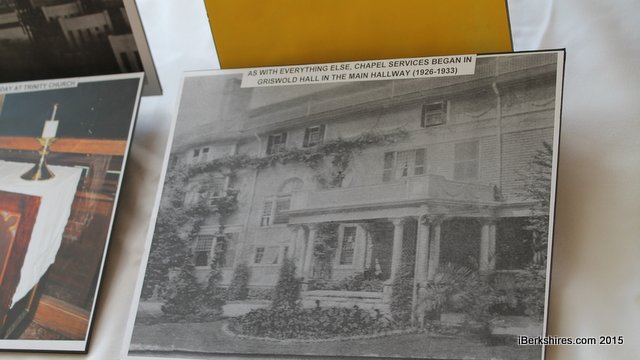
Parishioners of Trinity Episcopal Church raised $78,000 to buy Sunnycroft Estate on Kemble Street to start the school, which would not have an endowment but would still manage to offer a multitude of scholarships to help working-class families afford tuition.
"It was three buildings plus the huge estate building, which was a 30-room mansion," Harris said. "The school started with 40 students and four faculty."
The secondary school operated under the English style of education and added more students each year. As Kemble Street property owners sold or passed on their land, the school grew to some 100 acres, spanning most of the street.
"In the heyday, there were 240 students with 28 faculty and 17 staff. That was the zenith. In the Depression they had problems and then World War II it went down. They had difficulties after World War II because they had to accept professors of less quality. All of the normal professors were in the military so the reputation of the school dropped a little. The enrollment in the years immediately after the war until about 1951 suffered a little," Harris said. "From 51 on, it continued to grow."
It was built on a "service model" and in keeping costs down, the students who lived and learned there were all given jobs. Harris said the operations instilled a dignity for manual labor and held the student accountable for caring for their living and learning facilities.
Sansone said the close connection between the staff, who spent endless hours with the students, and the lessons about personal responsibility stood out about the way the school operated.
"The connection for me, that's what I can speak of best but I think partially hits everybody else, was the sense of dedication, duty and service. When we were here, we all had jobs. Whether you were on scholarship or not, you had a job to do. You were either a waiter in the dining facility, had to take care of the mail, cleaning dorm rooms," Sansone said.
But in the late 1960s, all-boys schools lost popularity. The Lenox School had just built a sport center — now the Bernstein Performing Arts Center at Shakespeare & Company — and with many on-campus buildings it became unaffordable. The school graduated its last class in 1971 and that August announced it would close. In 1972, the school tried to stay alive by merging with a military school but that only lasted a year because of low enrollment.
"It was a combination of things. The social times were against all-boys schools. If you look at the schools that survived, they went co-ed. The all-boys schools merged with the nearby girls schools. People didn't want to go to an all-boys school so tuition dropped in two years from 240 to 130," Harris said.
"Now you've got operating expenses to maintain the buildings which becomes difficult. They also built a sports center, which is now the Bernstein Performing Arts Center, and that went over budget by 75 percent of what was estimated. When you add all of those things together, the school had a hard time meeting its operational expenses and the payment on the debt."
This year, the school will have been closed for longer than it was open but the memories and bonds are lasting.
"The whole premise of the school was started on having the young men not only be academically challenged but they also wanted to give them life lessons," Sansone said.
"We had an education that was classical. You have masters, other people called them teachers, who coached us, who took meals with us at the dinner table, who were teachers in the classroom. They were teaching us not just academics and sports but about life in general. These are the gentleman, if anything, we are here to honor. They were selflessly devoted to the school and the students."
The alumni association has 780 active, dues-paying members now and attendance to the slate of events scheduled for one weekend a year continues to grow.
"We have more active alumni than many schools have in existence today," Sansone said. "Lenox School is like the Hotel California of schools. You can check out but you can never leave."
| The alumni association created a video, which it posted on its website, detailing the school's history. |
Once a year, the group holds a full weekend events, including a golf tournament, business meeting, luncheon, a hymn sing, and a dinner.
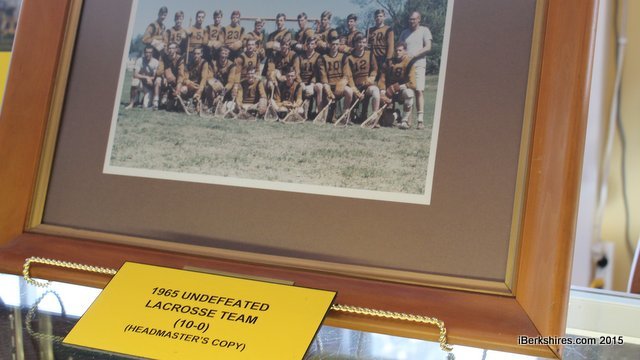
Each year the class celebrating its 50th year gets a spotlight. This year, the class of 1965, which had an undefeated lacrosse team, is in the spotlight.
"Every year we seem to get more and more. The more times people come, the more they keep coming back," Sansone said.
Three times a year, the school's newspaper, the Pen and Scroll, is published and mailed or emailed to association members.
A board of directors meets a few times during the year. And five scholarships are given out each year — two to Miss Hall's School, two to Berkshire Country Day School, and a $1,000 to Shakespeare & Company's youth programming.
"The idea is that we want to impart that motto, if you will, to pay it forward. It keeps the spirit alive," said Paul Denzel, one of the association's founders. "To try to keep the spirit alive, we give away scholarships every year."
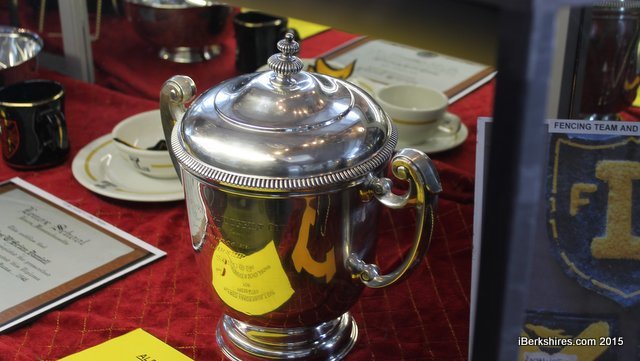
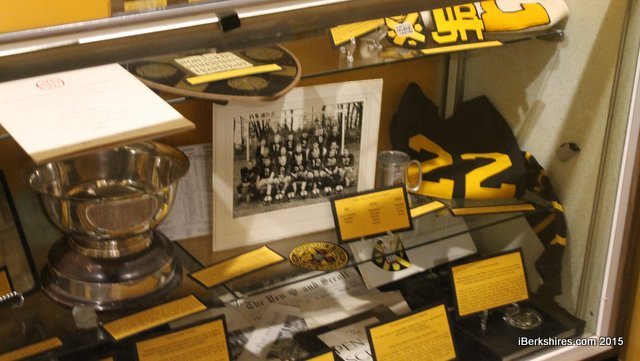
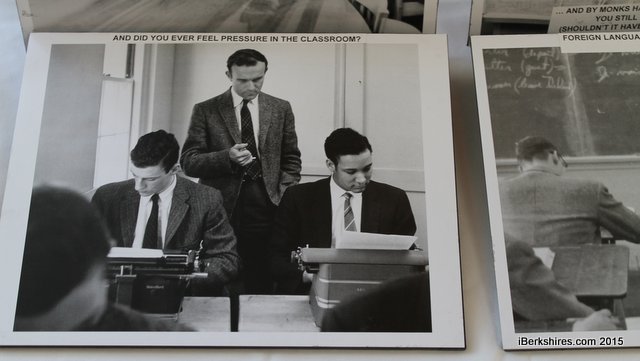
Shakespeare & Company now occupies most of the former campus and stores an array of memorabilia of the school for the association. It permanently displays some of the items and the rest is brought out by Harris each year. From old photos, to yearbooks, to report cards and trophies, those who went to school there have plenty over which to wax nostalgic.
"The mission of the board is to preserve the memory and legacy of Lenox School and to make sure we carry on in the traditions of our motto," Sansone said.
The president said word has been spreading and that this year he received a phone call from a member of the 1937 class who is unable to attend the annual reunion. He said there are two members of the class of 1948 attending. Each year, Sansone sees more new faces.
"We have people who come every year. People who have not come in a while come here and then become part of the core group when they see us here," he said.
The alumni association has a life of its own — it wasn't even formed until 18 years after the school's closing. Denzel said the idea of creating an organization was formed in 1989 and just months later, in January 1990, the nonprofit association was incorporated.
"There was a movement to get the school started again. Somebody had the vision to try to start it and there was a lot of initial enthusiasm and we collected money. What happened was it became obvious that the school restarting was not going to happen. But there was a meeting in my living room and at that meeting it was decided that we can't start the school but we can start and alumni association and that's what we did," Denzel said.
There was some immediate growing pains, Denzel said, as members were divided on where they should put their focus — on preserving the memorabilia or providing scholarships.
But, now things have "gelled" and the association does both in its mission to preserve not just the memory of the Lenox School for Boys but the principles it was founded upon.
Tags: alumni, historical sites, schools,