Mount Greylock School Committee Reacts to Lanesborough Referendum
WILLIAMSTOWN, Mass. — The Mount Greylock Regional School Committee on Tuesday received a sizable donation to the district, heard about the accomplishments of some standout students, discussed the importance of civic education, learned about the school's procedures during a lockdown and got some bad news about a soil remediation project on the district's grounds.
But the conversation, as it always seems to do, circled back to Lanesborough.
Meeting on the heels of Monday's Lanesborough Board of Selectmen meeting, the School Committee was forced once again to confront the possibility that one of Mount Greylock's member towns will take steps to dissolve the junior-senior high school district.
Members of the committee characterized the planned Dec. 1 non-binding advisory vote as "distressing" and "destructive."
But at least one member of the Lanesborough community tried to convince the committee members that the referendum will be a good thing for the district.
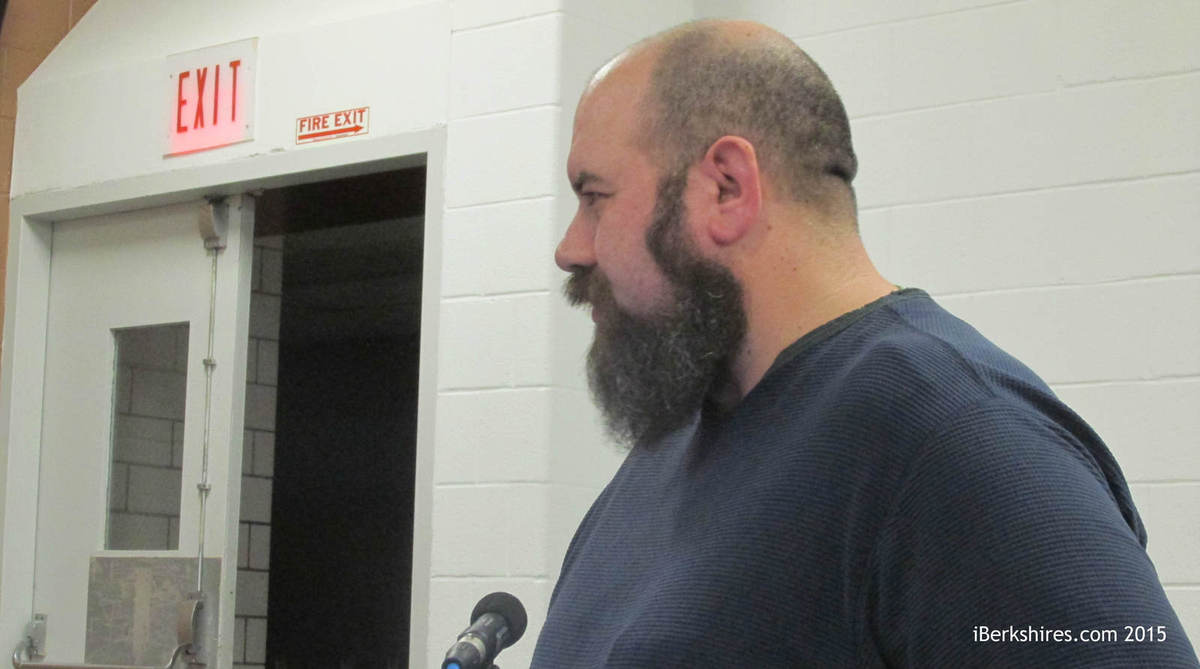
"I can tell you with complete confidence that if a percentage of people [interested in dissolution] exists in the town, they may be in the 10 percent or less area," Curtis Asch told the committee. "The people are not interested in anything other than being committed to this school.
"Every parent at Lanesborough Elementary School wants their children to come to this school. I have spoken to literally hundreds of people in our town."
Asch, a Lanesborough native and Mount Greylock graduate, told the committee he also has been a teacher for 17 years. He himself is a strong supporter of the Mount Greylock district.
"The Selectmen thought it wise to put forth a secret ballot to take the pulse of the town and see if there's any interest in leaving Mount Greylock," Asch said. "The more I think about it, the more I embrace it. The commitment the people of Lanesborough have to this school is not wavering and won't change with the fear of, 'What if the mall closes tomorrow?'
"The people of Lanesborugh want to be part of this school."
School Committee Chairwoman Carolyn Greene, committee members Sheila Hebert (of Lanesborough) and Steve Miller (of Williamstown) and Superintendent Douglas Dias attended Monday's meeting of the Selectmen.
Greene told the committee that she suggested to the Lanesborough officials that instead of holding a non-binding referendum, the town should ask voters a more substantive question: Should the Mount Greylock School Committee begin the process for Lanesborough to leave the district?
According to state law, that vote — if passed — would be the first in a 10-step process for the town's withdrawal. Such a process would include two more town meeting votes as well as the approval of the Department of Elementary and Secondary Education.
Greene reasoned that if dissolution is what the town wants, such a vote could move the process forward, and if it is not what voters want, the issue could be put to rest.
The Selectmen on Monday told Greene they did not think the issue was ripe for such a vote.
School Committee member Richard Cohen of Lanesborough said Tuesday the board's referendum is part of a campaign of "fear, uncertainty and doubt," aimed to derail the school building project.
Cohen noted that over the last couple of years, the Lanesborough Selectmen have voted to spend more than $1,000 on townwide surveys and studies about options for educating Lanesborough's 7th through 12th graders. No such townwide survey ever was done, he said.
"Doing this [special town meeting] survey is just a waste of time and creates what I've before described as FUD [fear, uncertainty and doubt]," Cohen said. "We should, as committee members, encourage them to go forward."
School Committee members expressed concerns that the FUD is already having an effect in the district's other member town.
Wendy Penner of Williamstown told the committee Monday's news prompted several phone calls from her fellow townspeople asking her what to make of Lanesborough's on-again, off-again flirtation with the neighboring Adams-Cheshire Regional School District.
Greene pointed out that the Dec. 1 special town meeting in Lanesborough was prompted by the School Committee's proposed change to the Mount Greylock Regional Agreement — a change that was itself a response to a request from the town of Lanesborough to address perceived inequity in the mechanism for funding capital projects under the current agreement.
"One of the concerns is [in light of Lanesborough's impending vote] Williamstown residents will vote not to support the regional revision, and that vote is next week," Greene said. "It's important to look beyond the politics and conversations going on at the town government level and decide whether it's an equitable agreement, a fair proposal. ... Does it achieve something that will help the building project get passed?
"The whole purpose, from my perspective, was to better enable passage of the [debt exclusion] vote in the spring. Now, we have Lanesborough town government saying, 'We're not sure we even want this.' They asked for something. We were able to provide a revision that accommodates their request.
"It's frustrating, and I do worry that Williamstown voters will say exactly what Wendy is reporting they're saying: Why should we do this?"
Committee member Chris Dodig agreed that the more important issue is the revised regional agreement and its implication down the road for a proposed addition/renovation at Mount Greylock.
"I have more questions than answers about what's going to on at this [Dec. 1] meeting," Dodig said. "One thing I am sure of is that even though it's a compromise, we have a much better chance of passing the final vote if we pass the amended regional agreement."
The ongoing question in Lansesborough intersected with another topic on the School Committee agenda on Tuesday: civics lessons.
Former committee member David Langston and attorney Sherwood Guernsey asked to address the committee about the need for more citizenship study at the high school level.
Cohen said the issue of the Mount Greylock district's future is a teachable moment and encouraged students to vote — if old enough — at this fall's special town meetings and, regardless of their age, advocate for the future of their school.
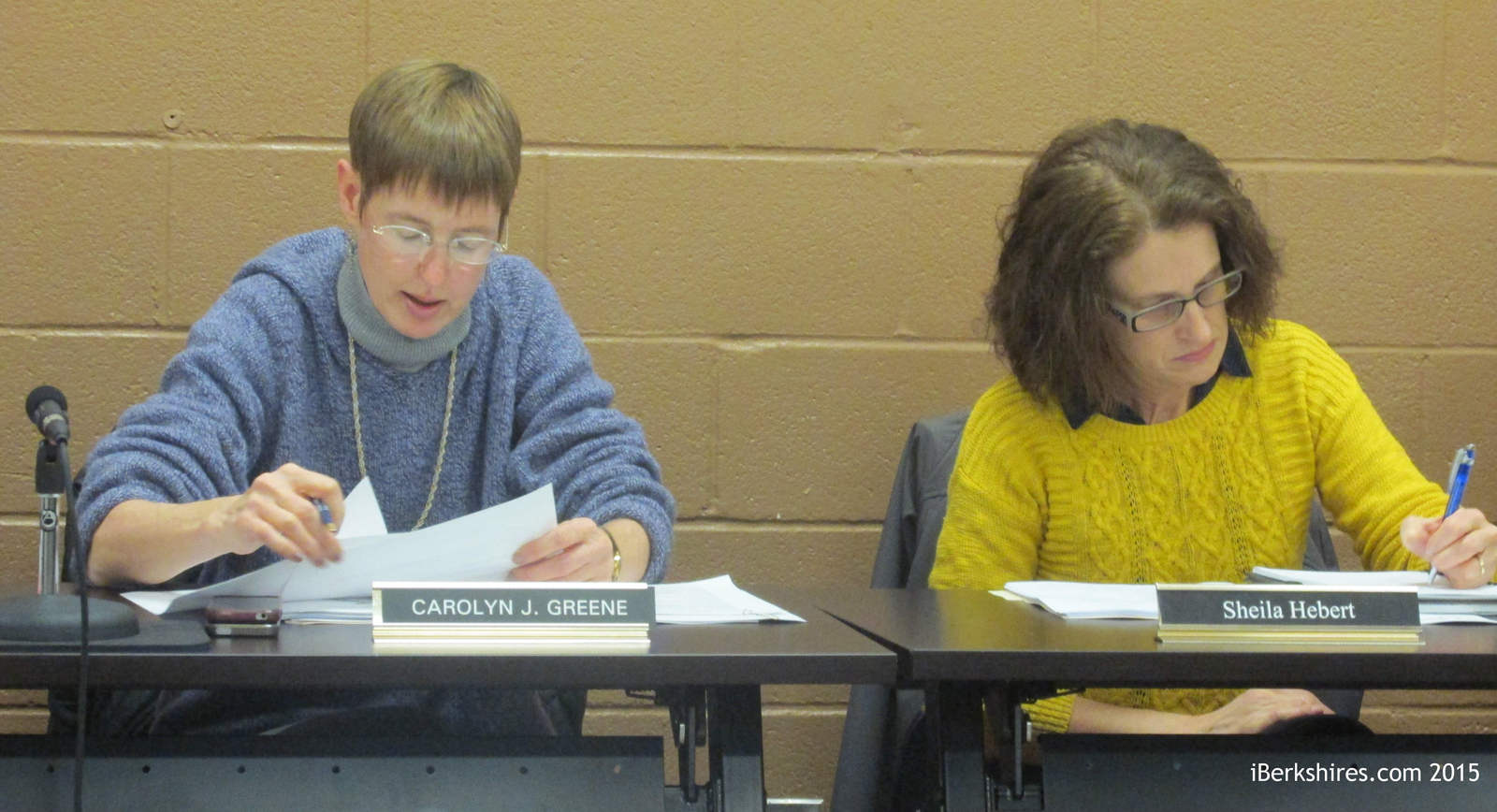
Carolyn Greene, left, and Sheila Hebert were elected to again serve as chairman and vice chairman of the Mount Greylock School Committee.
Guernesey drew on his own days teaching high school civics in northern New Hampshire, where he brought representatives from Students for a Democratic Society and the ROTC into the classroom.
"Anyone who tells you civics is dull and uninteresting is on the wrong track," Guernsey said. "That's an education that I see lacking in our young people today. I hope you would take the time to implement a civics type course."
Langston told the committee that civics education should encourage "engagement, activism and a sense of ownership" of government.
Greene said the committee will revisit the issue with the school's administration at an upcoming meeting when curriculum review is on the agenda.
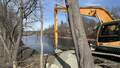
In other business on Tuesday, Hebert, chairman of the Finance Subcommittee, reported that a soil remediation project on the east side of the Mount Greylock campus may be more expensive than previously thought.
The problem goes back to an underground fuel tank and fueling station at the hangar of the airport that occupied the site before Mount Greylock was built.
At a previous meeting, the committee heard estimates that the cleanup would cost upward of $20,000.
"It turns out it's more than that," Hebert said. "There's a possibility it might be $50,000."
EcoGenesis of Pittsfield is working with the district to clean up the contamination, which is large enough to warrant involvement of the federal Environmental Protection Agency.
Dias told the committee that he only heard the contamination was more widespread than feared on Tuesday morning. The district is working to see what cleanup needs to be done immediately and what, if any, work can be spread out to fall in future fiscal years.
"We need to make sure we're budgeting for these types of issues," Hebert said. "We're going to have to watch the [current] budget very close. It's going to be tight."
Tags: Lanesborough, MGRHS, school district, school project, special town meeting,