Vermont Farmers Provide North Adams With Its First Winter CSA Program
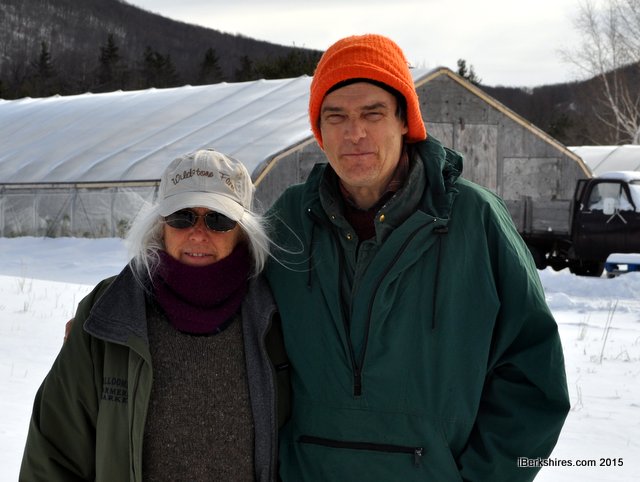 |
POWNAL, Vt. —Normally it is hard to get fresh local produce in the cold winter months, however farmers John and Joy Primmer have managed to push the growing season to its limits.
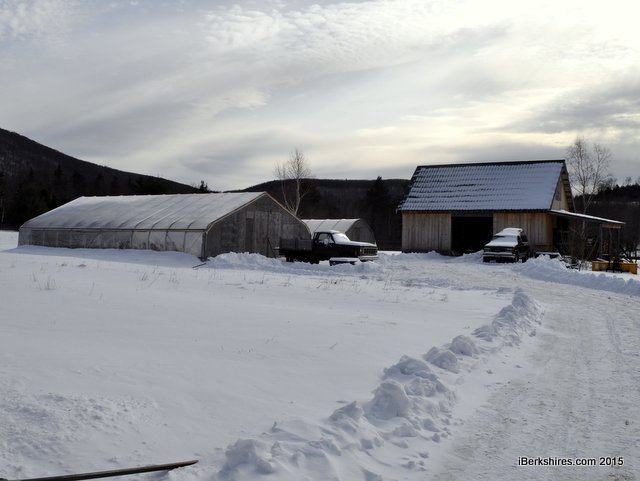
The Primmer's own Wildstone Farm, a 21 acre plot of land in southernmost area of the Green Mountains. Although the farm appears to be in a state of hibernation with snow blanketing it, things are still very much growing. In fact, the Primmers are partaking in their first winter Community Shared Agriculture (CSA) program and delivering fresh produce to North Adams.
"We have done winter farmers markets for three years now with just vegetables from our root cellar, and we have been playing with these high tunnels to see how long we could push the season," John Primmer said. "It's really been nice for us, and I think our customers really like it."
CSA allows people to partner up with and support local farmers in exchange for fresh food. John said individuals interested supply farmers with upfront capitol so farmers can avoid borrowing money and sell directly to people.
"It helps us get started because with farming all your expenses are in the spring," he said. "In return people get guaranteed vegetables at a considerable break from retail price."
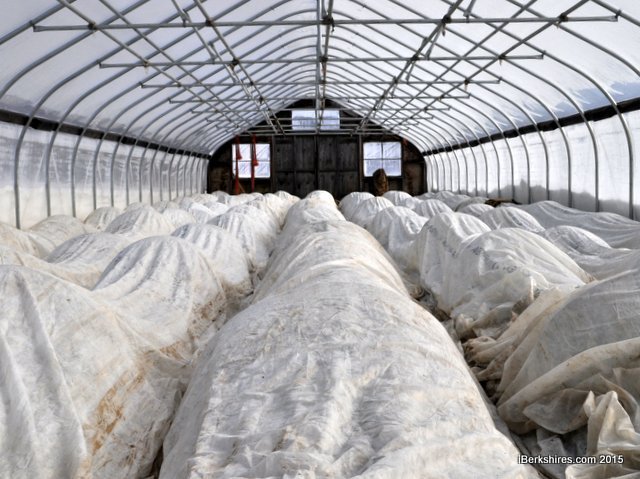
The Primmers are able to harvest during the winter because of greenhouses called high tunnels. Primmer said the basic greenhouse structures are covered with a special plastic that slowly lets infrared energy out which keeps the greenhouses warmer longer. He said winter harvesting has only been in the area for close to a decade.
"We started on a very small scale, mostly for ourselves to extend the season," he said. "Then we made the jump to year round growing which is just a matter of putting in a little more. It's really year round harvesting because you don't do any planting in the winter."
Although the science behind winter growing works, there is still a lot of trial and error involved in the process.
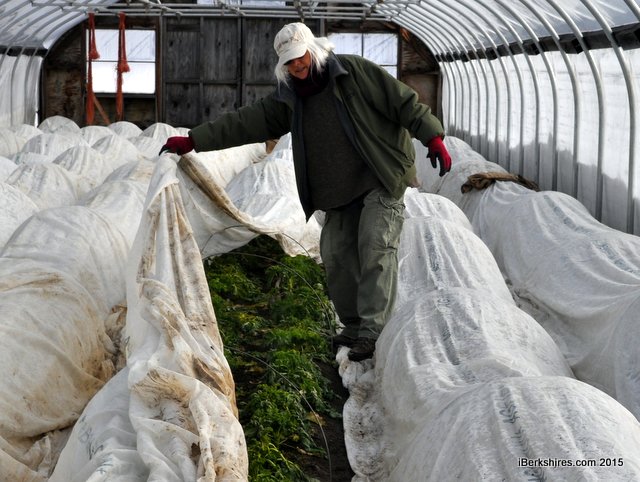
"There is a lot of just playing with different ideas and pushing the envelope. Sometimes it works and sometimes it doesn't, but that is the fun part, trying new things," Primmer said. "It keeps it exciting. This morning inside of the green houses everything was frozen solid, which the first time you see that you are like ‘oh no we wasted all of that time.'
"Then the sun comes out and you lift the inner covers a few hours later and you say ‘oh my God, it's fine.'"
Primmer grow kale, lettuce, winter squash, spinach, Swiss chard, as well as various root vegetables from their root cellar.
The Williamstown natives said they had toyed with the idea of being full-time famers for years.
"My folks were farmers and Joy's dad worked on a farm as a young man so we had agriculture in our background," John Primmer said. "We have always loved gardening and thought maybe we could do this at least as a serious hobby if not a living."
When the Primmers moved to Pownal in 1984 and established their farm in 1989, it was one of Bennington County's original certified organic farms.
"We had been growing organically anyway and it just seemed like the next step," Primmer said. "There is a great organic farm community in Vermont, and we learned a lot when we were just young folks then. It was still pretty new, at least in this area."
They slowly built up the farm and by the early 2000s they went full time.
"We could make a living, and we have had a good journey," Primmer said. "We are both outdoor people, and it seems like a good way to make a living and to make a difference in the world. You definitely have to be in it for the love of it vs the money because it's not the highest paying, but it's been really nice"
The Primmers also partake heavily in farmers markets thorough the area and summer CSA programs.
Primmer said the CSA program means more to them than making a living. He said he thinks they are filling a need in North Adams.
"I know there is a big push, especially in North Adams, to get local food into the system," he said. "We are trying to grow our summer CSA especially in the North Adams area. There seems like there is room for growth."
He said they also donate any surplus produce to the Hoosac Harvest, which provides local food pantries with fresh locally grown food.
Primmer said beyond actually supply people with food, they hope to reconnect people with where their food comes from.
"There is a disconnect. In the past people knew where their food came from," he said. "The connection between farmers and eaters has separated a little. This feels much more satisfying, and it's exciting for us. Gives you a reason to get up in the morning."
More information about Wildstone Farm and their CSA Programs can be found on their website.
Tags: agriculture, community supported agriculture, CSA, farming,