Eclipse Mill Quilt Exhibit Translates LeWitt Into Textiles
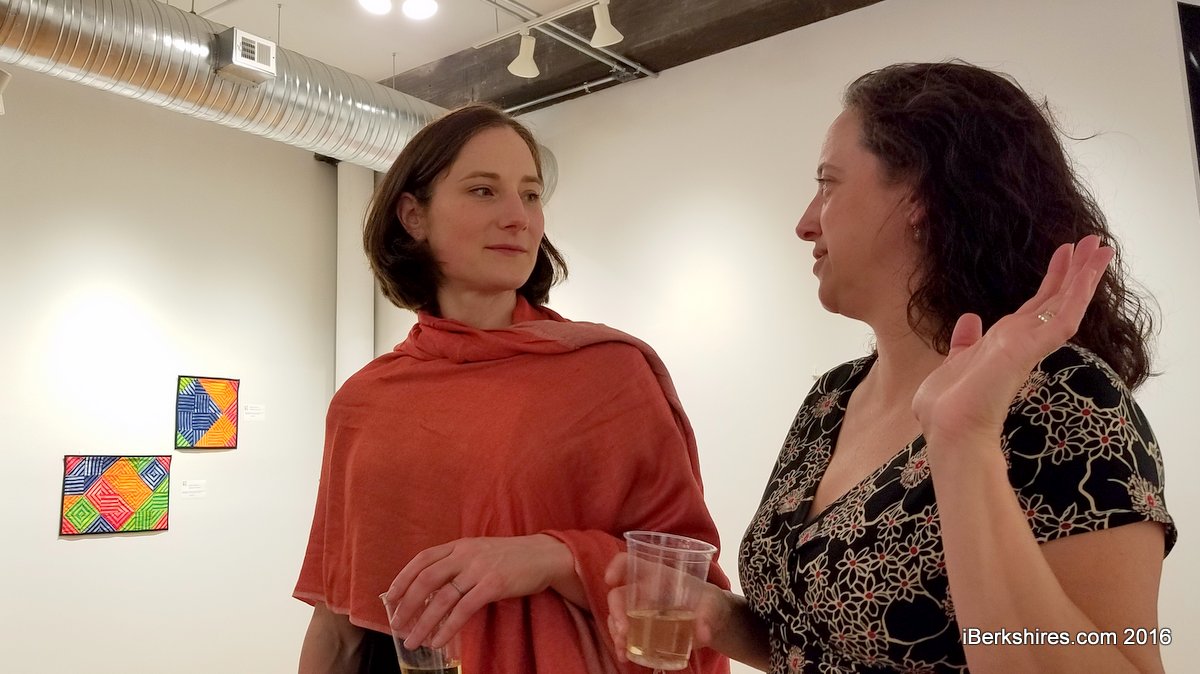
NORTH ADAMS, Mass. — A new exhibit at the Eclipse Mill Gallery proves artist Sol LeWitt could have been a quilter. Or more to the point, a pattern maker.
The late artist was a leader in the conceptual movement and believed art was as much about the idea as the execution, and therefore could be reproduced. That concept is behind the Massachusetts Museum of Contemporary Arts' retrospective of 105 wall works, all produced on site from LeWitt's explicit instructions.
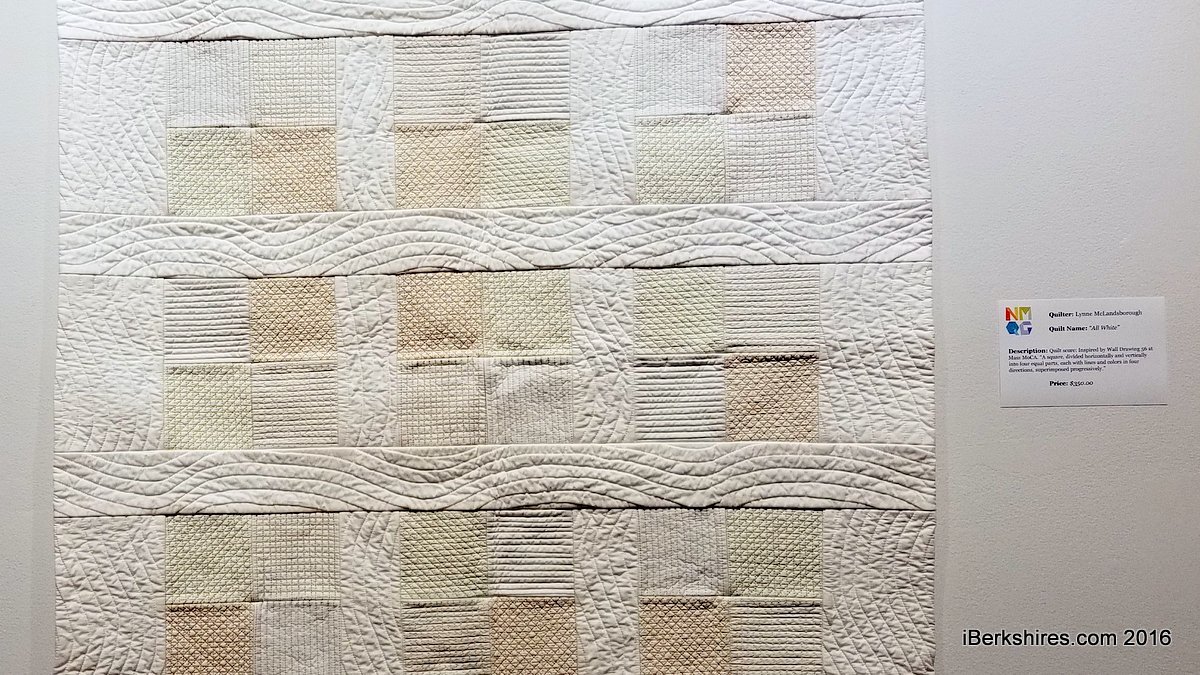
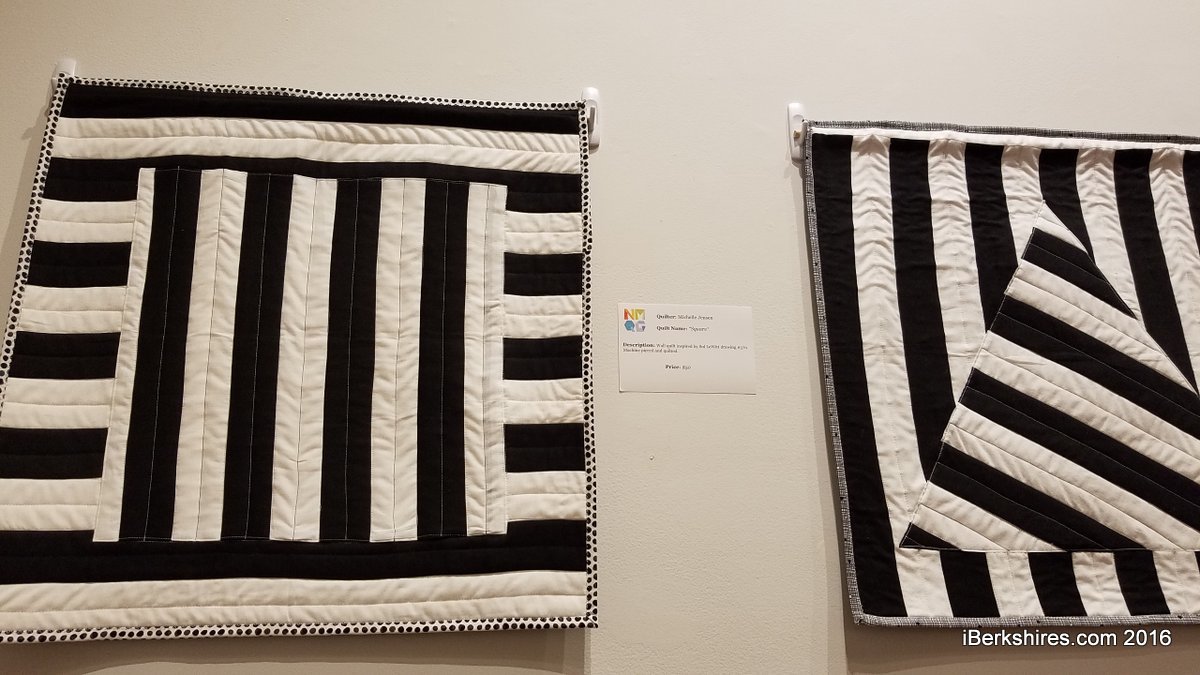
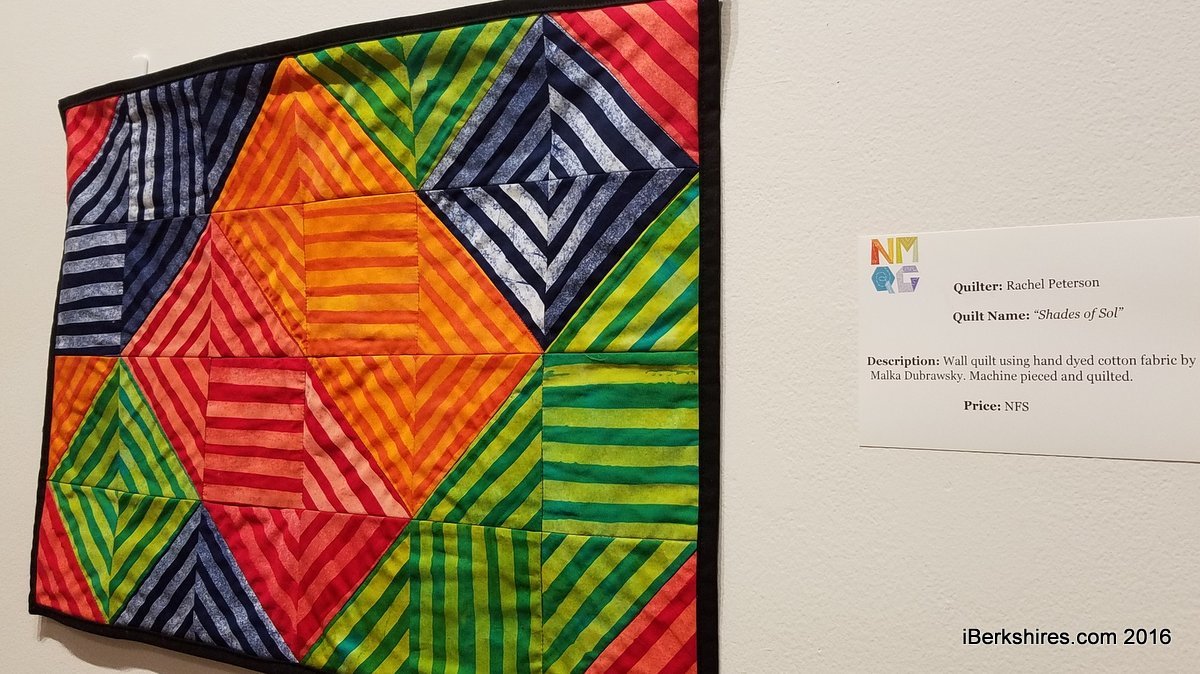
Those ideas also are on full display in "Sew'l eWitt: Quilts Inspired by Sol LeWitt," presented by the Northampton Modern Quilt Guild.
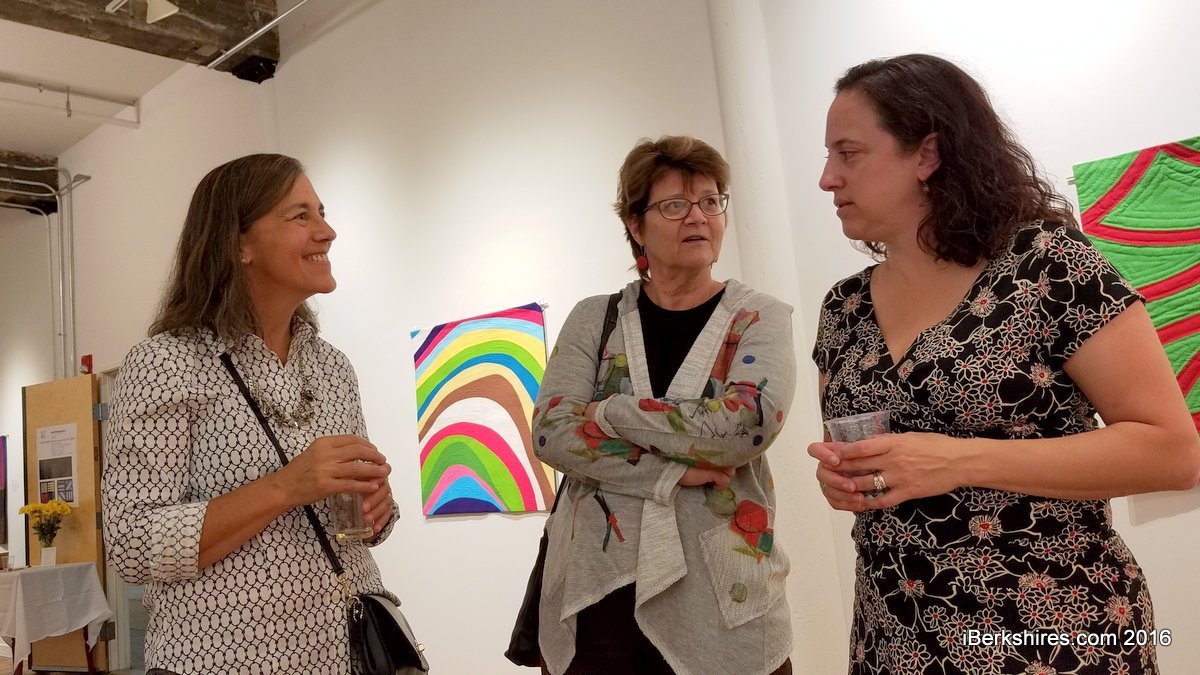
"As a guild, we came to Mass MoCA about a year ago and had a guided tour, about 15 or 16 of us, and the woman who was the tour guide was great," said Michelle Jensen, a guild president and curator of the exhibit. "She knew we were quilters and she tried to gear the tour a little bit to what might work for us."
Jensen had seen the exhibit before but was struck how differently she and her friends viewed it as quilters — seeing stitching, fabric qualities, and quilting designs in many of the works.
"So we said, you know what, let's make a challenge. Let's challenge our group members," she said at Friday's opening reception. Each was charged to create no larger than a 36x36-inch panel "somehow inspired by Sol LeWitt, whatever that means to you."
The result was a mix of works in which LeWitt's trajectory from line to color to form can be easily traced through the years. Some works are literal translations, others adaptations, but all very much recognizable together to anyone familiar with LeWitt's work.
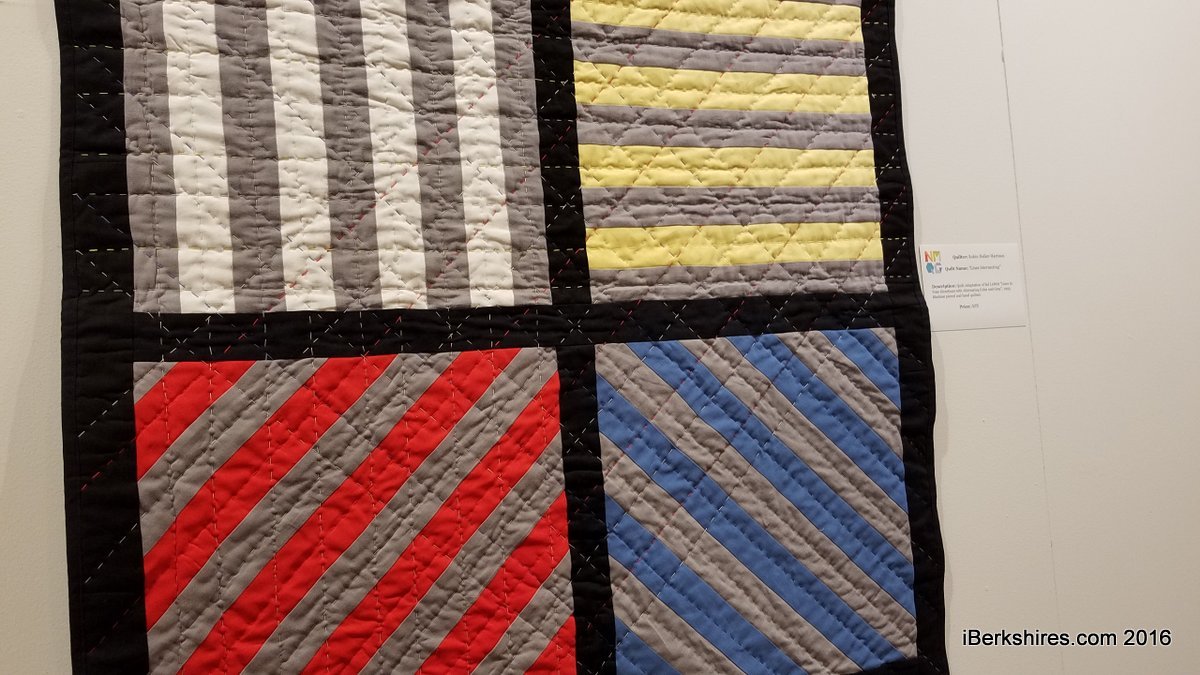
For Robin Heller-Harrison, it was a direct translation of the 1993 "Lines in Four Directions Alternating Color and Gray." A cell biologist, she found it difficult to reimagine a pattern instead of replicating it as a scientist would.
"In my former life, I was a scientist and I'm a very serious person," she said. "And adaptations and not direct interpretations of someone else's work, I have a hard time with. I think that's the way my brain works. ... It never would have occurred to me to do it in another color."
Instead, her "Lines Intersecting" focuses on technique in translating LeWitt.
"This was my first try at hand quilting and I thought this is easy, technically, to do. But it was time intensive," she said. "I had a bucket list this summer that I wanted to accomplish but this threw me for a loop."
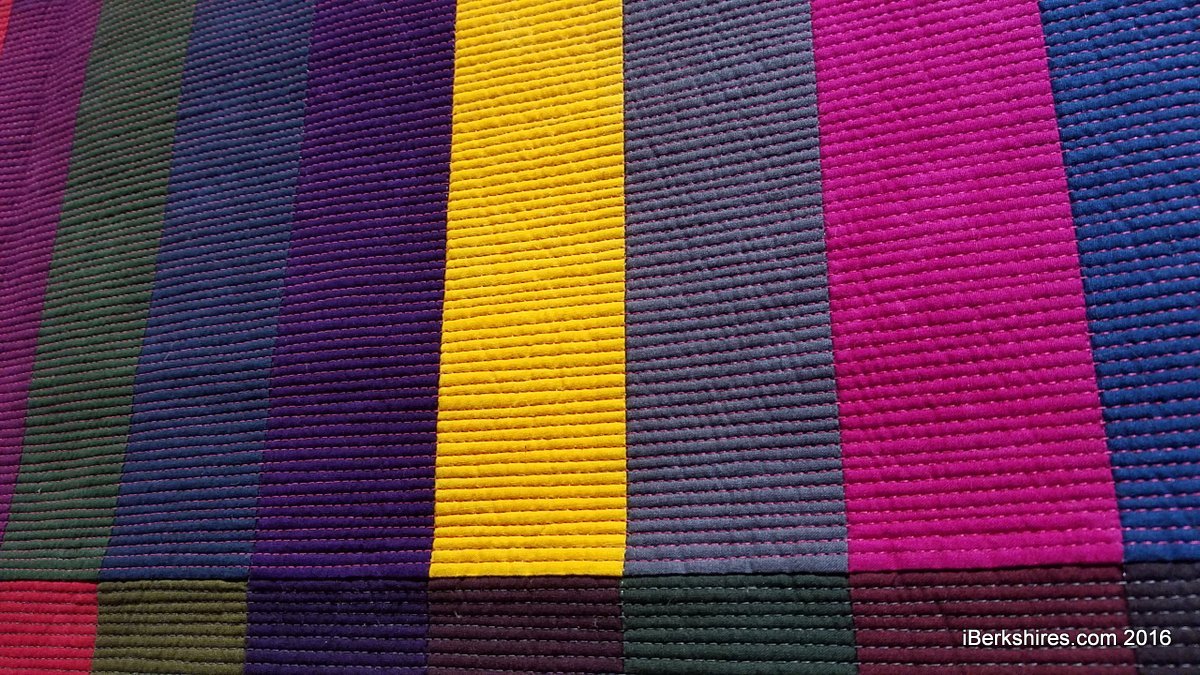
Artist and designer Carson Converse, on the other hand, was inspired by LeWitt's techniques and her own work in color. Based on Wall Drawing 422, a series of vertical stripes in which four color inks are combined in patterns, Converse's "S.L. Color Study" uses a similar pattern of 15 dye baths to create vertical quilted strips. But she adds a second layer by flipping the strips on the bottom and a third layer with dyed threads perpendicular to the strips.
"I've been playing a lot with color and how thread affects the final color and this is very much one of his studies," she said. "I recently start hand dying, so I decided to see what happened if I used the same method with the dyes ...
"You can see how the color changes, you can see how the thread changes the color."
This piece pushed her out of her comfort zone, Converse said, in forcing her to stick to a preplanned blueprint — not unlike LeWitt.
"I set the rules and I made the quilt," she said.
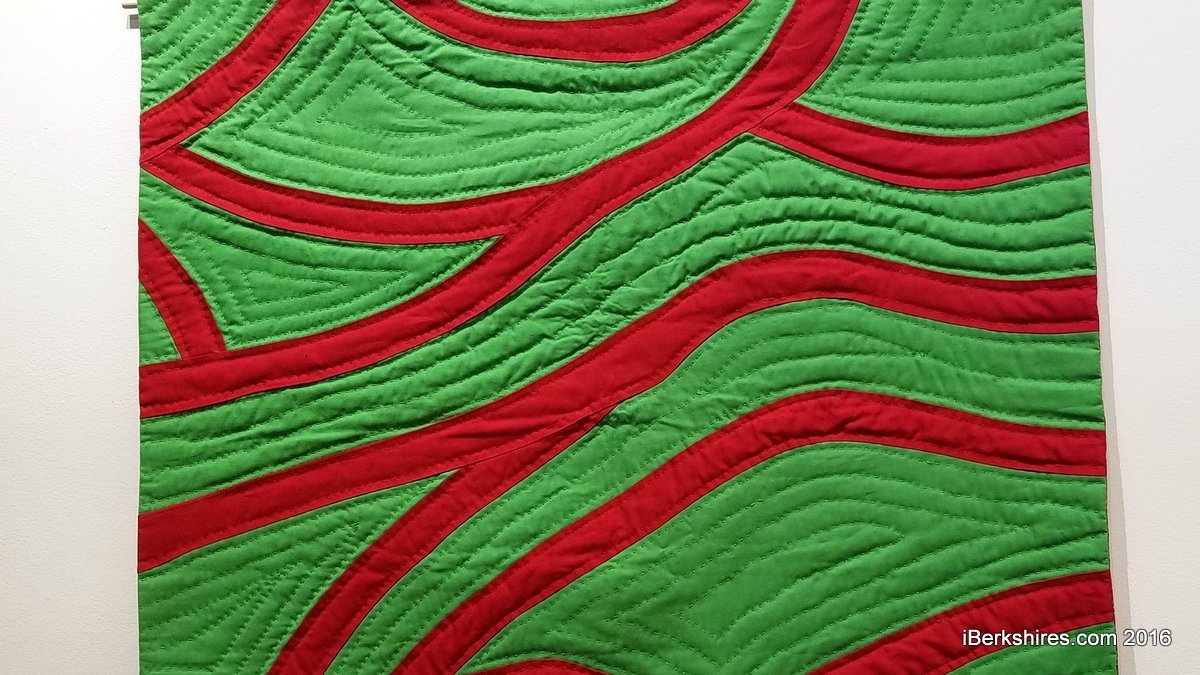
LeWitt's later works seem to break free of the rigid, imposed lines of his earlier pieces. That's what inspired Diane Wespiser's "Red & Green," based on the curvy and intricate Wall Drawing 880.002.
"It was deliberately a piece of his wall," she said. "I like the flow a lot and as a quilter, I like fooling around with all the inseam piecing so that was my personal challenge. [The piece stitching] is not applied on top, it's all in the seam. I just love the way it moves and flows."
Wespiser was one of only two works inspired by the curves rather than straight lines. And she discovered later she was strongly attracted to this piece in particular.
"I had been to see the Sol Lewitt exhibit about seven years ago when one of my kids was home, and I have a picture of myself standing in front of that wall although I totally forgot about it," she said. "Some things you are just drawn to and it's definitely a later part of his work and defines movement and flow. ...
"It's really fascinating to see art and quilt intersect."
The gallery in the Eclipse Mill, 243 Union St., is open from noon to 5, Saturdays and Sundays. The exhibit runs through Sunday, Oct. 23.
Tags: Eclipse Mill, exhibit, quilting,