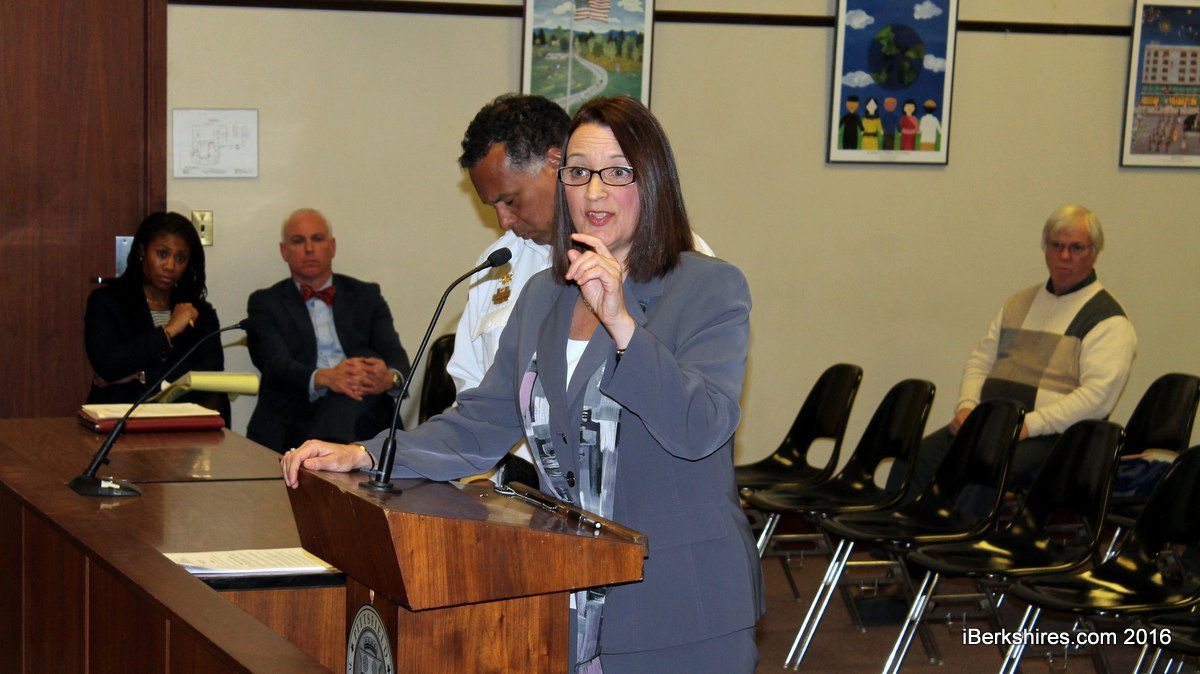
Pittsfield Accepts Gift To Deploy Gunshot Detection System
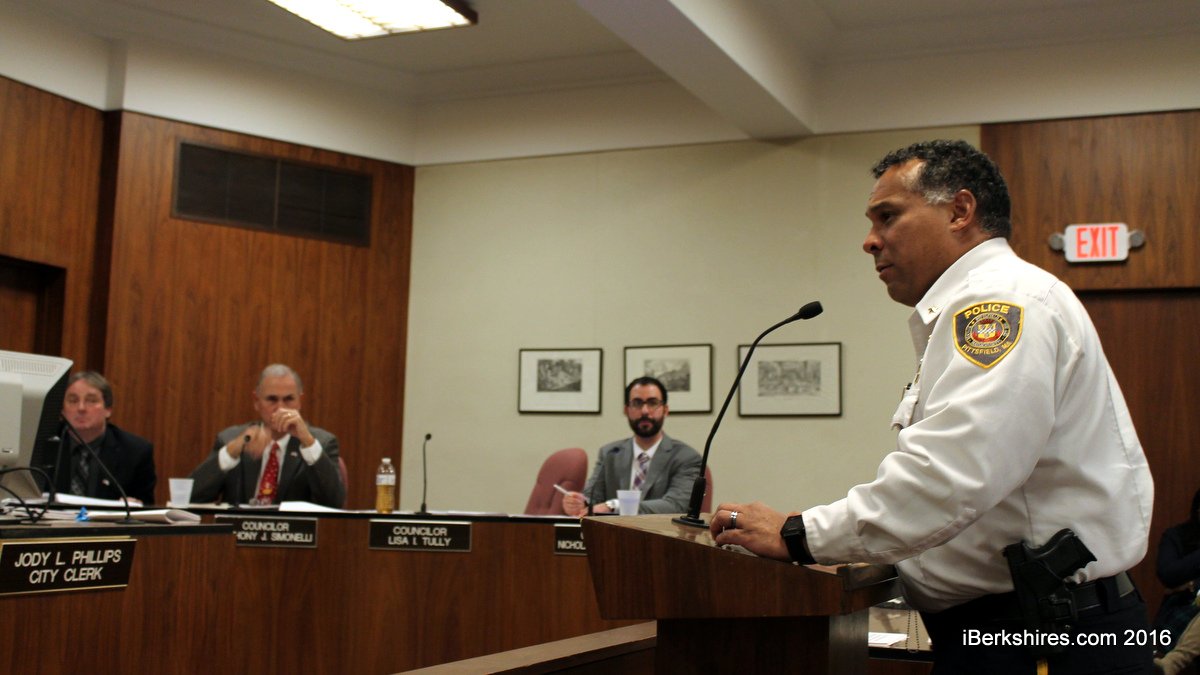
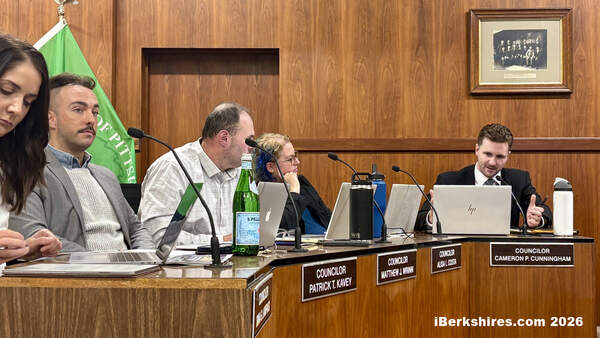
Police Chief Michael Wynn explained the system to the City Council on Tuesday night.
Police Chief Michael Wynn and his command staff then went and looked at the 911 calls reporting the shots. All four of the calls the department received were from the opposite side of the incident from where DeSantis was at the time.
That means if he hadn't seen the car, he would have driven right by the scene only to turn back around after talking with witnesses and getting the description.
When it comes to reports of shots fired, police are often getting vague descriptions from a resident describing in which direction the sound came. Often, that means driving past the scene to speak with the reporting caller and then coming back. Other times it means searching areas for any sign because the caller didn't have a great sense of exactly where the shots came from.
Enter ShotSpotter.
On Tuesday night, the City Council accepted a gift from Berkshire Health Systems of $300,000. That gift will contract with ShotSpotter, a company that establishes audio sensors to detect explosions such as gunfire. The microphones turn on with the explosion and the sound is run through a computer and verified by a trained staff member.
In just 45 seconds, officers in their cruisers will have where the gunshot was fired pinpointed on a map within 80 feet.
"We get an alert on a map saying gunfire at this location," Wynn said. "Instead of going to a location that was loosely described as 'I think I heard something in this area.'"
Wynn compared the technology to an alarm company such as ADT. Officers will get the alert that the gunshot was detected and head to the scene.
It also will help officers actually respond because Wynn says not every time shots are fired police are notified. Wynn said there have been cases when a shooting has occurred and Police weren't notified until well after the person had gone to the hospital.
"We can start our case that much closer to the scene, that much faster," Wynn said.
The city is contracting with the company for three years. The total cost is $600,000, half of which was provided by BHS and the other half Mayor Linda Tyer is hoping to secure from private sources or state or federal grants.
"I believe we have an obligation to protect the people in our city and the investments they make in their home," Tyer said.
Strengthening the Police Department has continued to be a priority for the administration. She began by giving the department nearly a $1 million boost in its budget to hire more officers. Now 10 new officers have graduated the academy and are doing field training. Seven more candidates are in the academy. And three more will be going to the academy in 2017.
But people alone won't solve the public safety issues facing Pittsfield, she said, and new technology will assist officers.
"There is more work to do and we cannot do it alone. Our resources are limited by our commitment is not," Tyer said.
When deployed, for three years only three square miles of the city will be covered with the technology. ShotSpotter owns and maintains the equipment as part of the contract. Wynn said the company has already "retooled" the contract knowing that the city has currently only secured half of the cost. The company will run the program for 18 months based on the price for three years.
Wynn says he hopes that federal money can be secured for the rest of the contract, but right now the city is not eligible for the grants used in other cities and towns for the technology. Wynn hopes the federal delegation can assist on that.
If not, Tyer said she is confident the gap will be covered some other way to complete the three years. But, she isn't ruling out the possibility of having the city contribute some.
"My plan is to secure an additional $300,000 from funding partners but I don't want to eliminate the option [of capital or operating money]," Tyer said. "I don't want to eliminate the possibility that we might provide some."
Wynn said eventually the technology could end up being part of his department's budget. But, he wants to see how it actually works first. Particularly, he is interested in seeing how much gunfire is happening in the city that isn't getting reported.
Last month, Forbes analyzed the data provided by departments that have utilized the services and found little as far as tangible results. Meanwhile, some cities have renewed and expanded using the system.
The City Council raised some questions like what happens on the Fourth of July when hundreds of fireworks are popping off. Wynn said the system will detect fireworks, and some departments have actually used the system to track down those launching illegal fireworks.
But, fireworks also have a different sound than gunfire, which would be part of the alert informing the officers that it is likely fireworks.
"We do have a problem but we certainly have been taking steps," Ward 2 Councilor Kevin Morandi said. "We want to try to make the city safer. The safer the better."
Others questioned the information in which Wynn responded that the audio sensors only go on after a gunshot and does not collect other noises. However, other reports say the technology can record spoken words or conversations.
Further, the department won't be keeping any of the data collected — it would be the vendor's information, again like home security systems.
"We don't need that data and we don't want to be responsible for producing the data," Wynn said.
The timing of Tuesday's approval coincides with another rash of shootings, one each week for the last three.
The donation was accepted by the council with an 8-0 vote. Councilors Kathleen Amuso and Lisa Tully both work for BHS and had to recuse themselves from the debate while Councilor Melissa Mazzeo was absent.
Tags: BHS, gun violence, public safety,