Hinds, MCLA Holding Workshop On Public Transit Options
UPDATE: Because of the Senate Caucus and Formal Legislative Session to take place starting at noon Friday, Senator Hinds cannot participate in today's events as announced.The Senate is expected to vote on the FY18 conference budget this afternoon.
His staff will ride the BRTA from Pittsfield to North Adams and attend the Workshop. The design thinking exercises will be led by the MCLA Design Lab team. Senator Hinds plans to call into the event at 1 p.m. from the State House.
His staff will ride the BRTA from Pittsfield to North Adams and attend the Workshop. The design thinking exercises will be led by the MCLA Design Lab team. Senator Hinds plans to call into the event at 1 p.m. from the State House.
PITTSFIELD, Mass. — State Sen. Adam Hinds is about to find out exactly how difficult it is to get around the county on public transportation.
On Friday, Hinds is taking a Berkshire Regional Transit Authority bus from Pittsfield to the Massachusetts College of Liberal Arts, a trip that will take more than an hour. Hinds is doing it as his commute to meet with MCLA's Dean Jake Eberwein as the two host a design thinking workshop on how to improve the county's public transportation system.
"We live in a large, geographically diverse region with concentrated downtowns and rural areas. We have services and economies separated by large swaths of space and an infrastructure system that is often outdated and without reliable cell phone coverage," the Pittsfield state senator said.
"Improving our public transportation system is central to addressing numerous challenges that I hear about often: reliable access to employment and services, the ability to move to a better job, thereby improving quality of life, connecting to other transportation options, and beyond. This is the start of an ongoing effort to improve rural transportation options throughout my district."
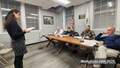
At MCLA, Hinds will spend four hours with the MCLA Design Lab, a curricular and co-curricular space, to "reimagine" what rural public transportation can be.
The workshop will include representatives from the Berkshire Community Action Council, Berkshire Interfaith Organizing, Berkshire Regional Planning Commission, the BRTA, Lever, Northern Berkshire Community Coalition, Berkshire Community College, MCLA, Workers Cities Pittsfield, the local National Association for the Advancement of Colored People, and Williams College. Others involved include students, employers, and other stakeholders.
The challenges of transportation in the Berkshires isn't new. For years officials in various aspects of public life have wanted to improve it but the rural nature of the Berkshires poses a challenge. The BRTA hasn't had sufficient funding to run fixed-rate bus routes throughout the county and the populations make it difficult to maintain rider population on routes in rural areas.
Now the BRTA has limited hours at night and weekends. That's particularly a problem with the tourism economy because those are the times when employers need the most amount of staff possible.
Recently, Andrea Sholler, managing director of Jacob's Pillow Dance Festival, asked to be involved with public transit planning because it means so much to her company. Becket is not easily accessible and those without personal vehicles are unable to work there. Yet, she has 75 jobs, mostly minimum wage, low-skilled jobs, available during the summer. Many of those go unfilled.
Similar stories have been told by numerous employers, specifically those in the hospitality industry and those who are removed from the urban areas of the Berkshires, over and over again throughout the years.
Meanwhile, Berkshire Community College officials have lamented the lack of transportation to get to their campus on the outskirts of Pittsfield because many students either don't attend or drop out because of a lack of ability to work.
Those in the public health realm say the lack of reliable public transit is a barrier to accessing health care.
Costa and Sholler expressed those views with the Berkshire Regional Planning Commission and found a welcoming audience. BRPC officials are also calling for a more enhanced focus on trying to find new and creative ways to provide the needed transportation service.
"If we want to crack some of the fundamental barriers in the region we have to think outside of the box of fixed-route transit," Executive Director Nathaniel Karns said.
Tags: BRTA, Hinds, transportation,