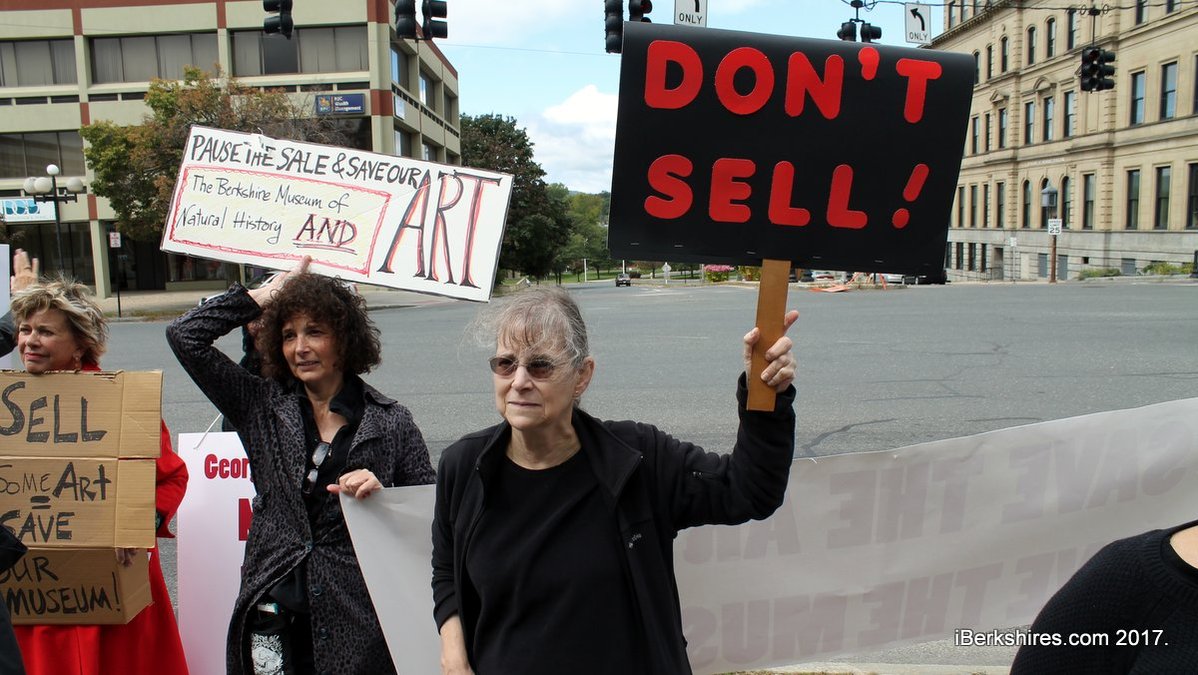
Citizens Continue to Protest Berkshire Museum Art Sale
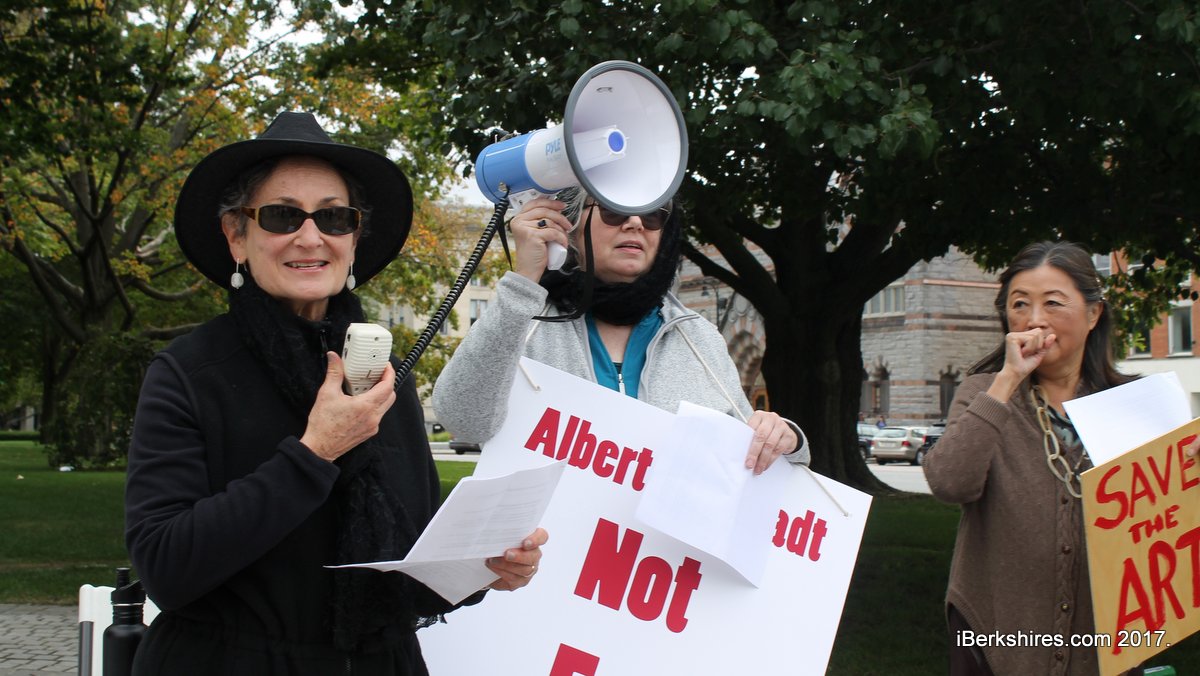
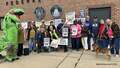
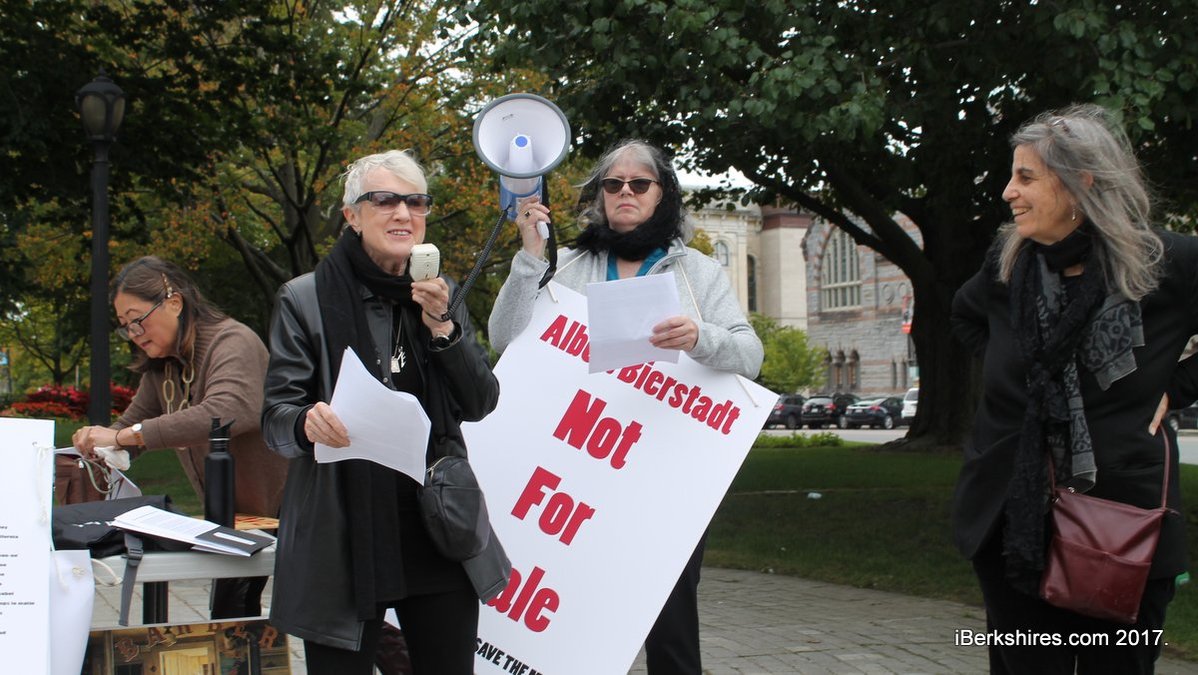
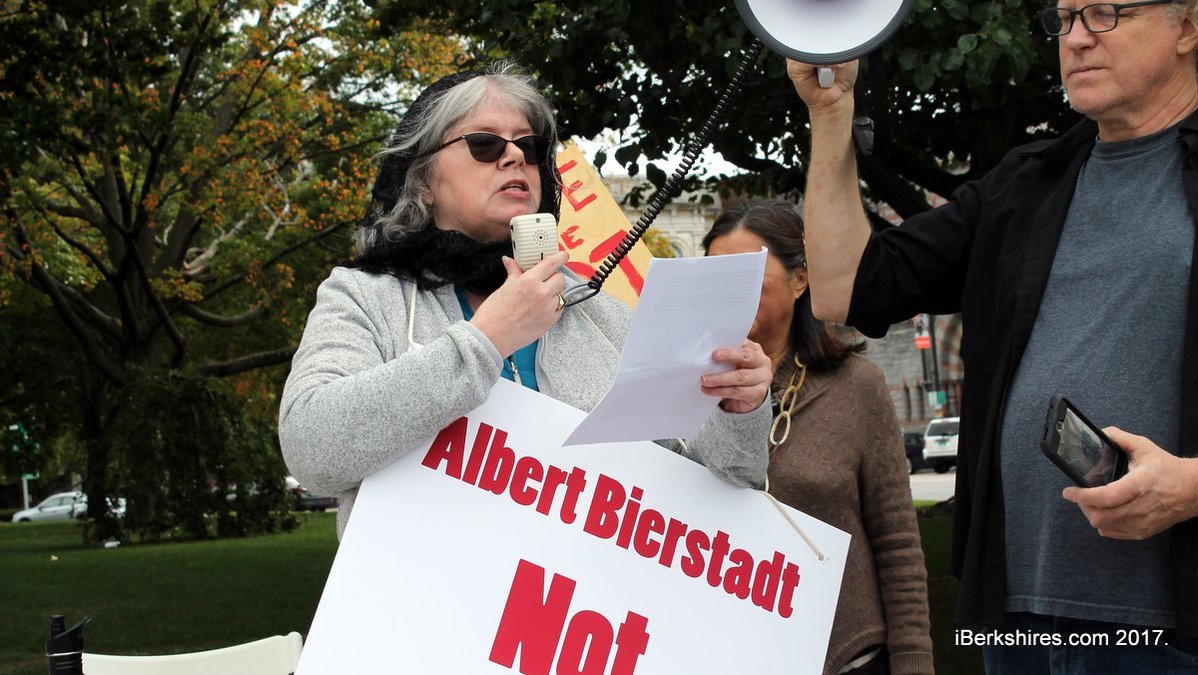
Hope Davis was one of four who spoke at Park Square in protest of the planned sale.
And Gregory isn't just anybody, she is someone with 40 years of financial experience. She retired as the vice president of business development and planning for Iredale Mineral Cosmetics, and before that worked with a number of organizations such as Lehman Brothers and Citibank.
"I think the deficit has a lot to do with managerial decisions on where they spend the money and where they don't spend money," Gregory said.
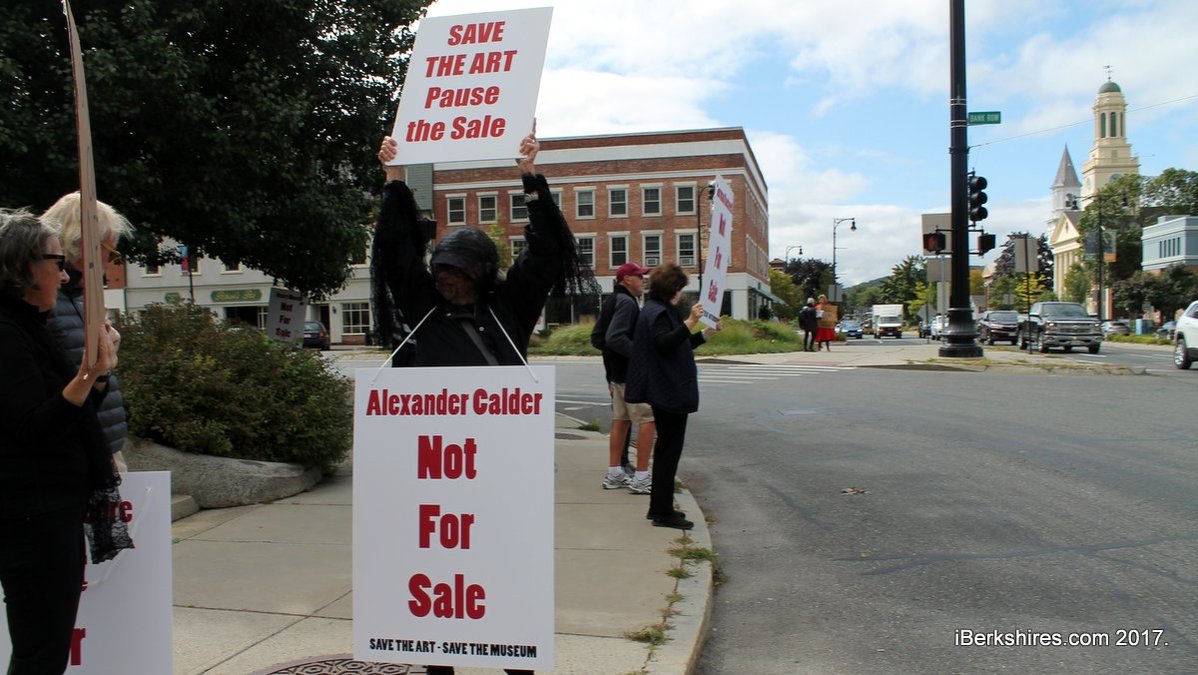
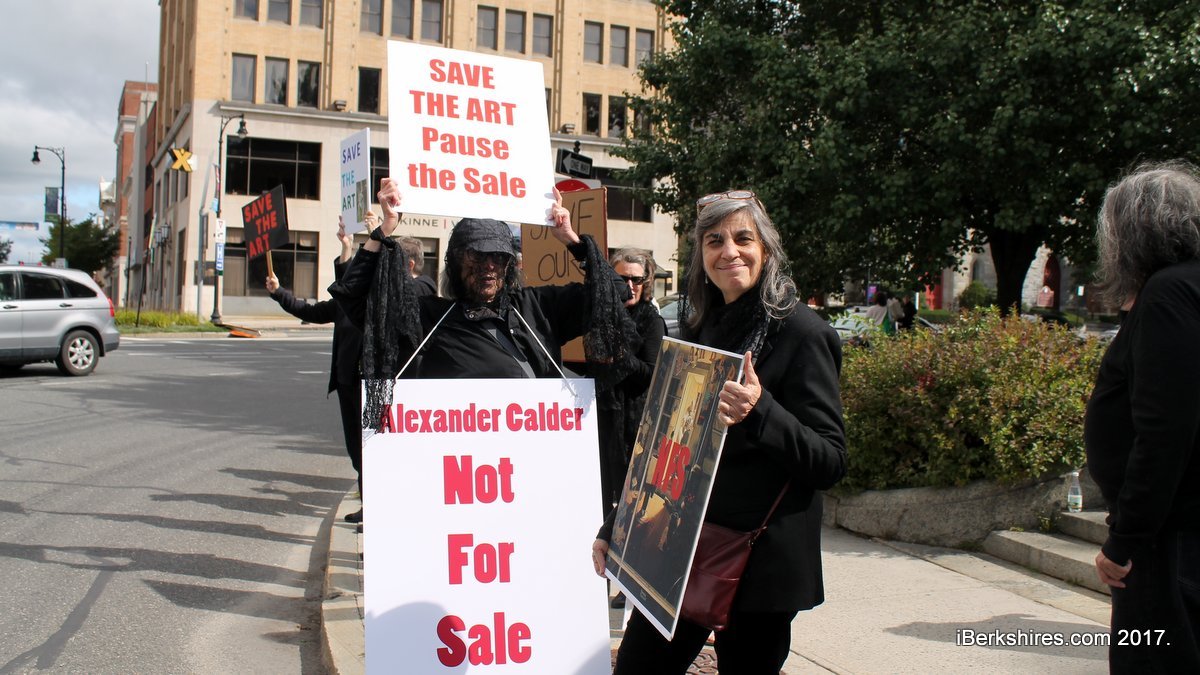
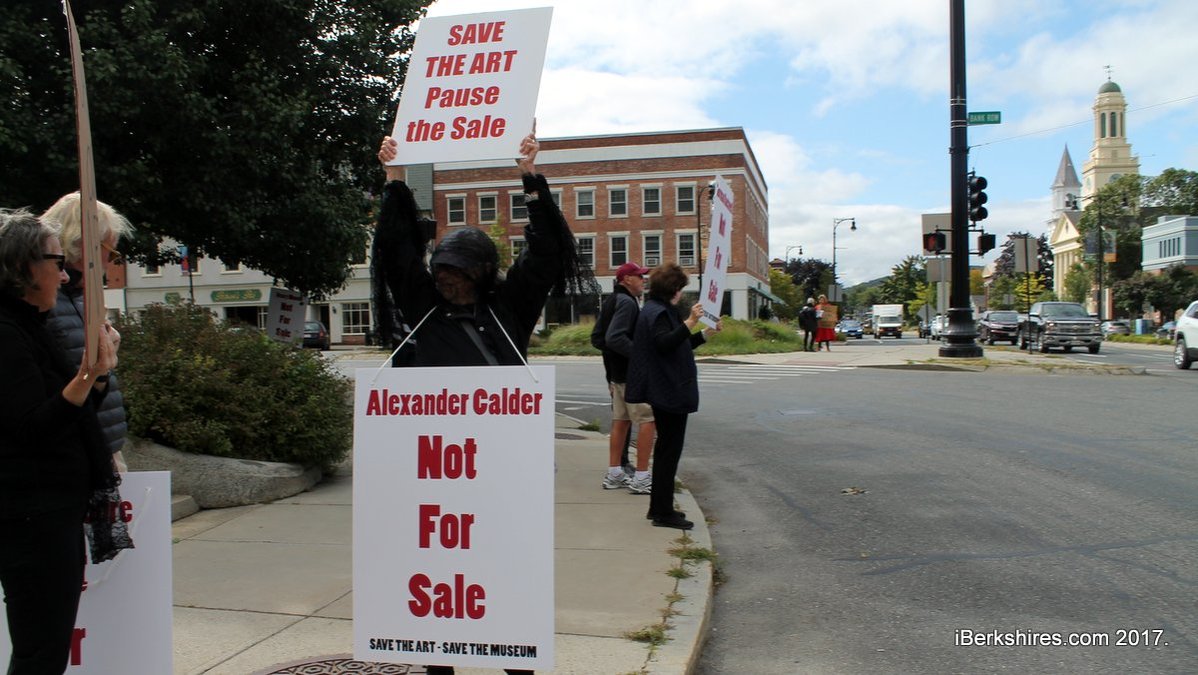
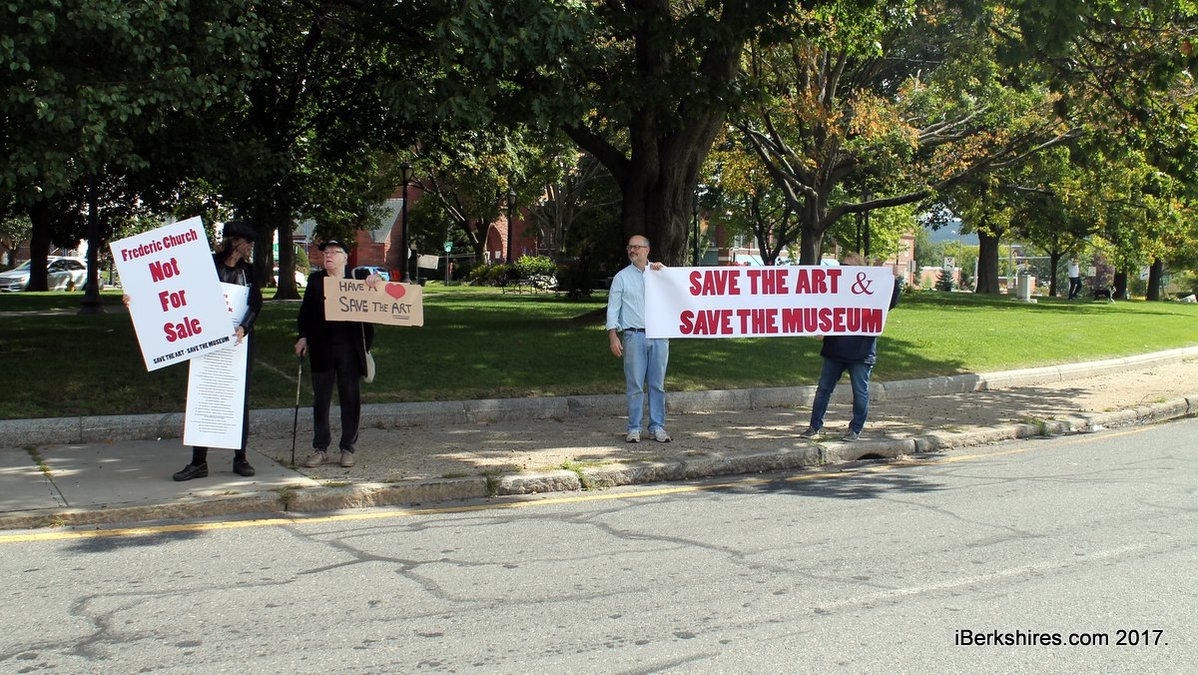
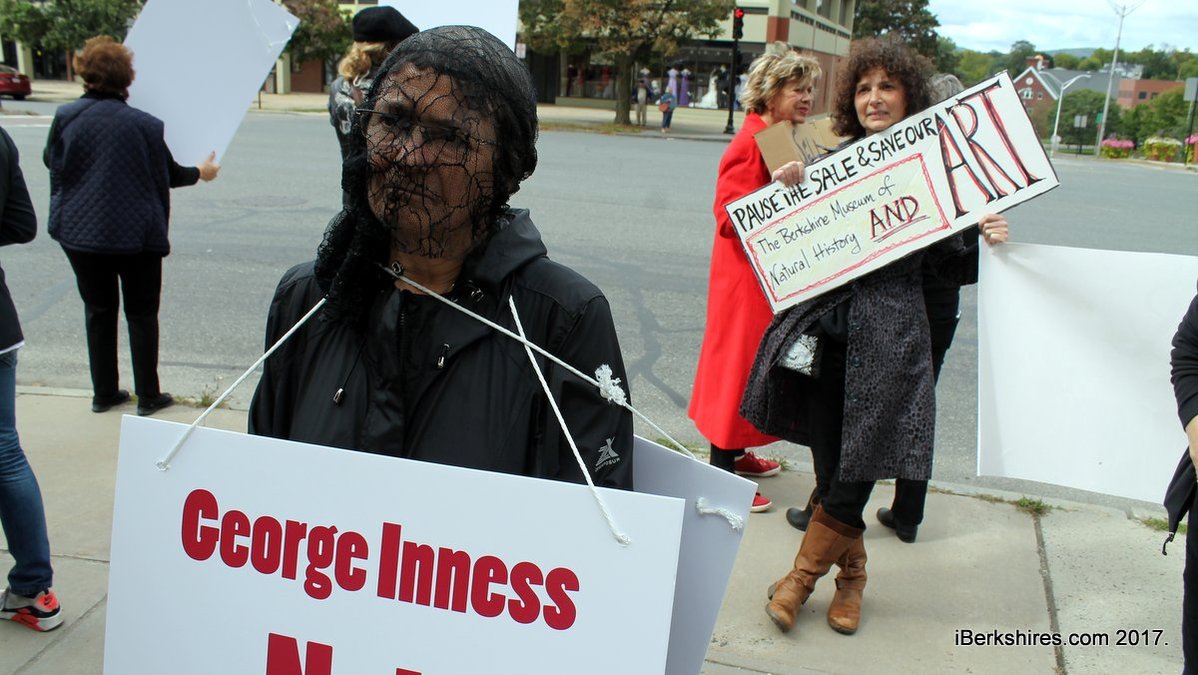
Gregory was one of the several speakers on Saturday as the citizen's group Save the Art continues to put pressure on Berkshire Museum officials. The group organized in response to the museum's plan to sell some 40 pieces of artwork to fund its new vision — a vision which includes bolstering an endowment and completely renovating the building and exhibits.
Gregory was at Park Square with about 40 others protesting the sale of the art. She said she wants the museum to succeed but and that can happen with a smaller fundraising campaign and better decision making by leaders.
"People think the only way to save the museum is to get rid of their most important treasures," Gregory said, but she doesn't believe that is true.
The group had many sharp words for museum Director Van Shields, criticizing him for a decrease in grant funding and philanthropy while allowing expenses to increase. The museum says it has an annual structural deficit of $1.1 million and at that rate, the museum has less than a decade ahead of it before it would be forced to close.
That's where the plan came in. The museum announced it would raise $10 million and then sell an estimated $50 million worth of pieces. Together, that would create a larger endowment and renovate and modernize the museum with interactive exhibits and presentation.
Linda Cleary grew up on Bartlett Avenue and remembers going to the museum all of the time. The announcement of selling the artwork was a shock to her, as she remembered how important that museum and the work was to her.
"The shock of learning of the intent of the Berkshire Museum administration to sell off its most iconic and priceless artwork has gripped the core of my being that I could not stand idling by and allow it to proceed unchallenged," Cleary said.
Now she looks the new plan with interactive exhibits and feels that the experiences are being packaged to engage a 5-year-old child, but not giving that child something to be inspired by.
"We need to give children something to go into, not grow out of," Cleary said.
And it is not that she is afraid of change or doesn't understand the evolution of museum exhibits. It is that she is "adverse to the plundering of public treasures to satisfy the career ambition of a few" and that's why she is opposing the sale of the artwork.
These local residents aren't alone in opposing the sale. The planned sale has gained nationwide attention and has strained some of the museum's relationships — including the Smithsonian cutting ties with it.
The protesters see a better vision, one that emphasizes the high-quality artwork the museum has been stewards of for years instead of shipping it off to hang on the walls of a private collector.
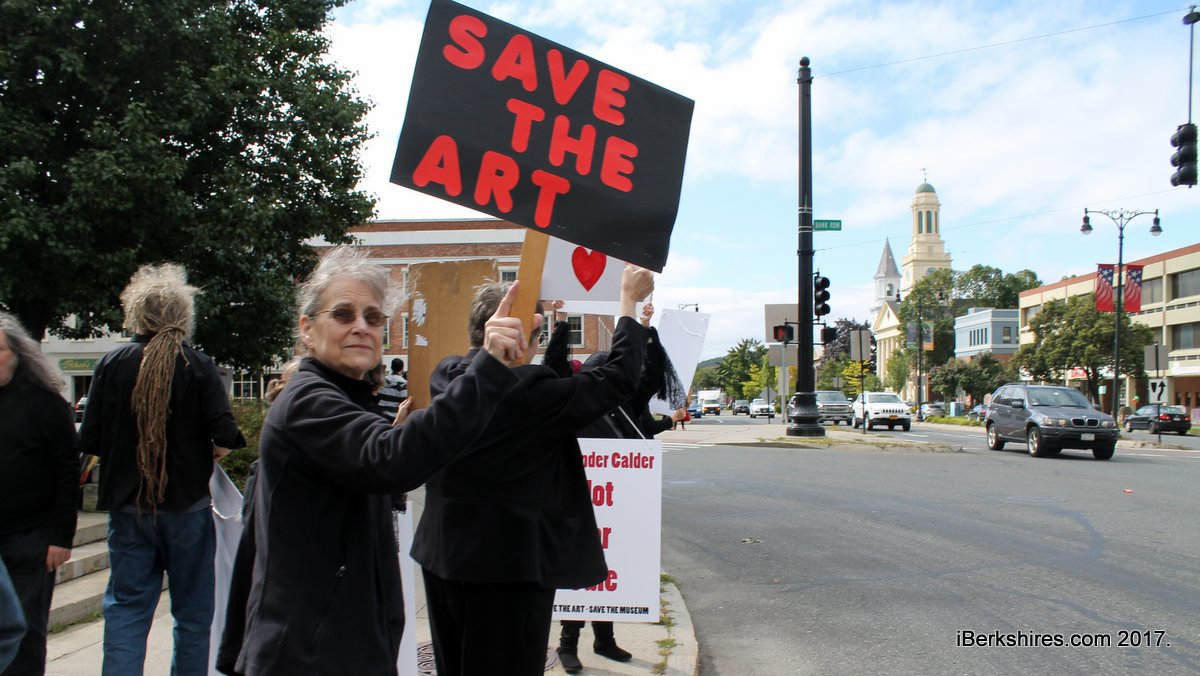
This is the second protest Save the Art has organized.
Davis is an art appraiser who says Sotheby's estimate of $45 million to $60 million is "reasonable." But, she said, the pieces mean so much more to the region — whether that be the Hudson River artists or the two Norman Rockwell paintings, both of which are local and tell the story of this region's history.
"The art represents our history. Without history, how do we and our children learn about the past, understand the present, and embrace the future? We would like to redirect the museum's new vision and turn this negative publicity into a positive tool," Davis said.
She wants the museum to "highlight and spotlight" the history and legacy of the region's best artwork.
The artwork goes to auction in November and museum officials say it can't be stopped. But it has been a divisive issue and one group even offered $1 million to pause the sale and craft a new vision. The Save the Art group formed and says about half the community is opposing the sale. They want a plan to save the museum that everybody can agree on.
"There is strong support to stop the sale of the work," said artist Peter Dudek, one of the group's founders. "We really cannot sell our heritage."
The group held a protest prior to this one and will continue to raise awareness of the issue. But, Dudek said museum officials are engaging even less than before. He said he recently wrote a letter to the editor expressing his opinion and then days later, museum officials canceled a meeting between him and two members of the board of trustees.
"They have seemed to have dug in their heels even more. They canceled a meeting I was supposed to have with two board members ... they aren't open to any criticism," Dudek said. "Van Shields has even said yeah, you can come talk to us but we aren't changing our plan. Now they won't even talk to people."
Dudek said he wants the museum to success and last a long time, but he also believes there are other ways to do that other than selling what the group sees are the best pieces in the collection.
"Any small town of this size would die for this collection," Gregory said.
Tags: auction, Berkshire Museum, protests,