Hinds Asks State to Fund Design for New Pittsfield Police Station
PITTSFIELD, Mass. — State Sen. Adam Hinds is asking the state to help in designing a new city police station.
A capital bond bill is currently making its way through the legislative process and Hinds has filed an amendment for $4 million to design a station. The city has been eyeing a police station for years and had previously hired a consultant to perform a feasibility study to identify possible locations and craft a conceptual outline of what the building would require.
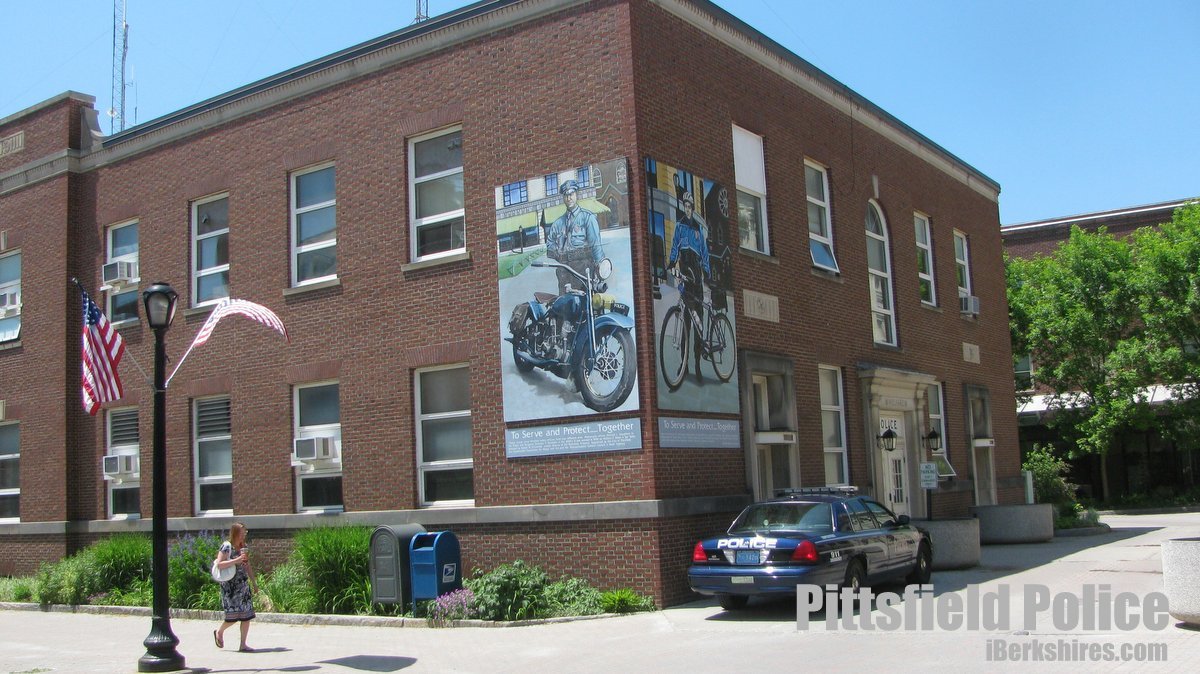
"The Pittsfield Police Department is a professional, progressive law enforcement agency that provides police services to a population of approximately 44,000 residents, occupying approximately 42.3 square miles in the Berkshires. Since 1939, the Pittsfield Police Department has coordinated and managed the delivery of these police services from their current headquarters. The current facility is antiquated and deteriorating that severely impedes the department's ability to improve the quality of services," Hinds told his colleagues in asking for support on Beacon Hill for the amendment.
"In 1939, when the current facility was completed, the PPD had 60 officers, five reserve officers, and one matron. The department handled approximately 2,959 calls for services per year. They had no full-time female employees, no crime scene services section, no drug unit or gang unit, and special operations didn't exist.
"In the 72 years since the PPD has grown dramatically. The staff has grown from its original size of 70 male employees to 117 employees, 25 of which are women. There are significantly more spatial requirements on the department with the additions of modern technologies such as computer servers, enhanced communications, and more robust laboratory facilities."
The current station has long been described as being inadequate, for having out-of-date facilities, not being handicapped accessible, having rooms flood, and heating systems are difficult and unpredictable.
"They often seek off-site locations for training and meetings, because their own spaces are insufficient. There are inadequate locker facilities for sworn personnel and none for support personnel. And, sections of the building have been condemned due to asbestos contamination," Hinds said.
Those problems have plagued the station, once the city's welfare office, for years. In 2011, the City Council had approved spending $83,000 to replace boilers at the station but as the problems with the facility kept mounting, the administration opted to make minor repairs instead and pursue a brand new building.
That push to build a new station is now in its third consecutive city administration.
Since 2011, the city had been unsuccessful in pitching the project to two U.S. senators — a Democrat and a Republican. At one point, the city had hoped to reel in stimulus money but the federal government refused to release funds for the building of police stations. Senators tried to earmark money and then earmarks were removed.
Nor has the state been interested in providing much funding for municipal police stations.
The city started considering creative ways to building it — by possibly having a Homeland Security or other type of component into the project to open up funding opportunities.
The city hired Kaestle Boos in 2014 to perform the feasibility study at a cost of $30,000. The company did an assessment of the department to find out what the station would need to operate. It determined on a 38,000 square-foot building and drew mockups of what the floor plans could look like.
It then identified a number of places for the building — with parcels on Woodlawn Avenue and Kellogg Avenue as front-runners. Other parcels considered included Dalton Avenue, East Street, and keeping it downtown.
The City Council later authorized $250,000 in borrowing to complete the engineering, with eyes to get it "shovel ready."
But last January, the Fire Department's ladder truck went out of service and wasn't scheduled to be replaced yet. Director of Finance Matthew Kerwood said the $250,000 wasn't nearly enough for the police station engineering, so the City Council used that authorization on the pressing need of a ladder truck instead.
"We are making the decision for the time being to abandon the police station for FY17," Kerwood said at the time. "We made an executive decision to reprogram that money in this capital budget."
City officials have a $3 million authorization penciled in for next year's capital plan to do the engineering and in the fiscal year 2021, $30 million is penciled in for the construction.
Mayor Linda Tyer voiced her support in December when she gave a speech during the appointment ceremony of Police Chief Michael Wynn and then on Tuesday, during the reorganization of government, again voiced support for moving the project along.
However, the city's quickly approaching its levy ceiling and the $3 million proposed for the year is just one in $16.8 million worth of tentative capital projects, plus anything else that may arise.
On Wednesday, Director of Administrative Services Roberta McCulloch-Dews said the mayor's office continues to support the building of a station, so the administration welcomes the support Hinds is giving toward finding a funding source. She said while no particular location has been specifically chosen, the hope is Hinds will keep an eye out for ways the state can assist in progressing the long-sought-after project.
The Police Department seems to have gotten more attention from the Tyer administration over the last two years than other departments. The city previously increased the department's budget by $1 million to up staffing levels; signed a contract to bring in the ShotSpotter gunshot detection system; and appointed Wynn to a permanent basis — replacing his "acting" status and bringing what the mayor believes more stability to the organization.
The state's bond bill this year includes a $45 million expenditure for Springfield's police station project, another $20 million for a joint police and fire station in New Bedford, and $3 million for the design of a station in Beverly.
Hinds hopes to add Pittsfield to that list.
However, getting the money into the bill might be the easiest part. It is getting the money released that can often be more difficult. The state has passed numerous bond bills which included project likes a pre-release building for the sheriff's department or repairs to the Columbus Avenue garage but the funds were never released.
As a last resort, the Pittsfield Police Department would be happy to share in anyone's Lottery winnings.
Just putting this out there in case one of our followers wins the Powerball or Mega Millions this week. We are in need of a new Police Station! What else would you spend the $400+ million dollars on? 👮😂💙 #rememberustomorrow #friends #Powerball #MegaMillions #newpolicestation pic.twitter.com/nI1Y1zq251
— Pittsfield Police (@PittsfieldPD) January 4, 2018
Tags: bond bill, capital projects, Pittsfield Police, police station,