Williamstown Zoning Board Green Lights Verizon Cell Tower
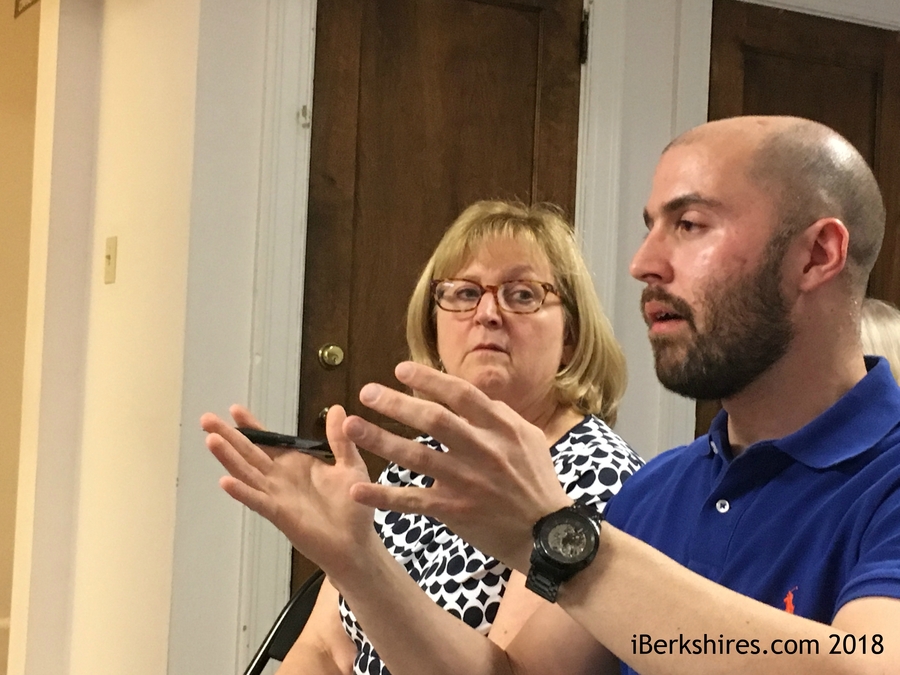
Verizon radio frequency engineer Jay Latorre answers a question from the board.
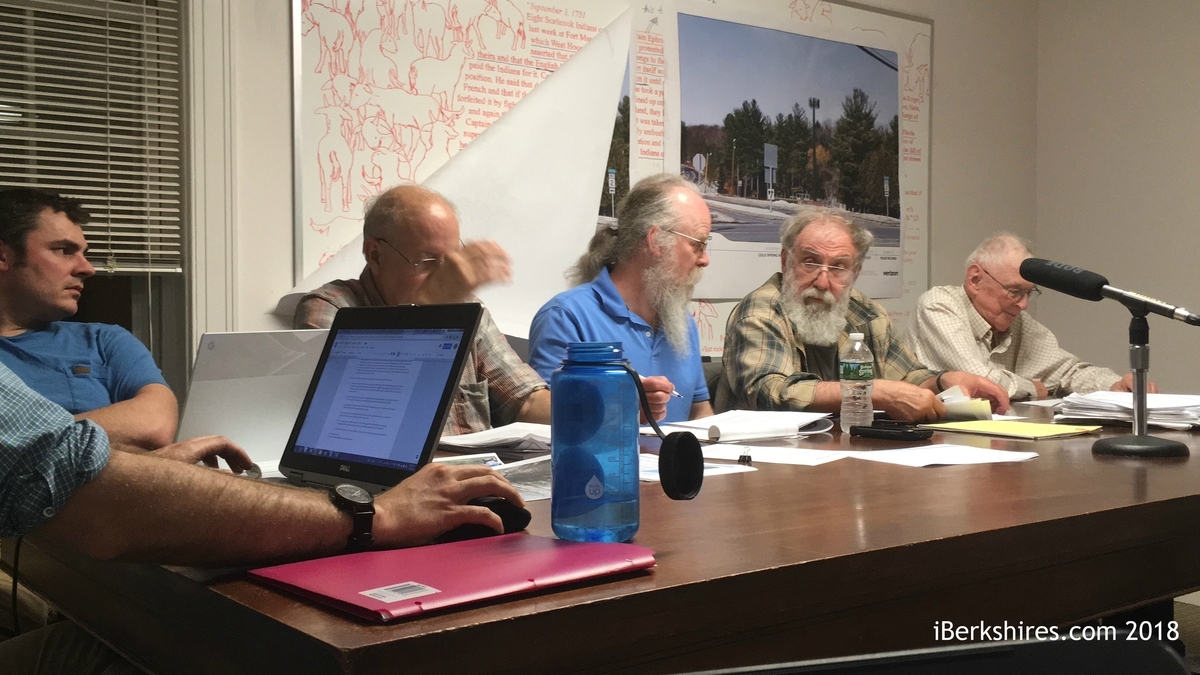
ZBA Chairman Andrew Hoar at the outset of Wednesday's continuation of the hearing stated his intention to have a motion before the board by the end of the night.
An hour and a half later, Keith Davis obliged him, reading for the record a lengthy draft motion composed by the town's community development director granting Verizon the two special permits it needed to erect a 95-foot tower on the site.
Among the board's findings: that Verizon had "implemented reasonable measures to attenuate and mitigate the impact of the installation" and that the proposed installation, "will not have an undue adverse impact on historic resources, scenic views, residential property values, natural or man-made resources."
The latter finding drew an interjection from resident Richard Sutter from the floor of the meeting. Sutter, who has opposed the Verizon application at several points in the public hearing called out, "yes it does," as Davis read the motion.
Later, after the entire 750-word motion was on the table, ZBA member David Levine returned to the assertion about "property values," asking whether the board had enough evidence to make the finding.
"We do," Hoar said. "That was a concern in South Williamstown [site of another tower farther down Route 7], and it hasn't affected values."
"The local assessor found no impact on values whatsoever," Community Development Director Andrew Groff confirmed for the board.
At Hoar's suggestion, Davis accepted one amendment to the proposed motion.
Originally, Davis moved that future co-locators on the tower would have to come back to the ZBA to request permission to extend the height of the structure.
"Can't we just say that the co-locator has to go below [Verizon's antenna]?" Hoar asked. "Do you want to open this can of worms again?"
Davis agreed, changing his language to read, "The tower shall not be extended beyond this height, period."
After a brief discussion among board members, Hoar asked for a roll call vote, and all five members who have sat for the hearing voted to accept Davis' motion.
At the end of the yearlong process, the Verizon tower will look a bit different from the one it originally pitched to the ZBA.
After taking feedback from the board and residents, the telecommunications company changed its application to specify a design that is slightly shorter, that incorporates a lower profile for the antennae at the top and which is painted a dark green color with a matte finish instead of the light gray originally depicted on drawings.
At the base of the tower, instead of the original chain link fence and barbed wire in Verizon's original plan, the tower's emergency generator and other support equipment will be enclosed by a wood plank fence surrounded by "Green Giant" arborvitae. The vegetative screening "shall be replaced if it plantings fail or fail to provide adequate screening," per Davis' motion.
Wednesday's hearing began with testimony from Virginia-based telecommunications consultant Walter Cooper, who was hired by the town and paid by the applicant to advise the ZBA throughout the process.
Cooper reconfirmed his previously offered written testimony that Verizon was accurately testifying to the coverage gap along the Route 7 corridor that the new tower is designed to fill.
The board asked Cooper about his thoughts on the feasibility of replacing the proposed tower with a series of small cell antennae mounted on utility poles along the stretch of U.S. highway, known in that area as Cold Spring Road.
Cooper, again following on his written testimony, told the board that he disagreed with Verizon about the number of small cells that it would take to fill the gap. However, his full answer supported the telecom company's case.
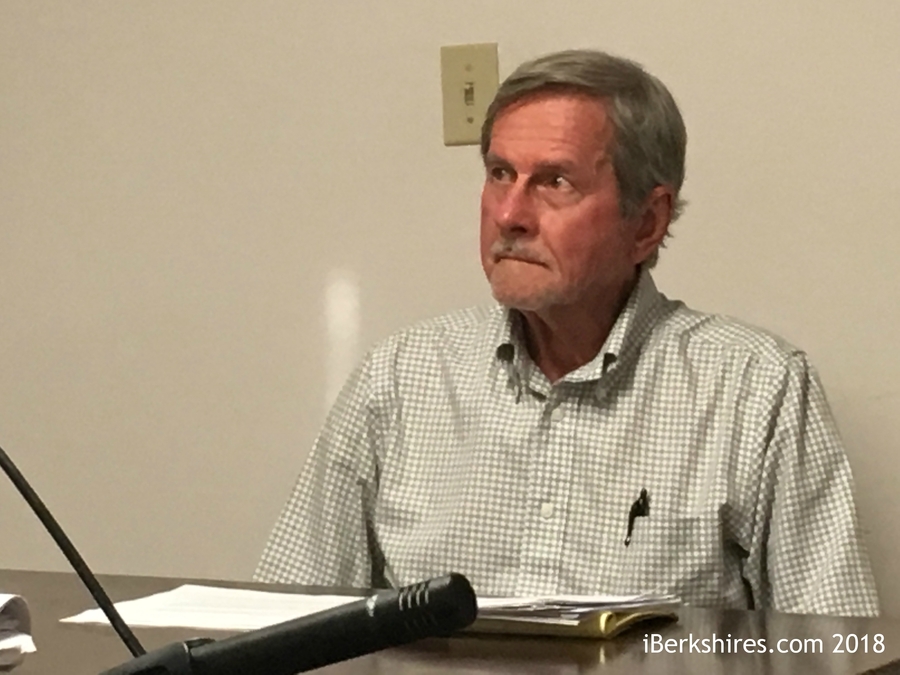
Walter Cooper, who was hired to advise the town, confirmed Verizon's findings to the ZBA.
On the other hand, Cooper did suggest that the company could solve its coverage issue with a perhaps more aesthetically pleasing alternative, a "flagless flagpole" tower in which the antennae are encased within the tower instead of mounted on the outside.
Verizon radio frequency engineer Jay Latorre told the board, as he has in the past, that the internal antenna design is not an acceptable solution in the company's opinion.
"Verizon's opinion is that the flagless flagpole solution is a solution that diminishes Verizon's ability to meet the coverage gap because it forces Verizon to put radios on the ground and reduces signal coverage," Latorre said. "We feel our solution allows us to take advantage of current technology and future technological upgrades."
Latorre and Verizon's attorney told the ZBA that the company had not done an engineering study to assess the feasibility of the "flagpole" style tower, at which point Sutter jumped in to tell the board it should force the company to go back to drawing board one more time.
Hoar responded by citing a passage from federal law that says state and local authorities "must act on applications within a reasonable period of time."
"I think since we have literally had this on the table for over a year, that's a reasonable period of time," Hoar said. "If we continue to drag it out, that gives Verizon the ability [to file an appeal with a court]."
Tags: ZBA, cell tower, telecommunications, Verizon,