Williams' BioEYES Program Expanding to Six More Schools
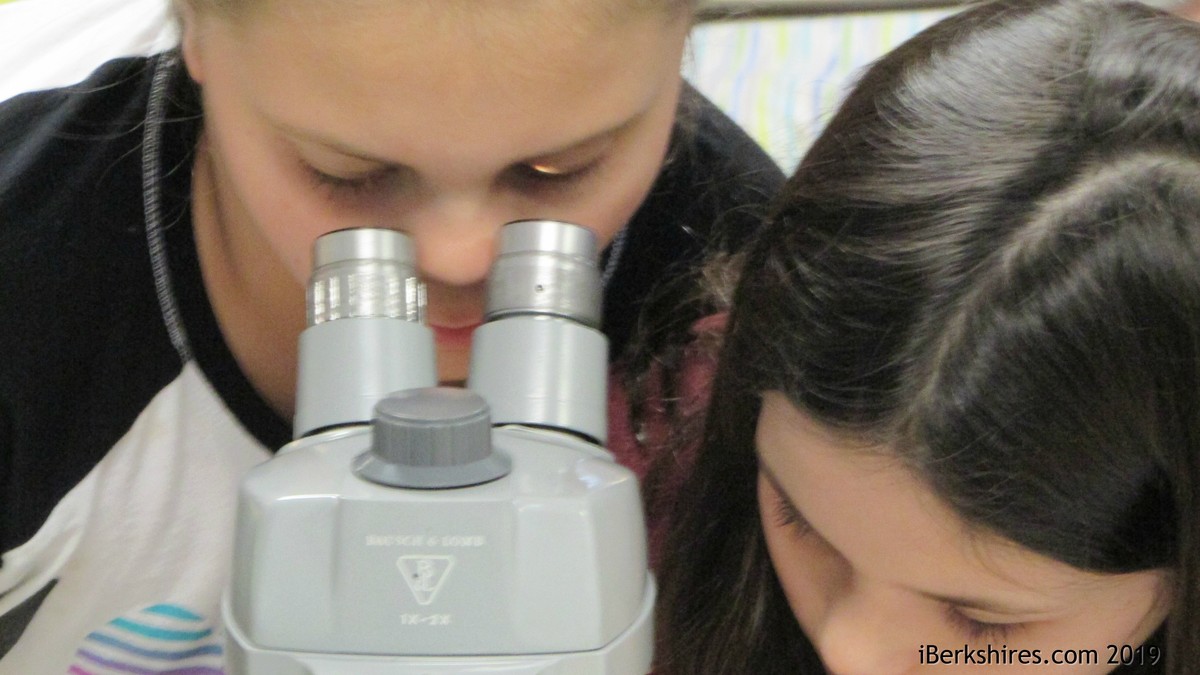
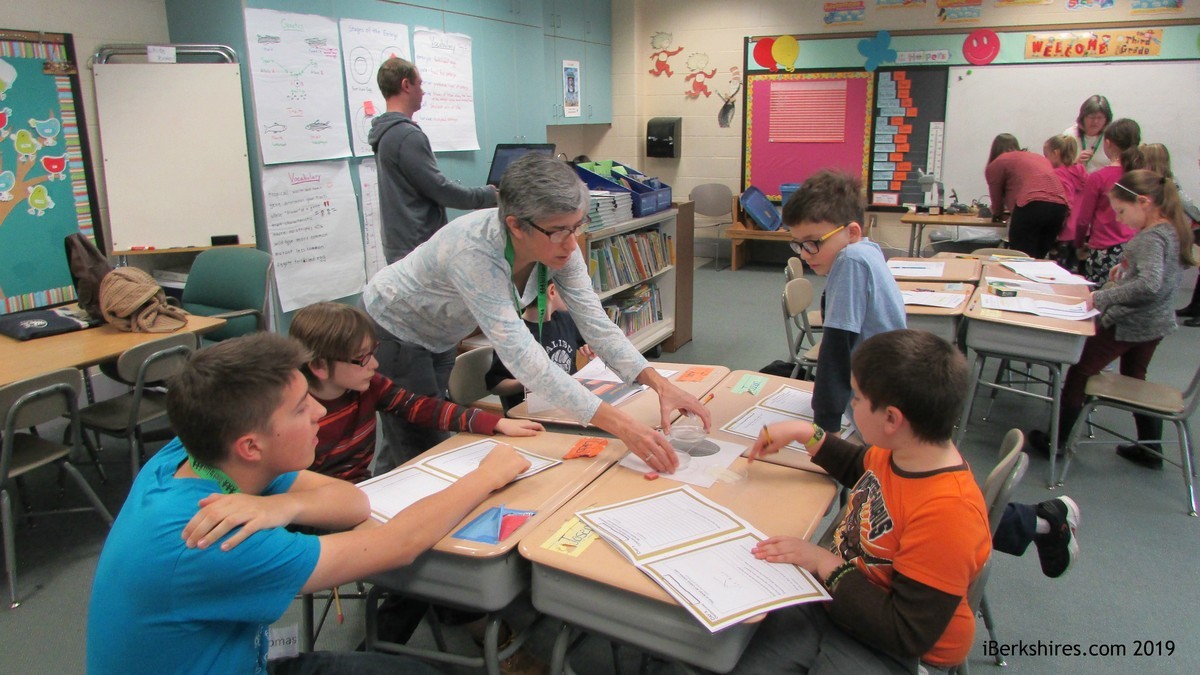
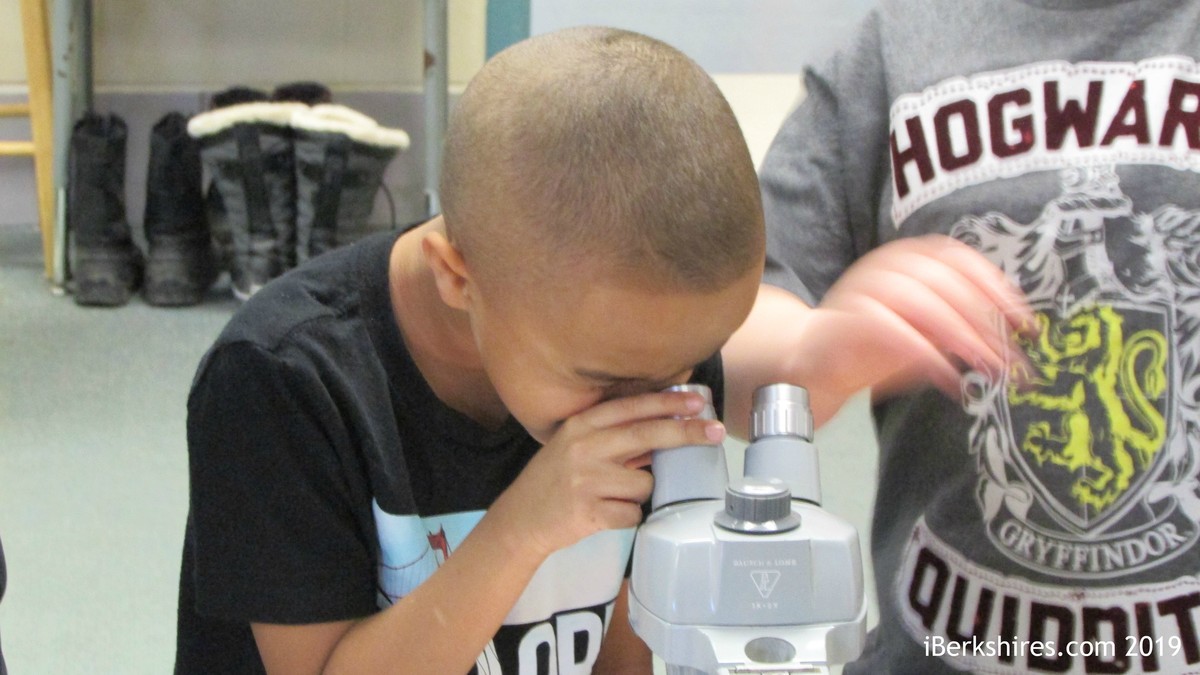
Brayton third-graders look at zebrafish hearts through a microscope.
This year, the program itself is multiplying with plans to go into more than twice as many schools throughout the region.
BioEYES, a curriculum developed by the University of Pennsylvania, has been used for a decade by Williams College professor Martha Marvin and Williams students to teach about genetics and basic biology in third- and fourth-grade classrooms.
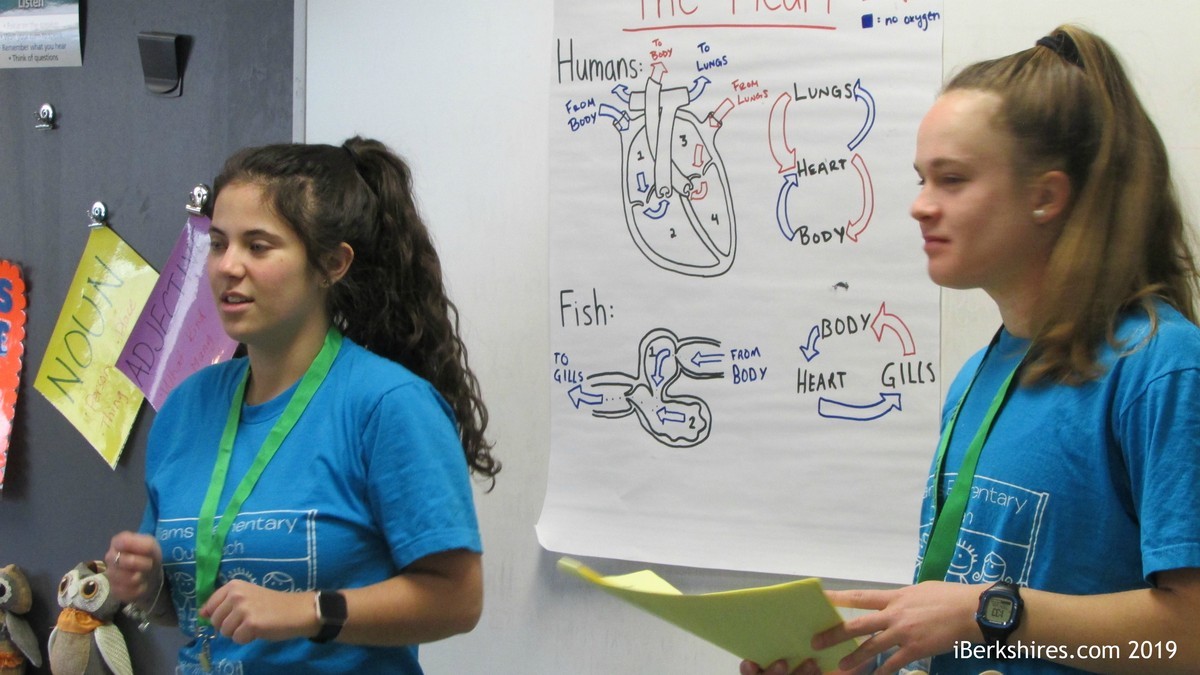
The outreach started modestly, with Marvin and a single collegian, at Williamstown Elementary School. This month, the program is back at Williamstown, Lanesborough Elementary and North Adams' Brayton Elementary, with more than a dozen Williams students who teach the program as a Winter Study course at the college, Williams' Director of Elementary Outreach Jennifer Swoap said on Friday.
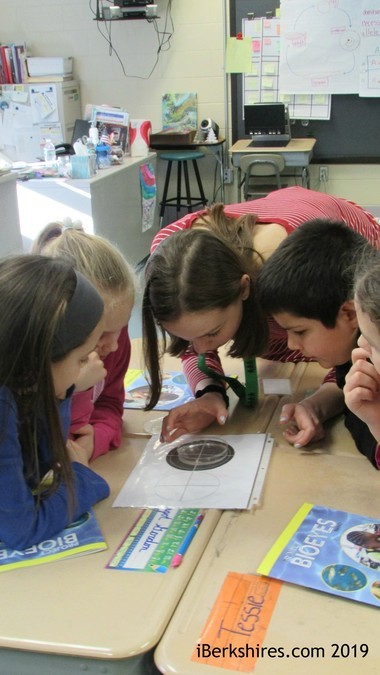
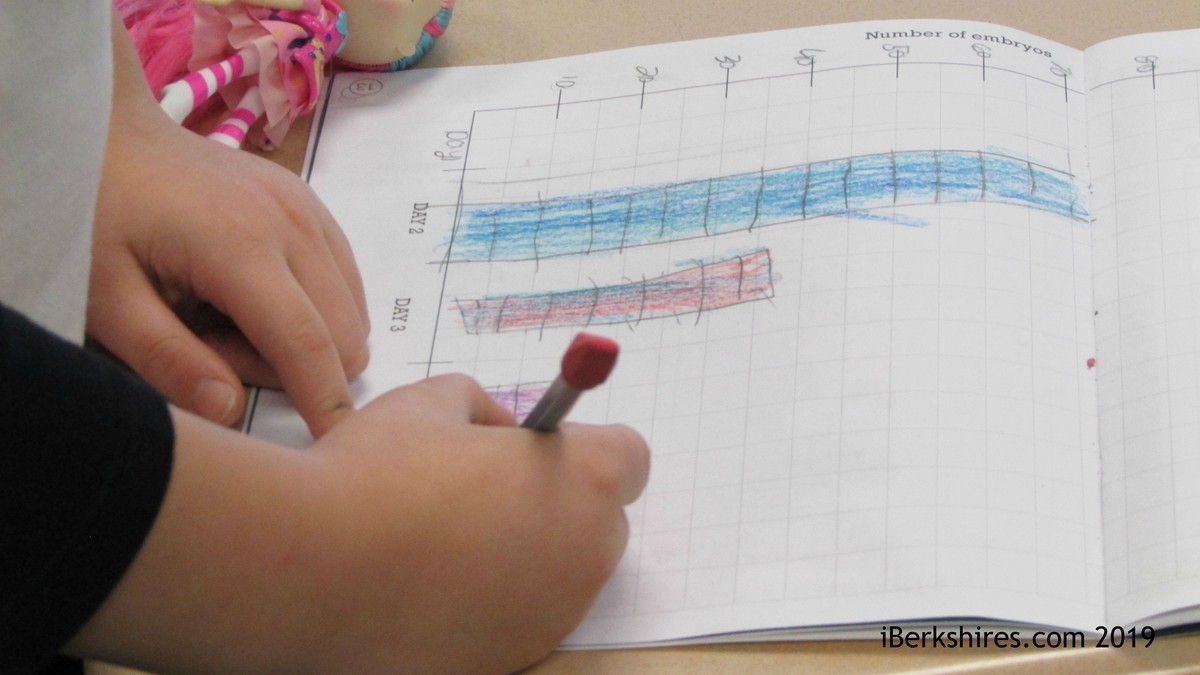
Swoap talked about the program as Marvin led a culminating discussion with two dozen Brayton third-graders, who spent the week learning about zebrafish and broader scientific principles, like using Punnett squares to predict genetic variation.
Even with Swoap, Williams Center for Learning in Action liaison Renee Schiek, community volunteers and all those college students, the program is "maxed out," with the three elementary schools where it can run weeklong BioEYES programs during each monthlong winter session at the college.
The solution: Teach the teachers.
In November, Williams conducted training in the BioEYES curriculum at the daylong Berkshire Compact professional development day.
As a result of that outreach, it plans to take BioEYES to Pittsfield's Morningside and Williams elementary schools, Lenox's Morris Elementary, Hancock Elementary, Pownal (Vt.) Elementary and Pittsfield's Taconic High School in the spring. The UPenn program has a separate curriculum for high school students.
"Right now, we're working with those teachers," Swoap said. "They would teach the course in their classrooms, and we would provide all the microscopes and the fish. And then Dr. Marvin would go on the final day to do her presentation, and Renee and I would do support on at least one or two of the other days."
On Friday at Brayton, the kids thrilled to see the maturing fish under the microscope and observe the beating of their miniscule hearts.
Marvin explained that those tiny organs are at the heart of her research at Williams.
"You might ask, 'Who wants to cure heart disease in fish?' " Marvin told the children. "Maybe we want to cure heart disease more in humans than fish, right?
"The point of doing research in fish is that fish are a lot like humans, even though they don't look it. The genes that you use to build a fish are the same as the genes you use to build a human. ... The same gene that causes heart problems in humans also causes fish to have weak hearts."
Williams' BioEYES program has been a yearly staple at Williamstown Elementary since its beginning 10 years ago. This week marked at least the fourth year at Brayton, and this January's lessons will conclude with the program's fourth annual stop at Lanesborough Elementary Jan. 22 to 25, Swoap said.
"We've wanted to reach out to Pittsfield, but the distance makes it difficult to do it over Winter Study with the Williams students," she said. "But it's a great program, and Dr. Marvin is willing to share her time.
"The model they use at UPenn in Baltimore is they do teacher trainings and the teachers do it in their classroom. So that's what we're trying to emulate. ... It seems like it's a good way for Williams to support science in schools that are a little bit further afield."
Tags: life sciences, STEM, Williams College,