In Pursuit of Beetle Happiness: Part 3
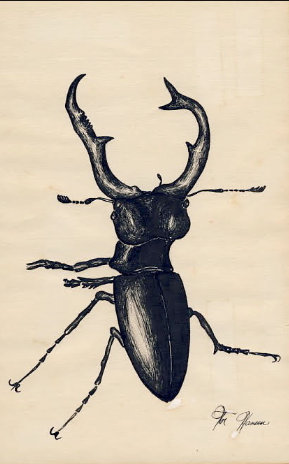
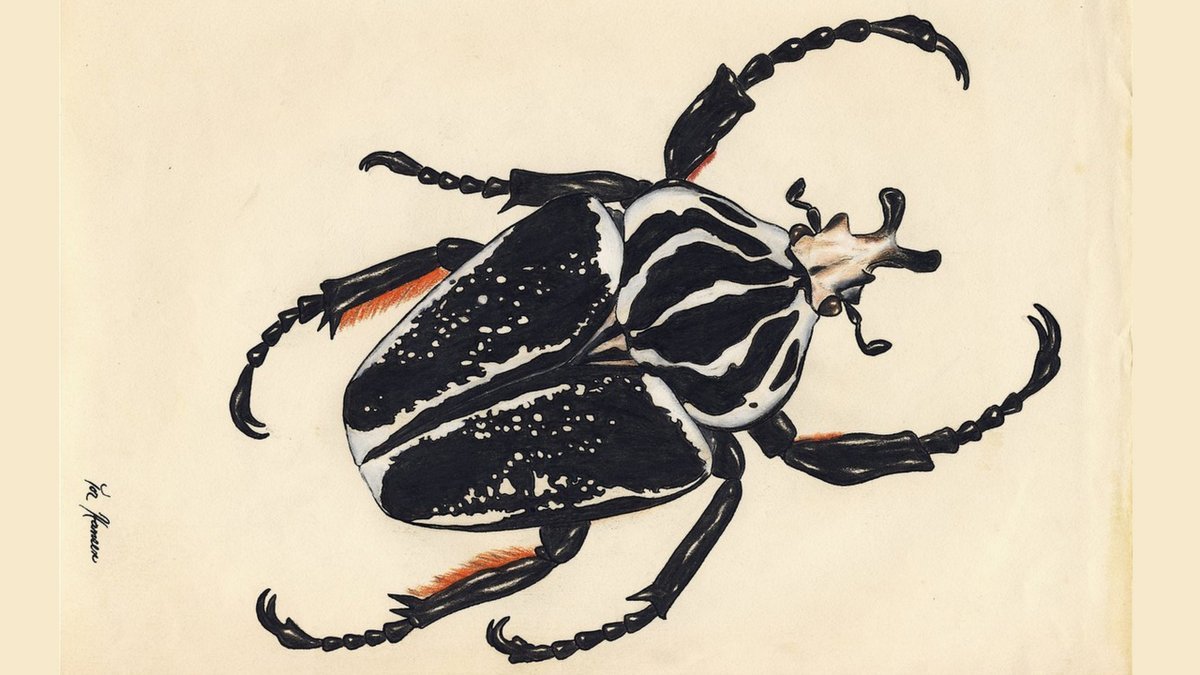
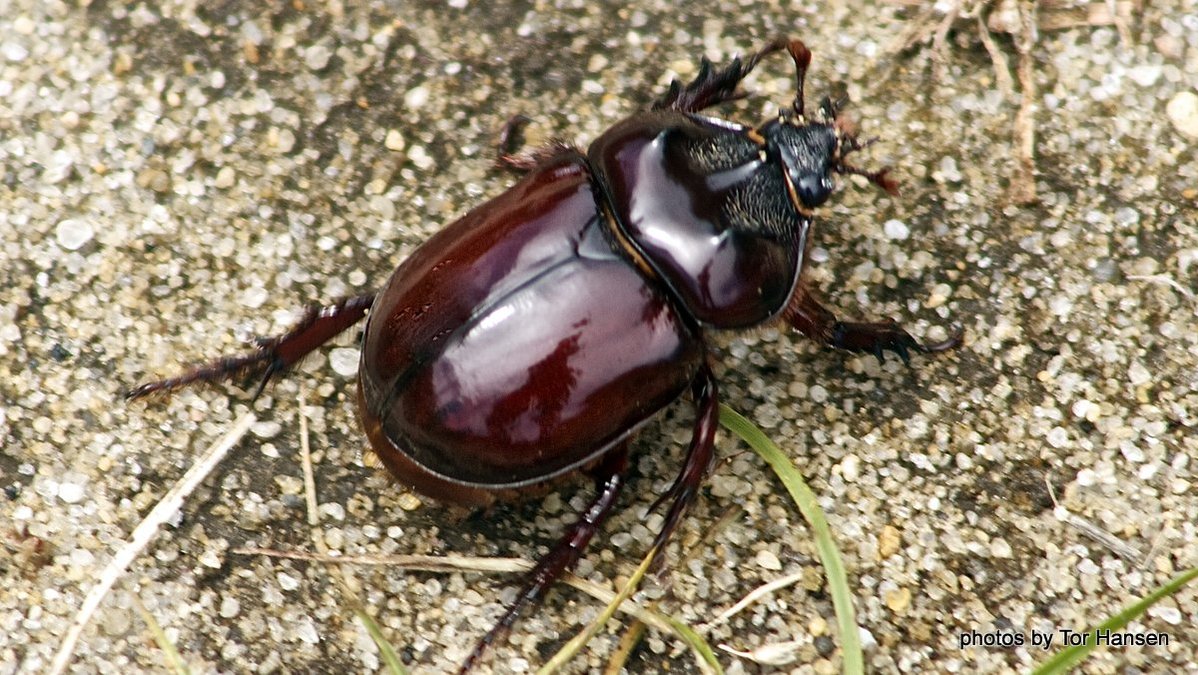
Ink sketch of a stag beetle by Tor Hansen. Below, an actual North American stag beetle.
.jpg)
This is the third in a three-part series on beneficial and invasive beetles. See Part 1 here and Part 2 here.
Switch research mosaic to Cape May in New Jersey, and situate yourself in an overgrown field gone to benign weedy neglect. While returning from a ferry crossing the Delaware Bay, I found a fleet question mark butterfly (Polygonia interrogationis) fluttering to a taller Queen Anne's Lace, and flitting down to feed on oozing sap welling from meristem and cambium within. Chafing beetles had scraped the cuticle so to reveal sap oozing from the wound, now a flourishing oasis for assorted foraging insects. The angle wing uncoiled its nimble proboscis, a hollow tubular flex straw, and sucked up sap beside the scarab chafers.
The chafers were as expected the green June beetles (Allorhina nitida) sipping needed natural sugars such as glucose and fructose. Who knows what extra juices flow as biochemicals abundant in nutrients in this left alone habitat — a weedy vacant lot. Wherein question mark butterflies are still heralds of a working co-evolution building up through the millennia, manifest in Cape May, indicates a unique and vital relationship serving plant and animal. If left intact the field will nourish butterfly and beetle continuity, thriving in a perpetuating interdependency, a bond in symbiosis anchored in tandem between Queen Anne's Lace and ephemeral butterfly and resourceful beetle.
In praise for our creator's passion for beetles, was asked of British professor J.B.S. Haldane by a group of theologians, as described in the literature American Naturalist in 1959: "What can we conclude as to what can science teach us about the nature of the Mind of God?" Renowned naturalist/writer Stephen Jay Gould later spoke of Haldane's answer, "Our Creator had an inordinate fondness for beetles." Those were the very same words as those known spoken by Charles Darwin. "Possibly apocryphal" became an endearing outgrowth in reference to the astonishing number 300,000 species that comprise named worldwide beetle diversity estimates today. The myriad numbers all fall within the Order: Coleoptera.
But many beetles degrading and destroying our forestlands summon us to rally in support of effective means to control destructive species that can decimate large stands of our very important trees. Many beetle species and their larvae are equipped with stout jaws or mandibles that are adept at chewing and shredding wood. The bulk of beetles killing our North American woodlands are by and large foreign, not evolved here, but have gained entry to the United States, Canada and Mexico by accidental import with wooden crates, boxes, and living plants. Their wood handy larvae also with chitinous jaws will burrow into bark and reside inside softer tissues including phloem and cambium, the germinative layer as well.
Serious damage done to the continental forest by accidentally imported beetles is well known to the U.S. Department of Agriculture and has cost us millions for research and methods to eradicate species found to kill our native trees. A Google archive search results in key articles that reveal for example two beetle species if unchecked could decimate ash (emerald ash borer) and sugar maple (Asian longhorns beetle). These two of several invasive beetles are under study as to control methods including effects of pheromone that attract mating partners. How difficult it is to stop their advance. Perhaps some woodpeckers feed on their larvae burrowed in the trunks, but little evidence shows our birds do feed on these beetles; their larvae are outside the usual North American food chain.
But native beetles evolved in manifold pathways that over time and the rivers flowing, developed in a network in the food chain, of interactive predator and prey, serving a natural system of checks and balances. Innovative research is underway to explain how some plants have adapted to instigate defenses. As the flora initiate ways to repel invading beetles capable of devouring soft organic tissues, certain plant species evolved structures such as thick bark, thorns and spines, and discouraging chemicals in the soil as well. Our native forests would still be pretty safe from beetle exploitation, had it not been for foreign invasions that multiply beyond control, having no North American predators to keep them in check.
Now that industry and urbanization have reduced elemental flora and key food reserves, non-invasive beetles everywhere are facing unfortunate annihilation and possibly extinction.
For example, the wondrous Goliath tribes throughout Africa are taking quite a setback in tropical rainforests wherever heavy unrestricted logging goes on without selective cutting. Their huge grubs grow underground, weighing 3.5 ounces, to become the world's largest beetle, based on their unique ability to lift objects 150 times their own weight. Goliathus will suck sap from trees and have bushy bristles (galea) at the mouth for securing sap. Some trees are felled for buena madera and commerce, but adults will become invaluable detritus feeders, indeed important as recycling specialists. Luckily they still thrive within national parks and preserves that protect existing population strongholds.
Goliath radiation into diverse populations is profound and offers, in the field of evolutionary biology, a great insight into how man can foster and regulate their habitats and restore woodland through effective reforestation efforts.
My illustration of Goliathus goliathus, a speckled aberration from the more common form, was done in colored pencil from a photograph in a wonderful book on world beetles listed below, when I missed school for a day home on sick leave, but not from a living specimen ... how I wish.
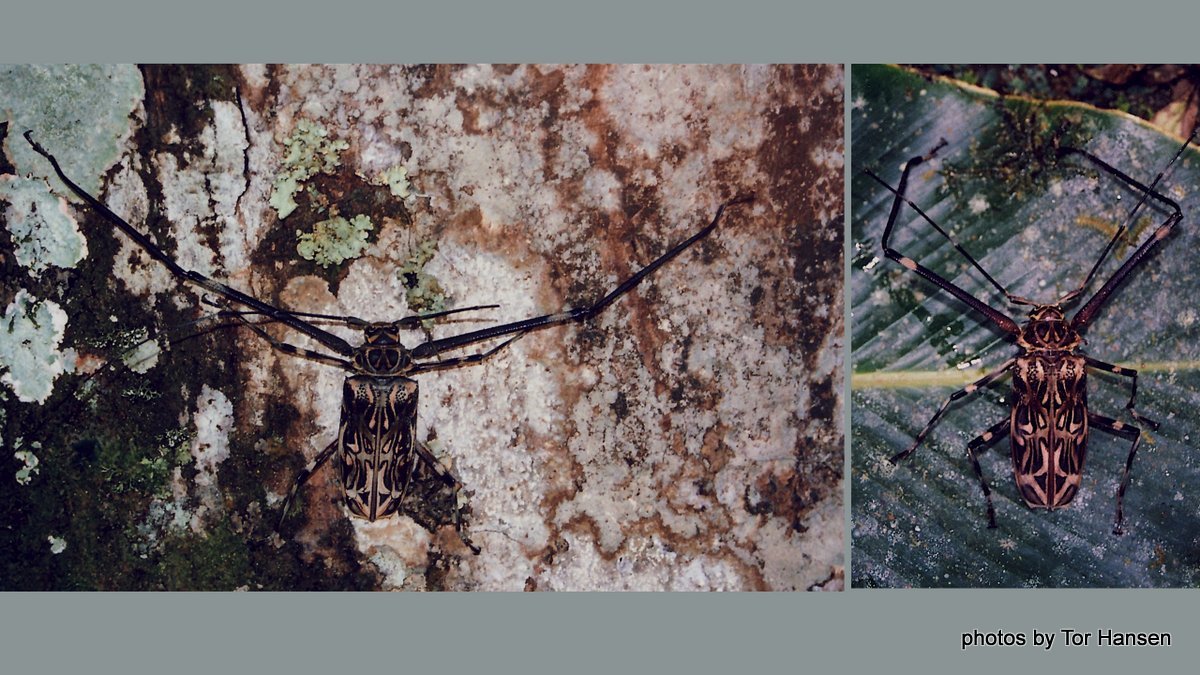
Of all the bizarre exotic beetles seen in my travels thus far, one with extremely long forelegs is nothing short of astonishing. The harlequin beetle, Acrocinus longimanus, is at first imposing, it delivers a stout bite if not handled gingerly, and to add to its fright posture it sports very long antennae. How relieved was I when I noticed its still form clinging like a decoration to a lichen-clad tree outside the cabanas at Tinalandia, Ecuador, right in rainforest habitat at that.
Many more longhorns exist around the planet, and I was so lucky to receive as a Christmas gift "Beetles," a grand pictorial book by Ewald Reitter, during my junior high school years so worthy of the coffee table, a special place reserved for indulgent inspiration. Our readers are encouraged to google "Harlequin Beetle" to learn about an incredible story of the commensal pseudoscorpion that inhabits the wing covers and gets a free ride from this most intriguing beetle from ficus to ficus tree.
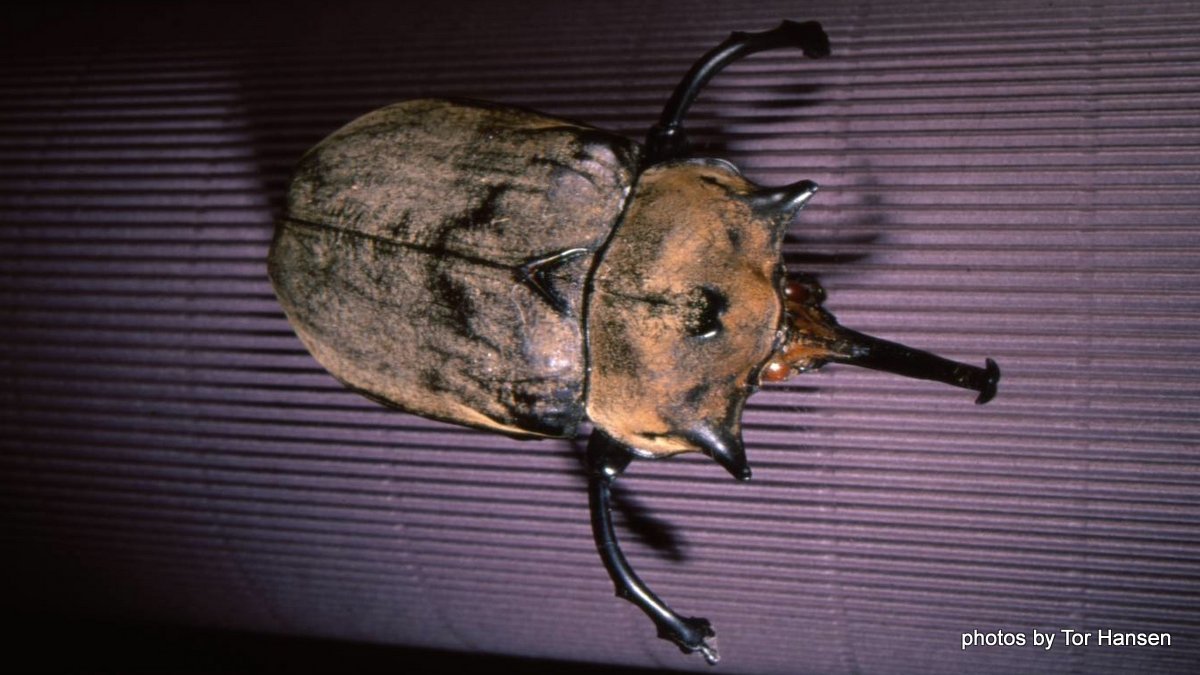
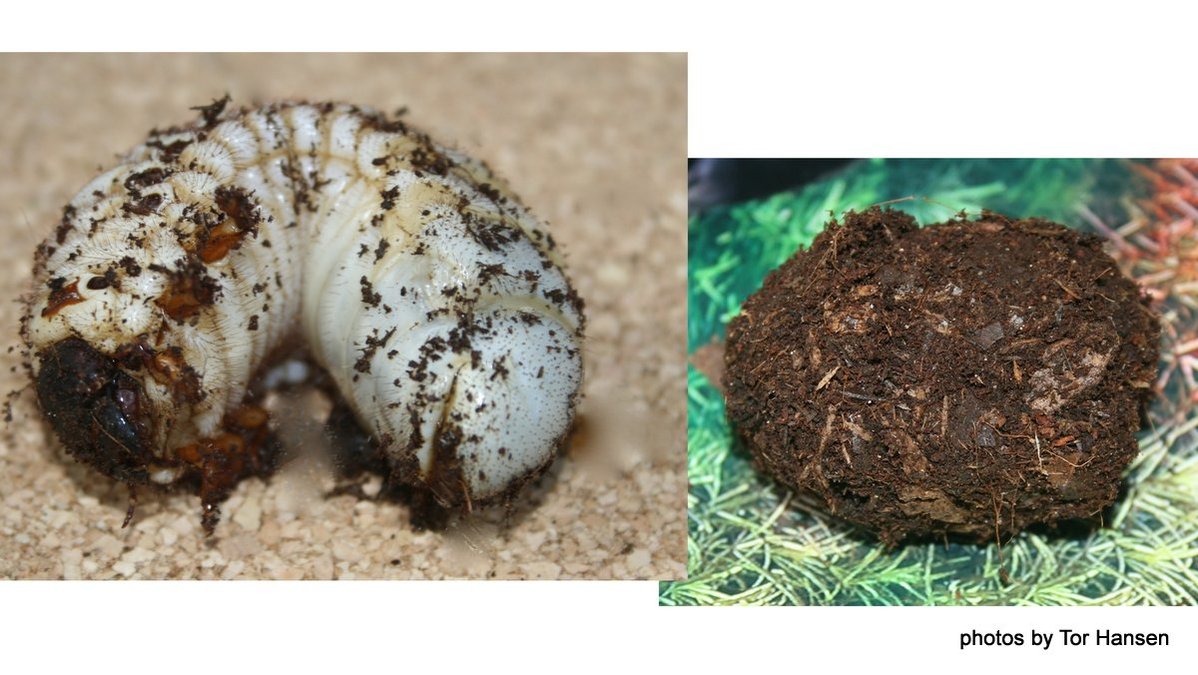
However, these measures to activate actual reforestation often fall short of objective because governments need appropriate funding to accomplish actual careful selection of trees and shrubs that comprise connecting corridors. Needed are funds to promote essential animals that effectively contribute and enhance seed germination, as well as protect and provide key pollinators that enable fertilization of the next floral generation. Example: The largest beetle in Middle and South America, in terms of weight and area, is the giant Megasoma gygus species whose huge grubs inhabit certain coconut palm trees. Quite amazing is it accomplishes transformation into a dormant pupa safely protected from adversity inside a home-made cocoon made underground of surrounding soil sort of like a sleeping bag congealed by beetle juices.
The sleeping beetle takes shape before synergistic hormones combine to cause emergence into the sunlit world. In the rush to farm the land, farmers of "milpa" may cut their host trees, and their larvae may vanish if certain trees are eliminated. Dilemmas exist as countries like Brazil become underfunded when its leaders must choose between industry and agriculture, wherein funds for implementing real reforestation fall short.
Find more facts like the lifestyle of pseudoscorpions by googling beetles of your choice and discover the state of research underway to clarify the hidden secrets of these fascinating insects. Explore the wonders of Wikipedia. Another great beetle book is "Metamorphosis" about wondrous beetle diversity in Thailand.
Keep ground beetles alive in your flower and veggie gardens, since they perform a vital role as nature's own beneficial gardeners. Indeed beneficial beetles belong.
Tor Hansen is a naturalist writer, photographer, and musician, in North County.
Hansen will speak about "Ecology & Metamorphosis in Moths & Butterflies of New England" at All Saints Church, 59 Summer St., North Adams, on Saturday, March 9, at 11 a.m. The illustrated presenation will include colorful photos and lively discussion of pollinating insects, birds, and flora that influence the lives that comprise the biological diversity in the Berkshires.
Tags: beetles, wild life,