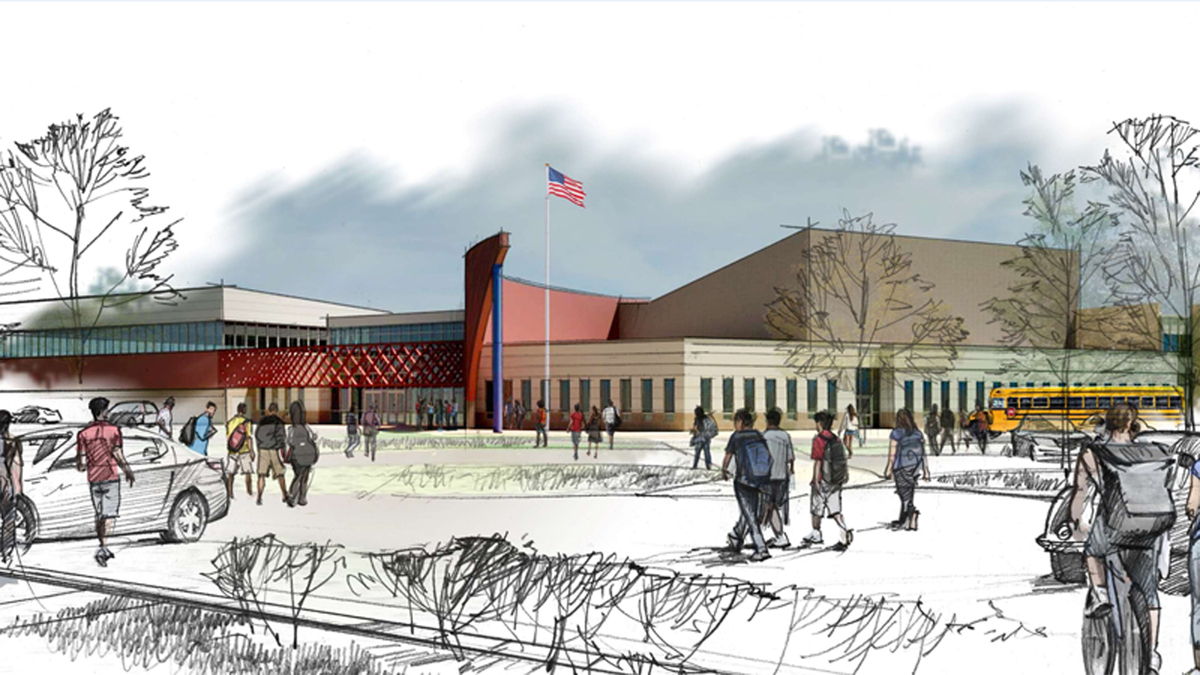
Wahconah Regional School Project Goes to Voters Saturday
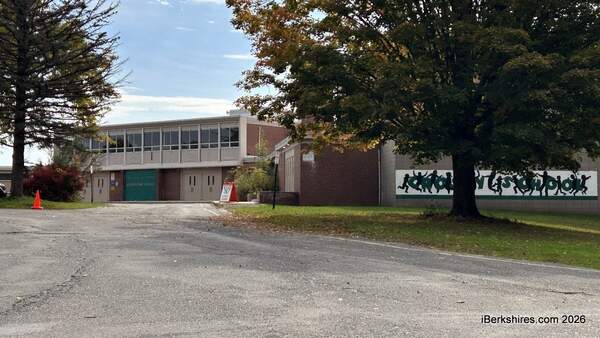
DALTON, Mass. — The co-chairman of the Central Berkshire Regional School District said this week that he believes voters in the seven-town district will back a proposal to build a new Wahconah Regional High School.
"My level of confidence on the Saturday vote is more positive than not," Tom Callahan, a Dalton resident, said. "Our committee understands the differing opinions and financial capabilities in the CBRSD. When all is said and done, speaking for myself, I believe the voters will opt for a new high school."
Voters in all seven Central Berkshire towns head to the polls on Saturday to decide whether to embark on a $72 million project.
The vote is the culmination of years of efforts by school officials and would keep the district in line for an estimated $31 million in state aid. It would allow the district to replace a building that forces teachers and students to "work around" its deficiencies with a structure that will meet the needs of 21st-century education, according to the district's superintendent.
But the building project is not without its detractors, including all five members of the Finance Committee in Dalton, by far the district's largest community, who last month voted against recommending the project to voters.
Town boards in the district have split on the issue. The Dalton Select Board, for example, voted 4-1 in favor of the project.
The voters will have the ultimate say, in the first of what could be a two-stage vote in the member towns. A positive vote on Saturday will commit the district to the new Wahconah, with an estimated local price tag of about $42 million, after the Massachusetts School Building Authority determines its ultimate level of participation.
If a majority of the district's voters favor the project, the individual towns later will have the option to hold a separate debt exclusion vote to allow tax increases above the 2.5 percent limit allowed by 1980's Proposition 2 1/2. Unlike 2 1/2, the debt exclusion is specific to borrowing for the school project and will end when the debt is paid.
Wahconah could be the latest in a recent spate of high school building projects in the county over the last decade, starting with Cheshire's Hoosac Valley in 2011 and continuing with Taconic in Pittsfield and Mount Greylock in Williamstown, each of which opened the doors to new facilities in the fall of 2018. Another proposed building project, in the Berkshire Hills Regional School District (Monument Mountain) was defeated by the voters in 2014.
Of the three successful projects, Wahconah's proposal is most like Taconic's in that it would be entirely a new build. Hoosac Valley was a full renovation; Mount Greylock went the route of an addition/renovation project that preserved parts of its 1960 building while constructing a new three-story academic wing.
At Wahconah, officials are looking to build a two-story school that will offer more academic space with a reduced footprint, Superintendent Laurie Casna told the Dalton Finance Committee at its March 20 meeting.
That panel peppered Casna and other district officials with questions about the building plan before ultimately voting, one night later, that a projected $1 million annual capital cost for 30 years is more than Dalton's taxpayers can incur.
"I've run some rough numbers, and … a $210,000 home will pay somewhere around $4,700 a year in taxes [if district builds a new high school]," Dalton Fin Comm Chair William Drosehn said in a meeting viewable on the Dalton Community Television Youtube channel. "They're presently paying just under $4,000 a year right now. It's a sizable amount of money.
"I think a new school is a great idea. Unfortunately, considering the climate we're in, I don't think the timing is very good at this point — being fiscally responsible. I'm the chairman of the Finance Committee, and I guess the town voters have charged me with being fiscally responsible."
Advocates for a new high school counter that it would be nearly as expensive for the district to not build a new building.
CBRSD Assistant Superintendent Melissa Falkowski told the Dalton Finance Committee the estimated cost for base repairs to the current Wahconah would total about $45.6 million. A new roof and HVAC system alone are estimated to cost about $9 million.
And the base repair approach would leave the district with a building that still does not meet Wahconah's academic needs, Falkowski and Casna told the Finance Committee.
One Fin Comm member asked whether the district could fund its base repairs through the MSBA's accelerated repairs program, a separate track than the building project program in which the district currently participates.
The school officials said that such a grant for repairs is theoretically possible but unlikely.
"What we've been advised by our project manager and design team is: When [MSBA has] identified a building as in need of full repair, you're not their favorite candidate for accelerated repair," Casna said.
"The building has been flagged as a full-repair building," Falkowski continued. "The MSBA is not going to take tax dollars and put it into a building that's not going to withstand the life of a roof or the life of a building."
The MSBA is funded by 1 cent of the commonwealth's 6.25 percent sales tax. The authority funds building projects and repairs with school districts throughout Massachusetts.
Prior to the Dalton Fin Comm's March 21 vote against recommending the Wahconah building project to voters, Drosehn suggested that the MSBA's reimbursement rate to Pittsfield for the Taconic project was higher than the rate anticipated in Central Berkshire because Taconic's project was more urgent than the one proposed at Wahconah.
"Part of the reason Taconic did so well — first off, it was the kind of community," Drosehn said. "And the other, as I understand it, there were structural problems with that school. The school was literally sinking. So there was a real problem. And I'm kind of thinking maybe Wahconah doesn't have those kinds of problems. There's a level of urgency, and I think MSBA takes that into account.
"I'm kind of thinking that's where the MSBA is coming from. When you put that kind of spin on it … I wouldn't blame them for coming from that viewpoint. There are a lot of other schools with a lot bigger problems. [Wahconah] needs work. There's no denying Wahconah needs some repairs. I know we're going to have to spend money on it, I get it."
In fact, the MSBA website cites Massachusetts General Law, Chapter 70B, Section 10, which lays out three factors the authority can use in adjusting reimbursement: the community's per capita income, the community's equalized property valuations and the community's proportion of low-income students (typically measured by students on free and reduced lunch).
In other words, MSBA's reimbursement level is based on economic conditions of the municipality (or municipalities, in the case of a multi-town district like CBRSD). There is no mention of the condition of existing buildings factoring into the equation.
And school officials say the problems at Wahconah go beyond the need for "some repairs." The school needs to be replaced, they say, because the current building's design does not meet the educational needs of the district.
Casna, the superintendent, began her presentation to the Finance Committee by talking not about finances but about the pedagogical concerns that drive the district's design for a new building.
"One of the driving factors was a visioning session that took place over the course of two days last winter," she said. "What does the building need to do for our children … and, as a result, what does it need to look like? MSBA requires that you submit that education plan, have it approved and have it drive everything you do. Our education plan is supported by the building that has been brought forward.
"The feeling right now is that there's a lot of effort that goes into working around the [old] building. This [proposed new Wahconah] is a building that facilitates the work."
Polls will be open from 10 a.m. to 4 p.m. on Saturday in all the Central Berkshire Regional School District towns. More information about the proposed project is available here.
Tags: MSBA, school project, Wahconah,