

Williamstown Elementary Pupils Given Reusable Water Bottles
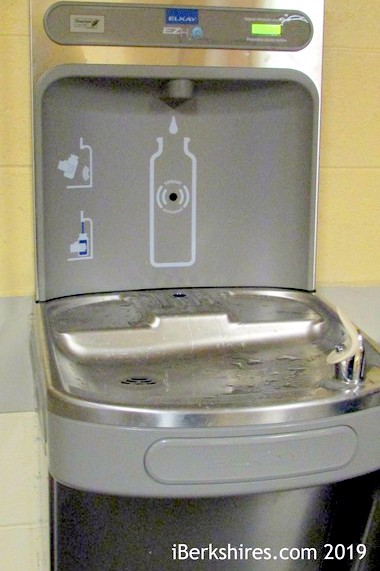
Two bottle filling stations were installed at drinking fountains in the school.
The latter is not a pretty picture, the children were told, as they saw photos of the 600,000-square-mile Great Pacific Garbage Patch and heard that an estimated 80 percent of single-use plastic water bottles end up in landfills, where they will take 450 years to break down.
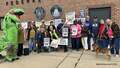
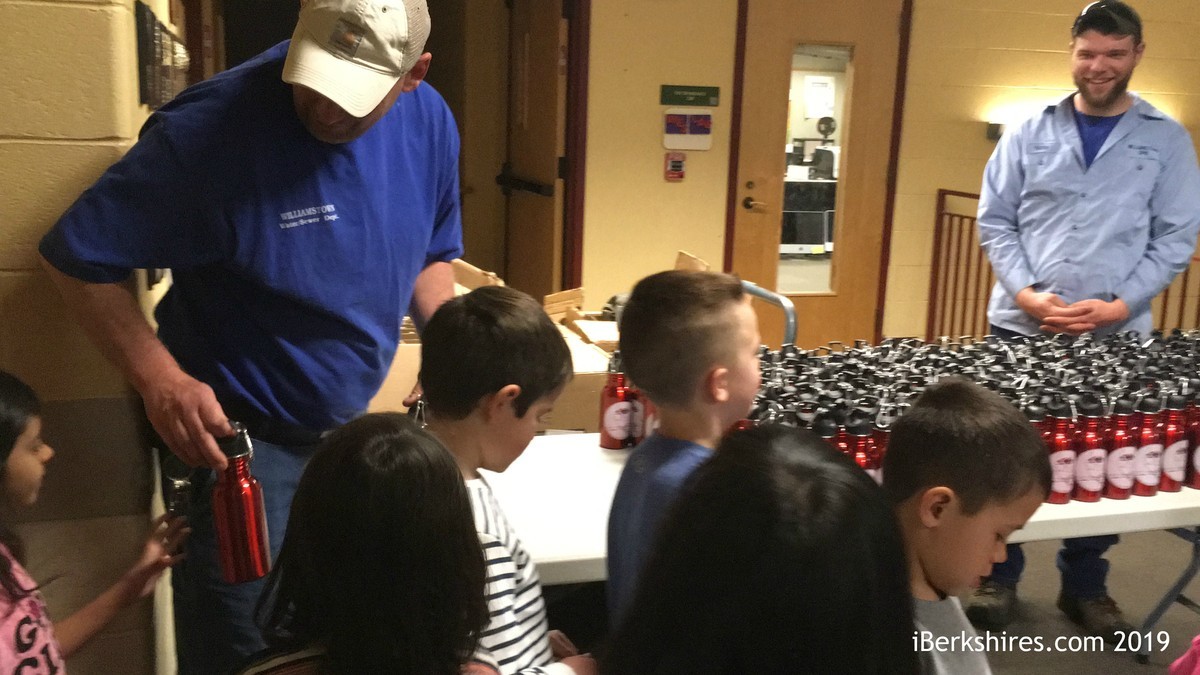
But the message was not entirely bleak because the messengers — employees of the town's water department — came bearing gifts that will help the youngsters do their part to help address the issue.
"I thank you guys for having us in today to teach you a little bit about where your water comes from, about what we're doing for the planet right now and how you guys are going to make a difference," Williamstown Water Superintendent Ed Rondeau told an assembly of pre-K through second-graders in the school's auditorium.
"We're going to start today by helping you make a difference. These are brand-new, stainless steel water bottles. Every child in the school will get a brand-new water bottle today to take home. … What we want you to do is get in the habit of is fill this bottle before you leave your house in the morning, clip it on your backpack. When you need more water during the day — gym class, recess, all the activities of the day — the fountains are here and also outside."
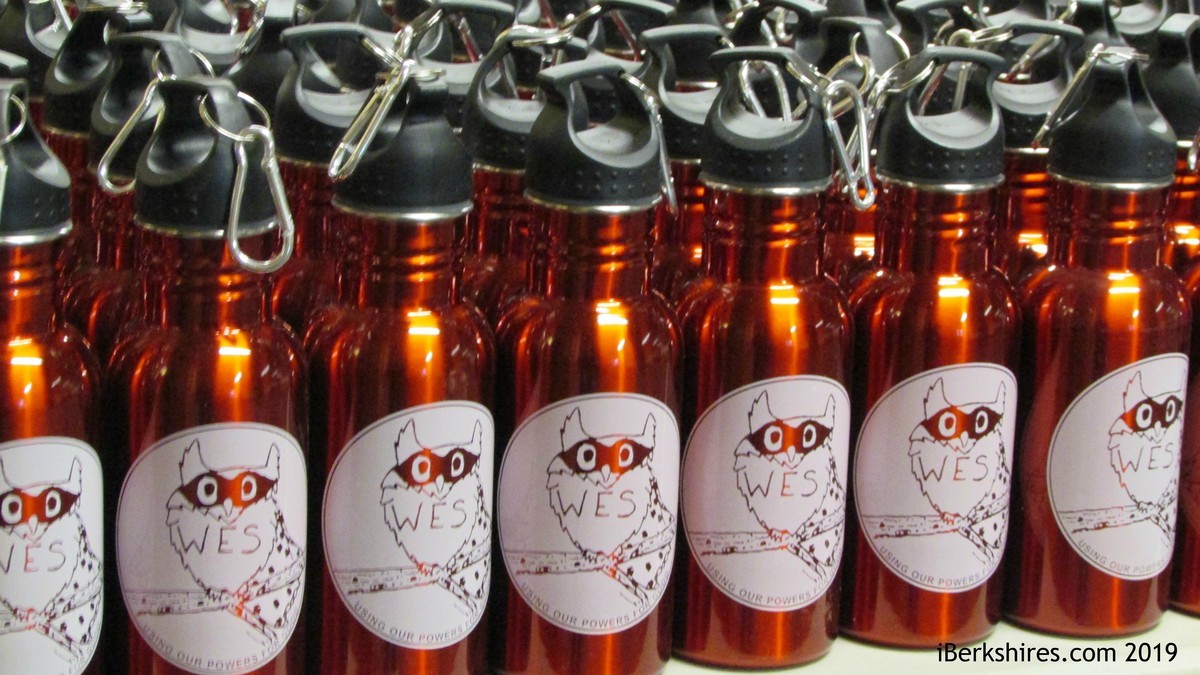
Rondeau and his staff were at the school to celebrate National Drinking Water Week. And the reusable bottles — bright red with the elementary school's logo emblazoned on the side — were provided free of charge out of the Water Department's budget.
The bottles complement the two bottle filling stations that Rondeau and his staff installed at the school during the recent April vacation. He volunteered to install them beside existing drinking fountains on the first and second floors after Principal Joelle Brookner mentioned how much she admired similar stations at the new Mount Greylock Regional School.
The fill stations feature a digital readout that tracks the number of single-use plastic bottles that are replaced by the water dispensed at the fountains. In just a couple of weeks, that number was over 1,000 on Friday morning, and Rondeau said he expected it to grow exponentially after the children received their new reusable bottles.
Rondeau and his colleagues David Larabee and Kirbie Nichols explained the many reasons why those bottles are a good choice.
Thanks to recent investments by the town, the bottles can be filled not only at the fountains in the school but at three outdoor fill stations — one at each end of Spring Street and one on School Street near the school playground. A fourth station will be installed on the school grounds near the playground between the school and Williamstown Youth Center, Rondeau said Friday.
Drinking the town's water, which consistently receives high marks for its quality, is a healthy alternative to the sugary sports drinks contained in a lot of single-use bottles, Nichols pointed out.
And water from taps or fountains is considerably less expensive than the pre-bottled stuff, Larabee noted.
"A typical bottled water costs, on average, about $1.21 per gallon," Larabee said. "Each person in the U.S. spends about $100 a year purchasing bottled water.
"One unit of tap water contains about 748 gallons of water. One unit of tap water in Williamstown costs about $3.85. So what 748 gallons of [tap] water costs about what a case of [bottled] water costs. Big difference."
After teaching the lesson — which later was given to the school's third- through sixth-grade classes — the town employees distributed the reusable bottles to the kids.
"We want to see you using them," Rondeau said. "We want to see 'em clipped to backpacks. We want to see you filling them in public.
"Teach your parents how to recycle. You guys can be the first generation where you can take the lead and you can make a difference going forward."
Tags: drinking water, plastics, pollution, trash,