BCAC Celebrates Accomplishments at Annual Meeting
PITTSFIELD, Mass. — The Berkshire Community Action Council annual meeting aimed to showcase what has been done over the past year, but this year's keynote speech highlighted just how much work there is to do moving forward.
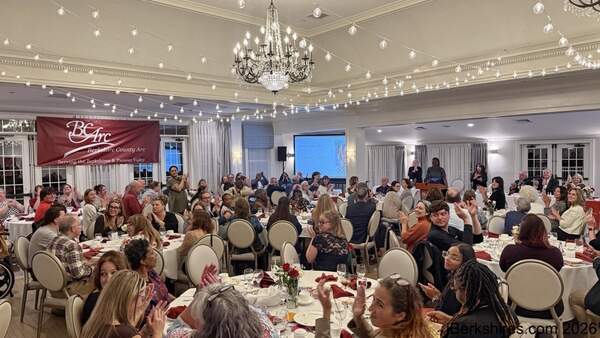
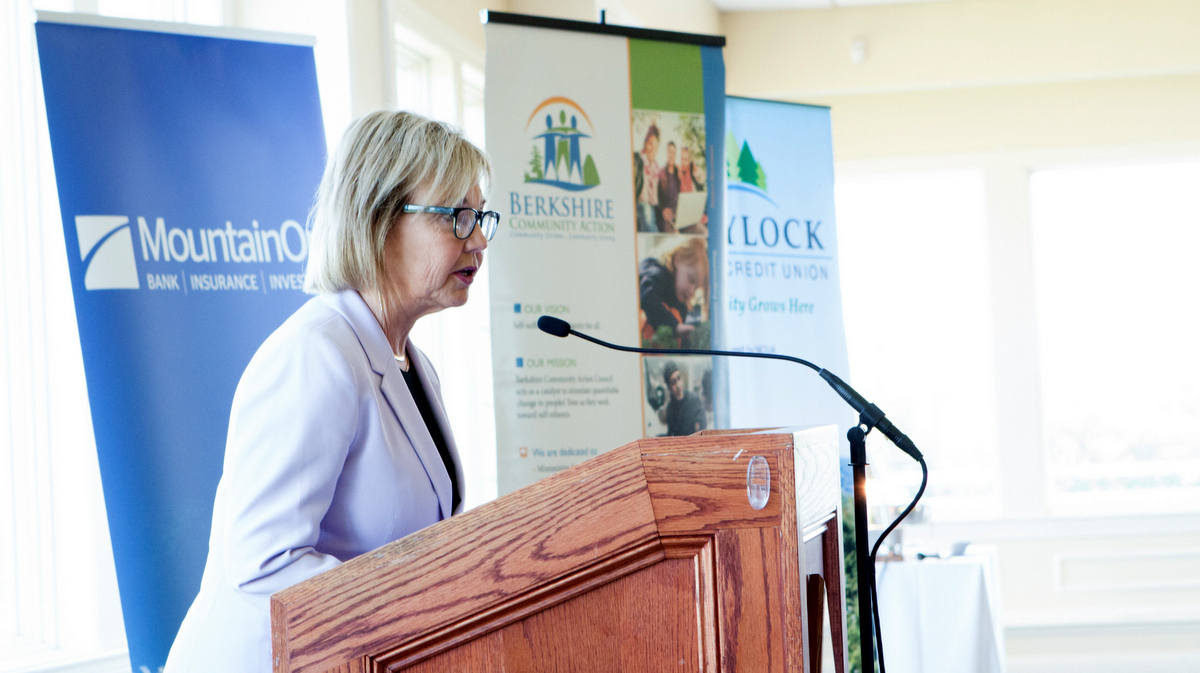
Nancy Wagman, the Kids Count director of the Massachusetts Budget and Policy Center, gave a presentation to the more than 150 guests gathered at Berkshire Hills Country Club on Friday that went back in time to show when and how poverty started winning the war that President Lyndon Johnson declared on it in the 1960s.
At first, she said, poverty did start to drop "pretty dramatically." But then, as the the country rolled into the 1980s, poverty began to rise again.
The reason, Wagman said, was clear in the graphs she brought with her to illustrate her talk. From the post-World War II era up until about the 1980s, the country's economy was growing steadily, as were wages for the the bottom, middle and top wage earners. But in the 1980s, something started to happen: wages stagnated for the bottom and middle wage earners while skyrocketing for the top 1 percent of workers.
That's important for one simple reason: "Poverty is mostly a story about low-wage work," said Wagman -- echoing the opening remarks of BCAC Executive Director Deborah Leonczyk, who said most of the people BCAC serves, outside of the elderly, have jobs -- just not good-paying ones.
"It speaks to our reality," Leonczyk said, citing the Berkshire County poverty rate of 11 percent -- including one in five children -- that exists despite record low unemployment.
There are ways to combat that reality, Wagman said in her talk: Policies like tax breaks and minimum wage matter, from local decision-makers all the way up to Washington, as do strong communities that deploy resources like affordable housing and food and fuel assistance to try to effect change. The Berkshires have agencies like BCAC to help with that, and Massachusetts has more progressive policies about issues like minimum wage. But Wagman sounded the alarm about two national issues that are could potentially have a chilling effect on the work being done here.
First, she said, the 2017 federal tax legislation that gave large tax cuts to the wealthiest Americans have removed billions of dollars from the federal coffers that could help fund programs at the state level that have been shown to succeed at fighting poverty but need financial support to survive.
"Federal budget cuts are real and have real budget implications," she said.
And second, she said, the upcoming census has the potential to be disastrous for the Berkshires. Beyond the potential controversial citizenship question that could dissuade immigrants from answering, the Census Bureau itself has identified the Berkshires as a potential "hard to count" region because the Census is rolling out electronically and access to broadband internet is sporadic in the county.
"If you don't have access to the internet, it's going to take an extra step to get counted," Wagman said, stressing that it really does matter that every single person is counted -- not only for reasons of congressional reapportionment but also for accurate federal funding for a slew of programs.
"If people don't get counted, they become invisible," she said, adding that 20,000 children across Massachusetts were missed in the 2010 Census, potentially leading to underfunding of childhood resources that could have a devastating impact.
She implored everyone in the room to make it a priority in whatever way they could do help ensure an accurate Census.
"It is essential that we count every single person in our communities," she said.
Those people in the room applauded Wagman's call to action, and nowhere has that call already been heeded more than at BCAC.
Leonczyk praised her "amazing dedicated staff" who helped run a variety of program this past year, including two new programs: the Build a Bed Program to assist low-income families by providing beds for children and the GROW Your Home Program, a credit-building micro-lending program for individuals and families in need. These are in addition to a slate of other programs BCAC operates: the Emergency Assistance and Referral Program, the Neighbor to Neighbor Program, the Holiday Elf Warm Clothing Program and Backpack for Success, among others.
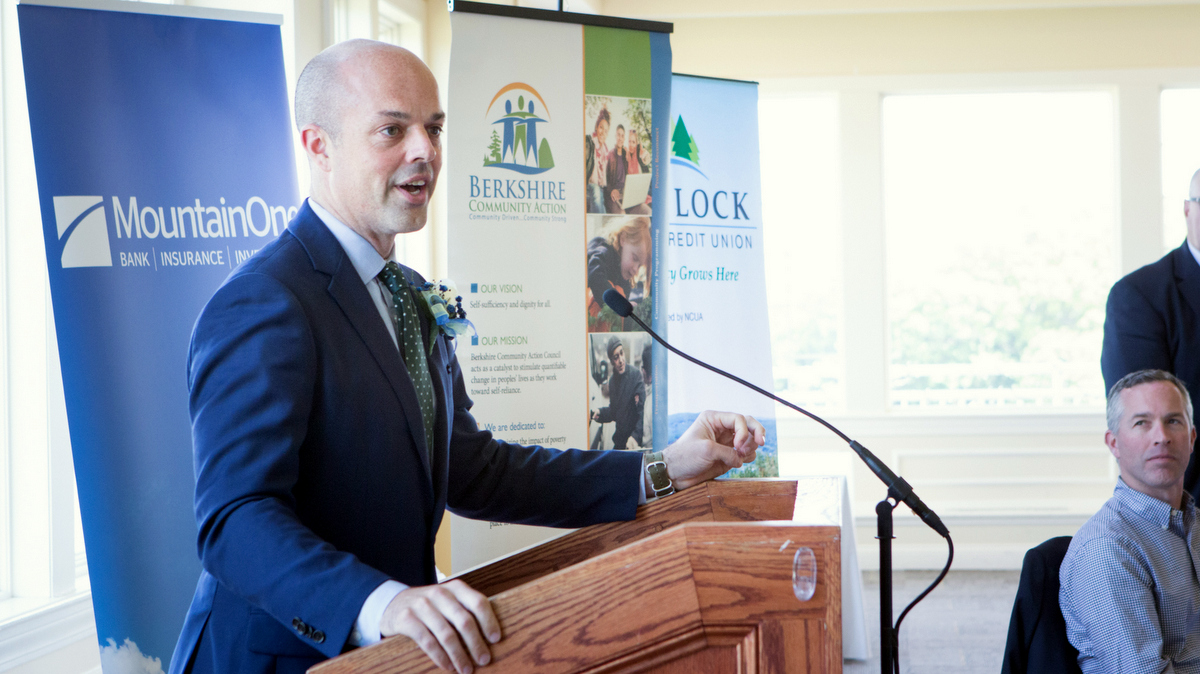
BCAC handed out three awards on Friday: BCAC's Volunteer of the Year went to tax assistance volunteer Williams Eulian, and the Dave Lachowski Service Award went to Butch Winters of the weatherization team, who has been helping BCAC since 1985. Leonczyk also presented the Community Hero Award to state Sen. Adam Hinds, whom she called a "powerful voice" for the Berkshires.
And former North Adams Mayor Richard Alcombright, now the president of BCAC's board of directors, praised the volunteers who serve on the board and all volunteers who serve the community in any other way. When he asked people in the room to raise their hands if they volunteer in any community capacity, most hands went up, and Alcombright quoted an unknown author by saying "volunteers are love in motion."
"Nothing could be more true," Alcombright said, urging everyone in the room to keep doing what they are doing to make the Berkshires a great place in which to live and work. "Direct the kind of community you want to live in, and become love in motion."
Tags: annual meeting, BCAC, recognition event,