Forum Makes Seniors Aware Of Cyber Scams
Sen. Adam Hinds had an opportunity to bring the presentation to Pittsfield and it tied right in with the series of technology classes the senior center has begun.
Now all of a sudden your grandson is in trouble. He's being held overseas and the only way to free him and bring him home is to wire money to a foreign nation.
It's a scam. The caller wants you to feel urgent. They want you to feel like it is an emergency. And they want you to spend your hard-earned cash to an offshore account authorities will never be able to track down.
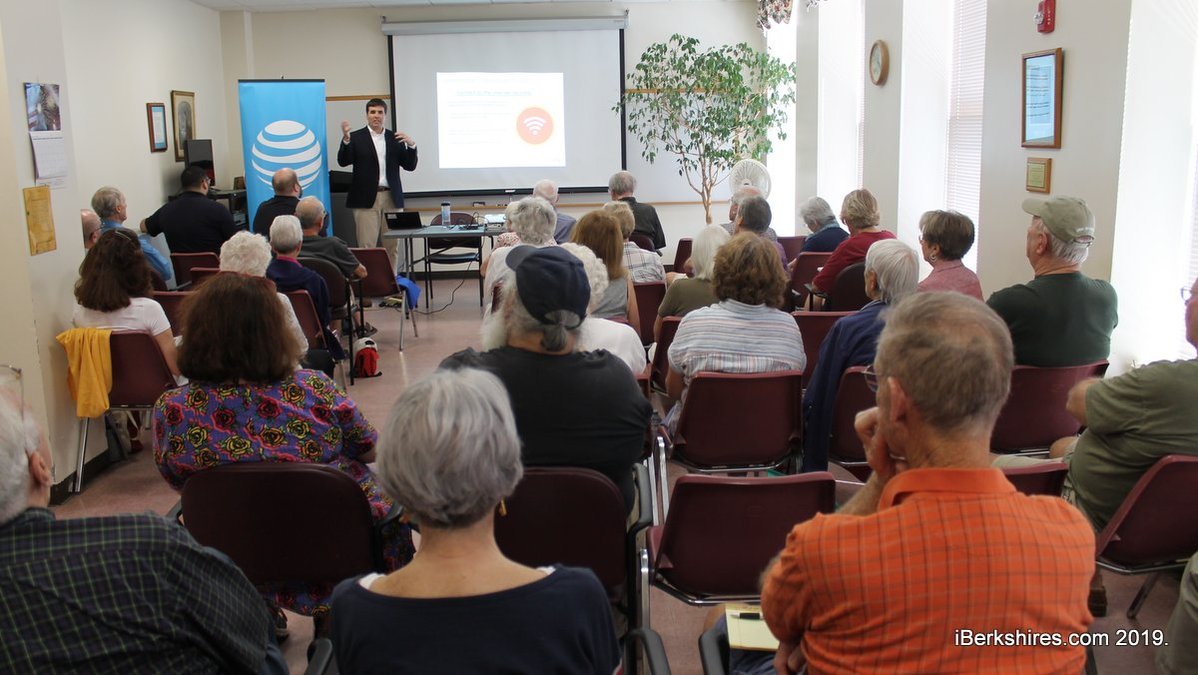
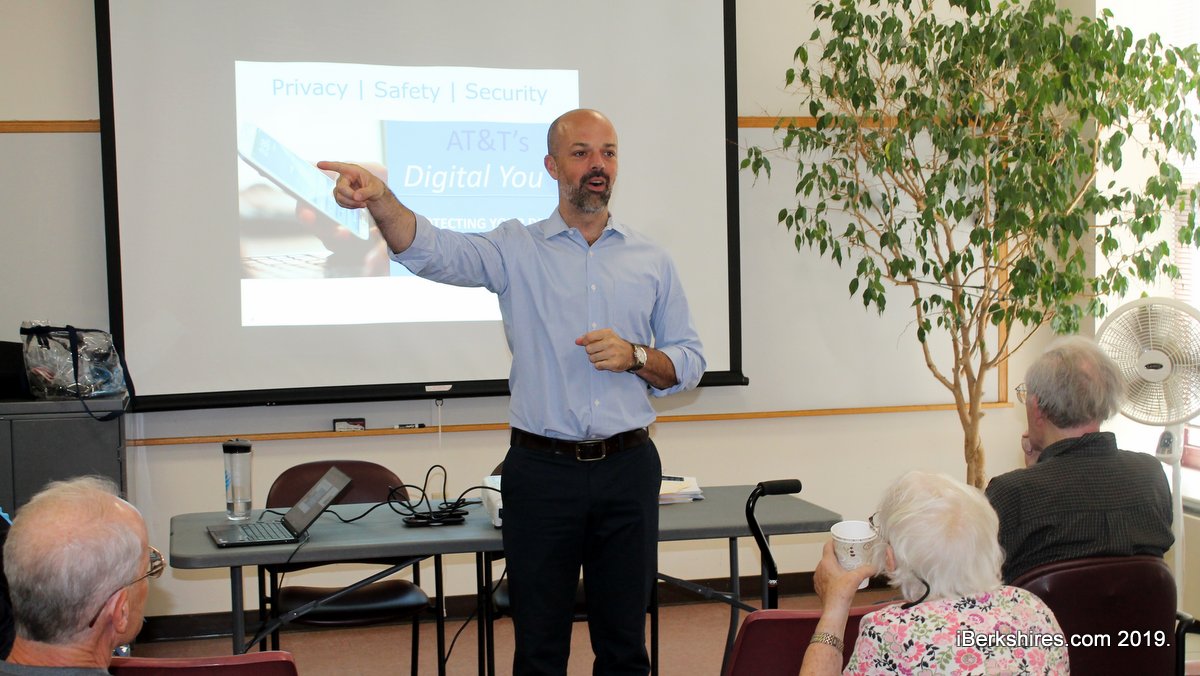
"The level folks will go through to trick you and get you to answer the phone knows no bounds," Ed Donnelly from AT&T told a crowd of seniors at the Ralph J. Froio Center on Friday.
That scam is one example that keeps evolving. And day after day, people fall for them and they lose out. Seniors specifically aren't as tech-savvy and tend to be targeted.
State Sen. Adam Hinds and Council on Aging Director Jim Clark brought in tech experts to help seniors learn a little bit more about how to protect themselves. Hinds said Donnelly has been giving presentations throughout the state and offered to bring it here. He was happy with the turnout at the afternoon session.
"The piece that really caught my attention is that it feels like every single day we are learning about a new scam by phone or by email or countless other and they evolved. It is like cat and mouse or whack-a-mole. You get ahead and something else comes up," Hinds said. "It is this type of a forum we need to keep having so we are all aware and not succumbing to the billions of dollars countrywide that are handed over in scams."
Clark said it ties right in with the senior center's recent push to help seniors understand technology better.
"Normally the joke is if you want your phone fixed to give it to your 13-year-old grandson and he'll fix it for you. We've become the 13-year-old grandson, trying to help people out," Clark said.
The Council on Aging is holding a number of technology-based seminars for seniors. Friday's focused on avoiding scams but Clark said the plan is to cover an array of topics to help seniors become more adept with technology. He said often seniors were asking him about setting up various features and downloading apps so it was natural to start classes to tackle those issues.
"The tech has probably been the most important part because people come to me and say I've spent all this money on a phone, what do I do with it? How do I do it?" Clark said. "We are just looking at important things for our seniors."
Donnelly gave an overview of how seniors can protect themselves before staying to answer individual questions about smartphones seniors had. He began his presentation with the protection of the phone itself.
"The best practice is to be locking it and using a password," he said. "That is one of the most important things you can do, god forbid you lose your phone it is not open season."
Phones carry so much personal information now that it is important to ensure it's secure, he said. He advised finding the middle ground for a password between some easily guessed — like 1234 — and something so complicated that the phone's owner can't remember it.
He advised the seniors to be aware of their internet connection. He said to check to ensure there is a lock somewhere in the address bar showing the website is safe and to always look for the S at the end of HTTPS.
He said public wifi at libraries and shops are not secure. He advised the seniors not to make purchases through their phones when connected to those. But, those networks can still be used for general browsing. He said using data is more secure than open networks because of encryption but he said any personal information being entered should really be done with a secure wifi connection.
The security is to avoid people from taking over the device and using the information for nefarious purposes. He said AT&T can remotely tap into a device to help fix it but they won't do so unless asked. But scammers have been known to lock up devices and demand money or worse.
A common scam people fall for is with a notification saying the computer or device is infected with viruses. The notification calls for giving access to the device. Donnelly said providers will not be sending those notifications. It's a ploy.
"AT&T is not monitoring everybody's phone to see if there are viruses," he said.
He alerted the seniors to a number of phishing scams. He said they don't need to be aware of every single one but that the concept is the same — the scammers are trying to get information.
"If it sounds too good to be true, it is too good to be true," Donnelly said.
These are times when emails or calls come in and the caller tries to engage the person in conversation and extract personal information. Donnelly said in no circumstances will banks or doctor's offices ever solicit for information over the phone.
He said if there are offers for free hotels or airline tickets that one hadn't asked for, it's probably a scam. If an email or text is filled with grammatical mistakes, it is probably a scam. He told the seniors to watch where the email is coming from specifically because often it may appear to be from a legitimate source but isn't.
Another scam is when the phone rings just once. The person receiving it out of curiosity calls back. And now they are being charged for the call and the money is going to the scammer. There is a simple solution to that — don't call back.
"If it is an urgent problem, they will leave you a message," Donnelly said.
He said people don't change phone numbers often anymore so to keep the contacts up to date, that way any time the phone rings the name of the person comes up. There are "spoofing" calls happening now in which a number is masked to appear local. Additionally, Donnelly said the more you answer the phones for those calls, the more you get targeted.
"The best defense is just ignoring the calls," he said.
He touched on robocalls. This is automated computers doing the same type of things. He said robocalls can be used for good — when it is a reverse 911 from the Police Department providing important information or for things like domestic violence organizations so an abuser isn't alerted to who is calling. But that isn't always the case.
Donnelly said since 2016, AT&T has blocked 12 million robocalls per day on average and has blocked 4.5 billion illegal calls. And that's only one provider.
"It is a computer program running through and buzzing everybody all of the time," he said.
Donnelly said the tips are a lot of common sense. The overview provides some specific scams and those will change somewhat but the concepts will be the same. Donnelly hopes the seniors are equipped and aware of the types of ways scammers try to fool them.
"We want to talk about the skills and the world view you want to start deploying," he said.
Tags: COA, phishing, scam, seniors,