Clark Art Institute Names Director of its Research and Academic Program
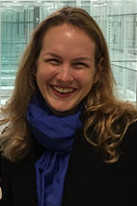 |
WILLIAMSTOWN, Mass. — Caroline Fowler has appointed to serve as the Starr director of its Research and Academic Program.
Fowler joined the Clark staff in 2018 as associate director of the Research and Academic Program. She was named interim director later that year and has led the program for the past year.
"After undertaking a thorough search and interviewing a host of candidates from around the globe, we came to recognize that the best candidate to fill this important role was one who was already a member of our staff and who has been making important contributions to the Research and Academic Program," said Olivier Meslay, Hardymon director of the Clark Art Institute. "Caroline Fowler is a distinguished scholar, an accomplished author, and an effective and very capable administrator. Since joining the Clark's staff, she has earned the respect and admiration of her colleagues and the academic community for her energy, intellectual rigor, and vision. Her hiring marks an exciting new chapter for the Research and Academic Program, and I am confident that Caroline will move us forward with new ideas, fresh perspectives, and an infectious enthusiasm for embracing our future."
As director of the program, Fowler will lead RAP in conceptualizing, coordinating, and developing the Institute’s art historical research and academic efforts, creating intersections where the knowledge and insights of museum and university professionals come together.
Fowler is the author of two critically acclaimed books, "The Art of Paper: From the Holy Land to the Americas" (Yale University Press, 2019) and "Drawing and the Senses: An Early Modern History" (Brepols Publishers, Harvey Miller book series, 2017). Prior to joining the Clark, Fowler was the A.W. Mellon Fellow in the Physical History of Art at Yale University from 2016 to 2018. While at Yale, she taught graduate seminars on the history and philosophy of conservation practice and coordinated workshops and symposia that introduced graduate students to the theoretical and practical concerns of working with objects.
After completing her bachelor's degree in the history of art at New York University, Fowler earned both her master's degree and Ph.D. in the history of art from Princeton University, specializing in early modern art. She completed postdoctoral fellowships at the Center for Advanced Study in the Visual Arts in Washington, D.C., and the Getty Research Institute in Los Angeles, and she held the Panofsky Fellowship at the Zentralinstitut für Kunstgeschichte in Munich. Fowler is a specialist in early modern art and intellectual history and has published widely on intersections between artistic practice and philosophy.
"The Clark's Research and Academic Program has earned its reputation as a place where new and challenging ideas are raised, engaged with, and vigorously debated. I welcome the opportunity and challenge to sustain RAP as a place of rigorous intellectual inquiry while also expanding the theoretical commitments of the program to meet the challenges and demands of our current world," Fowler said. "The unique combination of the Clark’s resources—particularly its library—and our relationship to the Williams College Graduate Program in the History of Art distinguishes the Research and Academic Program and makes this a dynamic center of academic pursuit. The commitment to both the mid-career and senior scholars who come to the program as our fellows and the Williams College graduate students who live on our campus offers an extraordinary and unique combination that allows for a constant cross-generational dialogue about not only the arts but also the ethical challenge of pursuing research and critical writing.
"RAP plays a central role in nurturing this discourse, and I am honored to be in a position to listen, to learn, and to ask the necessary questions so that RAP plays a crucial role in defining art history for the next generation."
The Clark is one of a small number of institutions globally that is both an art museum and a center for research, critical discussion, and higher education in the visual arts. Its Research and Academic Program encourages fresh approaches to the production of knowledge about all periods and genres of art, and particularly the objects, conditions, and issues they comprise.
Tags: Clark Art,