Williams Libraries Receives Collections from Celebrated Poet, Scholar
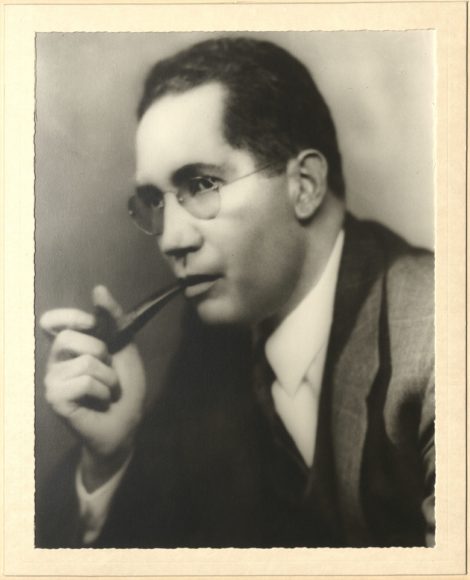
WILLIAMSTOWN, Mass. — Williams Libraries has received collections of books, manuscripts and record albums documenting the life and work of one of America' most influential poets and scholars: Sterling Allen Brown, a Class of 1922 graduate of Williams College.
Brown's family made the donation to the Williams College Archives, where the materials will be preserved, cataloged and made accessible to researchers in Special Collections. The gift includes Brown's personal library, manuscripts, photographs and sound recordings, providing deeper insight into his legacy, especially his devotion to the development of a literature about authentic Black folklife.
"The Sterling A. Brown archive will be the cornerstone of our 20th-century American literary collections," said Lisa Conathan, head of Special Collections. "With this generous gift, Williams Libraries has acquired an extraordinary resource for the study and teaching of African American poetry."
"The acquisition of the Sterling Allen Brown collections is serendipitous, momentous, and timely," said Rhon S. Manigault-Bryant, associate professor of Africana studies. "Brown was and continues to be an influential figure in African American literature and education. That his family has seen it fit for Williams Special Collections to steward his important body of work is an honor, and we anticipate that faculty, students, alumni, and researchers alike will engage his materials and learn a great deal about black culture, poetry, and the instrumental legacies of black educators, as well as the deep impact of a Williams education. It gives me and my colleagues in Africana Studies no greater joy than to celebrate this important homecoming."
Funding to process and make this material accessible to researchers is supported by gifts raised in a campaign led by members of the Williams Black Alumni Network. In 1990, WBAN established the Sterling Brown Fund, which continues to support visiting professorships at the college named in Brown's honor. Each year, a Sterling Brown visiting professor is invited to campus for a semester to teach an undergraduate course, to deliver a series of lectures that is open to the public, to work with students individually, and to contribute to the awareness and growth of the Williams community.
"Black alumni at Williams have a very long history of supporting the college and motivating important institutional changes," said Sharifa T. Wright ’03, director for alumni diversity and inclusion. "The Sterling Brown Fund is a true testament to the importance of this community for the success and ongoing evolution of Williams. In 1973, Brown returned to campus after 50 years and spoke to the things he learned at Williams: 'how to read, how to teach, how to think'; he also spoke of the things he could not learn at a then-segregated Williams: 'the strength, fortitude, humour and tragedy of my people.'
"Through the stalwart efforts of our alumni community, Williams, in becoming a home for this collection, has come that much closer to keeping the promise it made 100 years ago when it had the privilege of admitting and educating Sterling Brown.”
Materials from the Sterling Brown collections will be available to researchers by appointment through Williams Special Collections in Sawyer Library. The Archives will hire an archivist for a two-year term appointment and interns to help process the materials, beginning in summer 2020, and will offer research fellowships to support original research using the materials beginning in the 2020-21 academic year.
"The Sterling Brown collections are a vital cultural heritage resource not only for Williams affiliates, but also nationally and internationally," Conathan said. "We look forward to hosting researchers from around the world, and supporting research through fellowship awards."
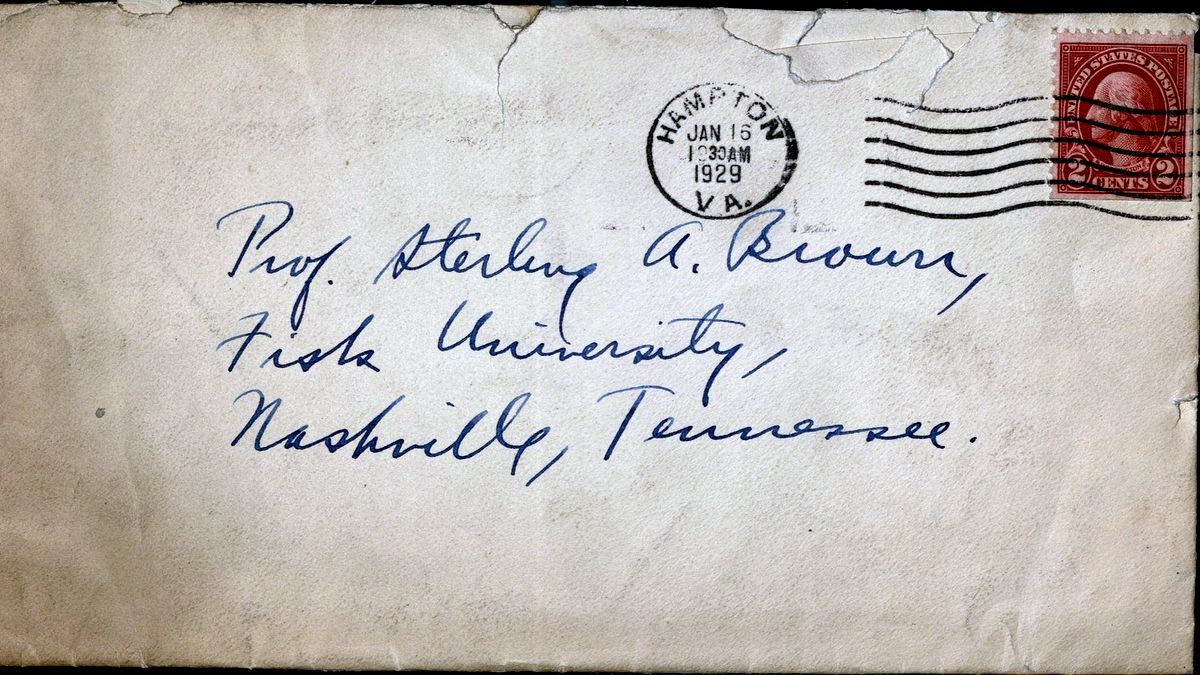
Brown (1901-1989) was an influential African American teacher, literary critic and poet whose poetry was rooted in folklore sources and Black vernacular. The son of a Howard University professor and a graduate of Dunbar High School in Washington, D.C., he received an academic scholarship to Williams College, where he studied traditional literature, but also explored blues and jazz music. Brown graduated Phi Beta Kappa from Williams, and received his master’s degree from Harvard University in 1923. Brown began his teaching career at several historically Black institutions at a time when Williams excluded African Americans from the faculty. In 1974, Williams presented him with an honorary degree of Doctor of Letters.
While he was teaching, he began collecting folk songs and stories from African Americans, which inspired the poetry he then began to write. In 1929, Brown began a 40-year teaching career at Howard University, and in 1932 his first volume of poetry, Southern Road, was published. Musical forms, especially ballads, work songs, spirituals, and blues, were primary influences on his work. At a time when Black speech had been distorted into a stereotype by white writers, he brought an authenticity to the use of Black vernacular in American poetry.
As critic, essayist, and Opportunity magazine columnist, Brown supported realistic writing and harshly attacked literature that distorted black life. In 1937, he published the pioneering studies "Negro Poetry and Drama" and "The Negro in American Fiction." In 1941 he was co-editor of "The Negro Caravan," an anthology of African American writing. Most of Brown's major work was written by the mid-1940s; two decades later, students inspired a widespread revival of interest in his work, much of which was subsequently reprinted.
Tags: Williams College,