Hoosac Valley Students Learn Composting for Gardening Program
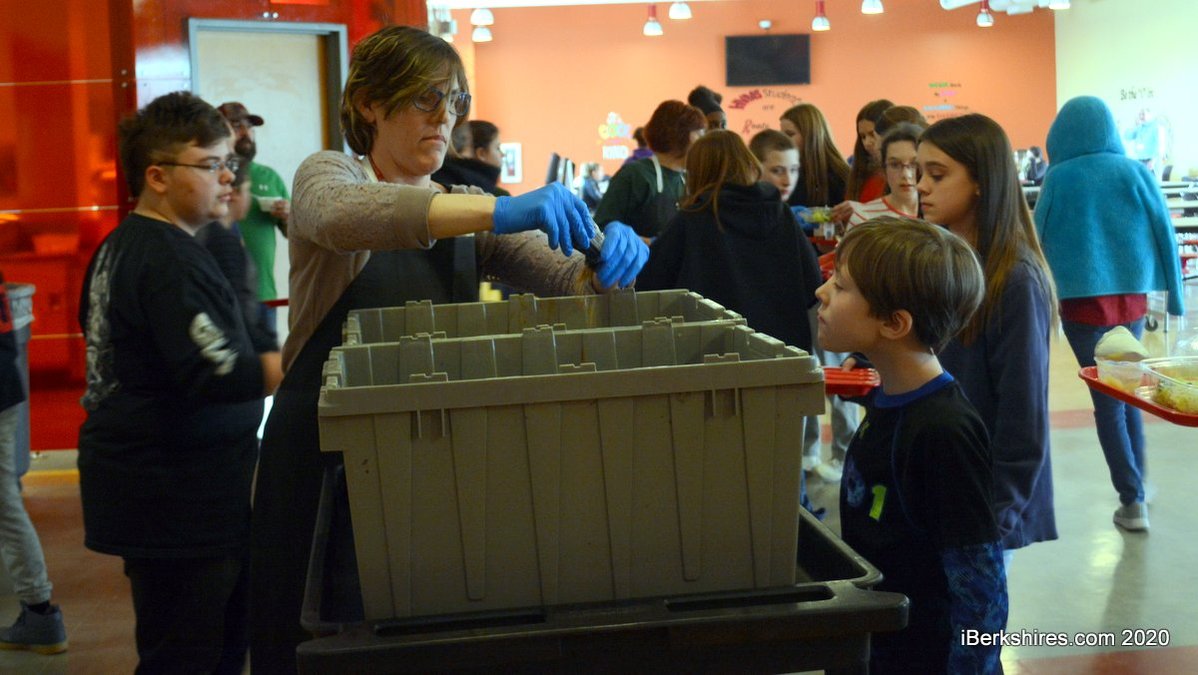
Lindsay McGinnis is teaching students about the benefits of composting. Their lunch leftovers will help create nutrient-rich soil for planting.
In the weeks leading up to school closures because of the COVID-19 pandemic, Hoosac Valley was ramping up its composting program. Teacher and program organizer Lindsay McGinnis had her eyes set on the spring.
"We want kids to be more environmentally conscious but also to see that everything is connected," she said. "There is a community connection but also environmentally things are connected."
Last year, the school received a $25,000 grant from the Henry P. Kendall Foundation to help roll out the program that ties in several departments, classes, and organizations.
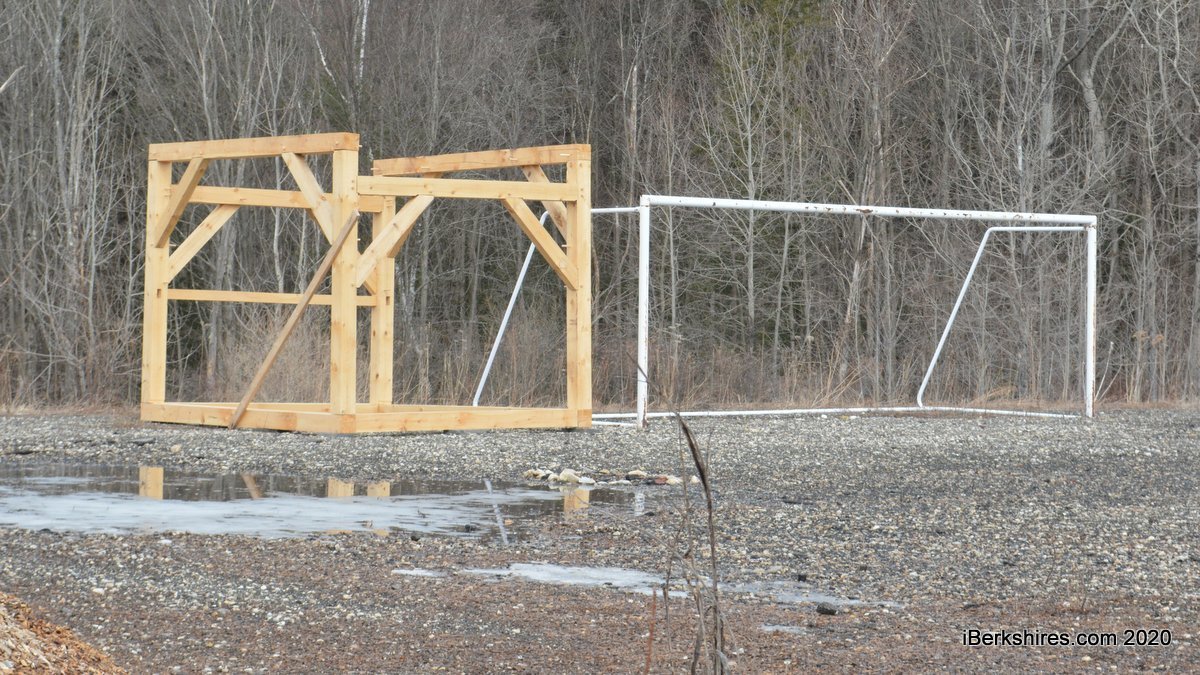
Much of this money will fund the program's infrastructure that will be built on the old tennis court. The space will include three greenhouses, two supply sheds, and 10 raised beds that will eventually supply the cafeteria with student-grown produce.
But first, they need to make compost — this is where McGinnis found a teachable moment.
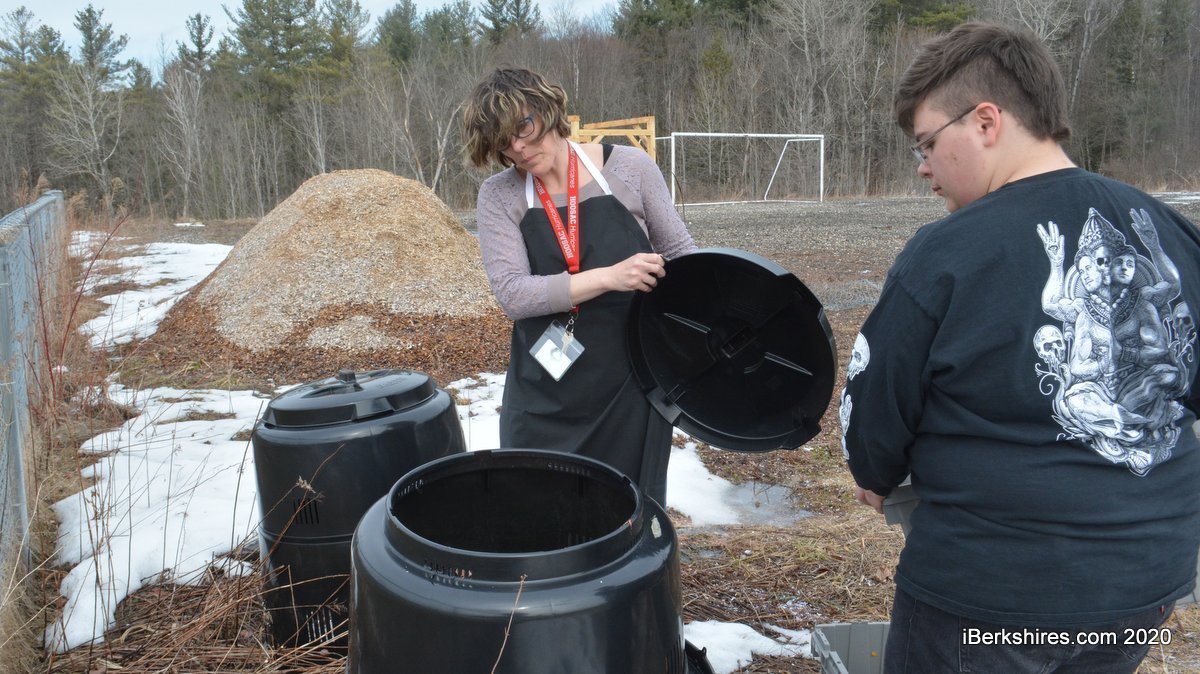
"We had two [barrels], they are already almost full," she said. "We started just composting in the kitchen just to get the ball rolling ...we want to get everybody on board."
She said students were learning to think before they just throw their lunch away.
"We want them to make better choices," she said.
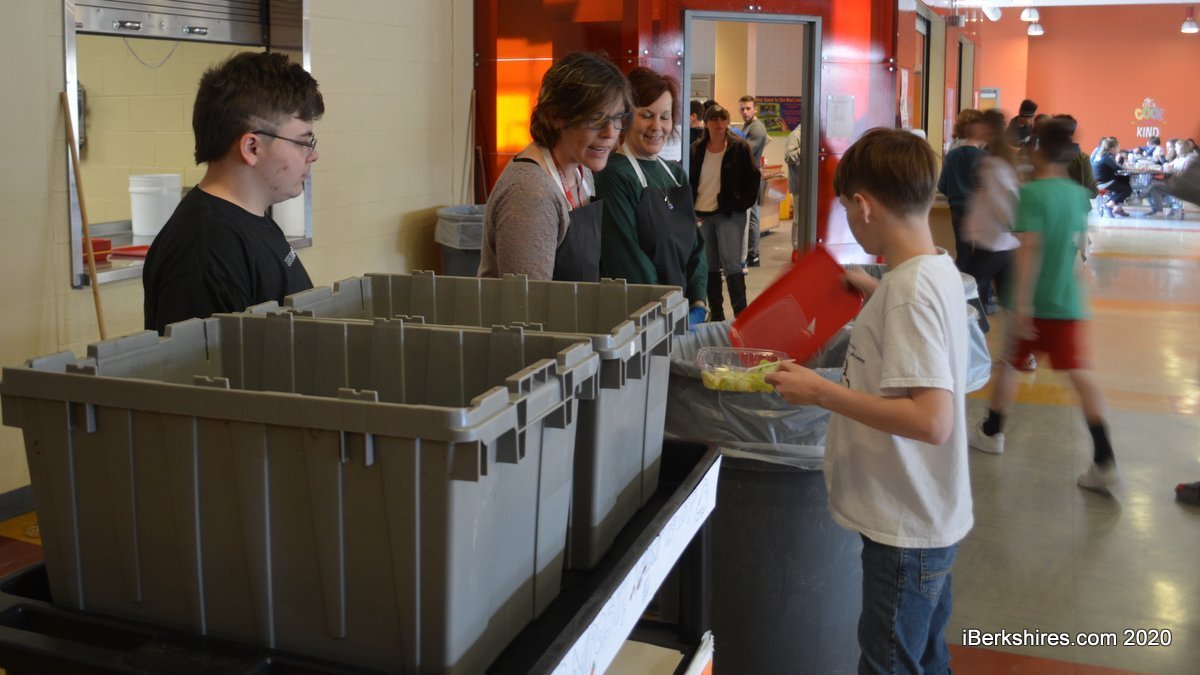
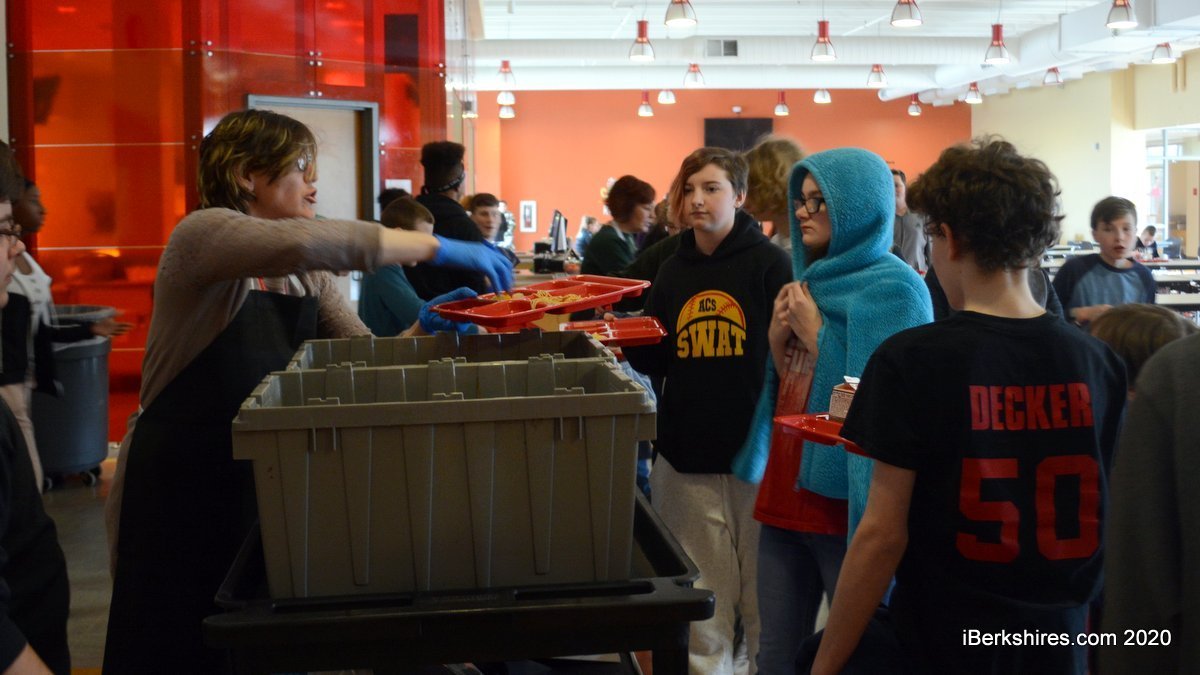
McGinnis said the composting station was often manned by students from her Outdoor Leadership class who help other students determine what is compostable and what can be thrown out. They then wheel the collection out to some earth machines donated to the school by the Northern Berkshire Solid Waste Management District (NBSWMD).
Student Chris Fortier said he was happy to see his fellow students composting.
"I think that it is very helpful especially for our schools where we have a lot of waste," he said. "People take food but they don't always eat it so doing this helps the environment."
Food Service Director Roseanne Schutz said there is a lot of food thrown out during lunch and she was happy to see it not all totally go to waste.
"They will buy the whole lunch for a bag of chips ... and they will dump everything else," she said. "I hope a program like this gives them more respect for their food."
NBSWMD Program Manager Linda Cernik, who often helps with the composting, said she was happy to see the composting program now because in 2021, composting will likely be mandated and schools will be held accountable.
McGinnis said beyond her Outdoor Leadership class, the program has other connecting points. This includes a working relationship with the NBSWMD, the school's own state Department of Environmental Protection-chartered Green Team, the garden club, the Cornerstone program, and the timber framing and wood technology programs that are building the greenhouses and raised beds.
"All of these things are kind of intertwined," she said. "It is kind of a weird web."
She said the entire school ultimately will be involved through composting or eating Hoosac Valley grown produce.
Also, they plan to build an outdoor classroom all students will have access to.
She said the grant will realistically last two years and mostly supports the initial startup. In order to make the program sustainable, they will sell excess produce at farmers' markets and work with local partners.
"We want all of the harvest to go into the kitchen," she said. "Anything we cant use ideally will go to the farmer's markets. We will have a student intern run that for us and bring the profits back for the program."
McGinnis added that she hopes the program betters general food issues in the area. She noted kids often come to school hungry and the program will not only provide more food for students but hopefully connect them to their food.
McGinnis said this disconnection became more apparent after they surveyed students about what they want to grow. She said although corn and watermelon topped the list, mangoes were also in the running.
"It is funny how many people do not realize where their food comes form ... somebody wrote mangoes you can't grow mangoes in our back yards," she said. "Sorry guys. There are things like that but we can do corn, we can do watermelon, and we can do berries."
Schutz agreed and said she has talked to students who thought food just came from the market and had no idea that it was grown. She said she hopes the program connects students directly to their food and empowers students.
"Having the food in our kitchen grown by the students I think kids are going to be excited to try it," she said. "I think it makes it all a little more personal."
McGinnis said kids, in general, have responded well to the composting and said she hopes they can change some habits.
"The kids seem to get it and we only miss a handful of students," she said. "We are trying to get it into the older lunches. They have been here so long with a program like this it is harder to get them to step out of their routine, especially the teenagers."
This article was written just before the COVID-19 shutdown. We are hoping that will eventually happen be able to follow up with planting.
Tags: environment, HVHS, school garden,