Hancock Shaker Village Focuses on Gardens, Livestock
PITTSFIELD, Mass. — The museum at Hancock Shaker Village may be closed, but the gardens are thriving.
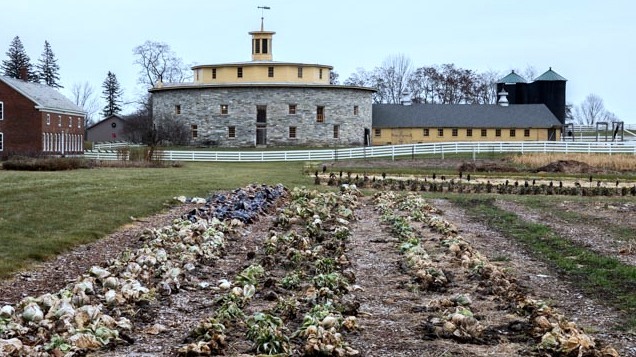
Unlike any other cultural institution in the region, Hancock Shaker Village is both a museum and a working farm. (In fact, it is the oldest working farm in the Berkshires.) Though the museum is closed — and, like every other business in the country closed due to the pandemic, doesn't know when it will reopen — the village made the decision to plant its gardens.
"Bill Mangiardi (director of Farm and Facilities) and Lauren Piotrowski (head gardener) made a strong appeal, and it felt more important than ever," said Director Jennifer Trainer Thompson.
In addition to the working farm, with livestock including pigs, goats, cows and sheep, the village gardens more than 5 acres.
It's our Renoir, providing visitors with beautiful, real-life landscapes," Trainer Thompson said.
It’s also a food source. Ten years ago, the village introduced a CSA (community supported agriculture) that allows the public to buy produce and meat directly from the farm. The summer vegetable CSA is already sold out, with 60 memberships, and the billage also gives away an additional 15 percent of its crops for seven months out of the year to regional families with food insecurities. Memberships to the fall/winter meat CSA are still available.
"Hancock Shaker Village's farm and CSA are an essential part of the agricultural landscape of the Berkshires," Piotrowski said. "We believe it’s vitally important that regional food systems remain intact and strong in the face of the challenges the world is facing today. This is an opportunity to reaffirm our commitment to local, sustainable food production."
Typically, most of the garden costs are financed by ticket sales generated by admissions to the village. As a farm within a museum, Hancock Shaker Village operates as such — creating an interactive, educational, farm-based "exhibit" for almost 60,000 people a year. This unique model has allowed the village to quietly develop initiatives such as a thriving internship program and partnerships with agri-ed collaborations.
Over the last three years, Hancock Shaker Village has:
· Expanded a robust summer internship program to include farm and garden interns, and to strengthen the concept of using the farm for social justice — finding ways to provide for those with food insecurities and help train the next generation of emerging food leaders.
· Made its CSA year-round, adding a successful winter meat CSA that will double in size next year.
· Partnered with organizations such as an artisanal hard cidery in North Adams to use the farm's heirloom apples, and entered the fourth season with Roots Rising — an inner city program designed to get Pittsfield teenagers interested working on a farm.
· Made the farm part of its programming, demonstrating sustainable/regenerative farming seven days a week.
"These initiatives stay true to the Shaker spirit and help define who we are," Trainer Thompson said. "As the Shakers said when neighbors stole their vegetables during hard times, next year we need to plant another row."
Sharing the farm and baby animals with the public has prompted Hancock Shaker Village to introduce a new Facebook live stream. Called Virtual Farm Friends, the Facebook live feed will stream from the Shaker barn every Wednesday at 11 a.m. with Farmer Billy and others. This free 10- to 15-minute live feed in the barn will give children (and adults) the chance to meet the baby animals, learn about their care, and watch them romp, nurse and sometimes get into a bit of mischief.
With the loss of revenues from coronavirus lockdown orders, the village is also funding farm operations through creative revenue streams. Beginning next week, the village is introducing Baby Animals Zoom Meetings. Looking for a baby animal to brighten your virtual happy hour? Jazz up your birthday party? Get a goat on a corporate conference call?
The village has a few choices:
• Fifteen minutes with baby animals: $50 donation for up to six people on a Zoom videoconference. Your choice of animals on the farm – goats, lambs or calves. You will be in the barn with them, or out in the yard if it's a nice day. If you're lucky, you might even time it on a day when a baby is born! This will be offered Tuesdays at 10:30 and 11 a.m., beginning April 21.
• Fifteen-minute corporate meeting: $150 for up to 20 guests on a Zoom videoconference. Meet the baby goats, lambs and calves. If you wish, we also will tell you about the farm and the famous Round Stone Barn the Shakers built. This will be offered Tuesdays at 1 and 1:30 p.m., beginning April 21.
• Twenty-minute VIP tour: $300 for unlimited guests on a Zoom videoconference. A private tour of the baby animals with farmer Billy Mangiardi and Director Jennifer Trainer Thompson. This will be offered Fridays 1 and 1:30 p.m., beginning April 24. Custom time slots may be available.
Tags: Hancock Shaker Village,