Mill Town Capital & The Lantern Feeding Front-Line Workers
.jpg)
With the COVID-19 disrupting just about every aspect of life essential workers in the health and human services fields who have had to make many sacrifices but the local investment firm and North Street eatery believe this should not include a good meal.
"Our hope is that these front line workers receive these bags first and foremost as a small gesture of thanks for their work to keep our community safe, get our neighbors healthy, and keep the wheels moving," Carrie Holland, managing director of Mill Town Capital said. "Their sacrifice and risks are appreciated."
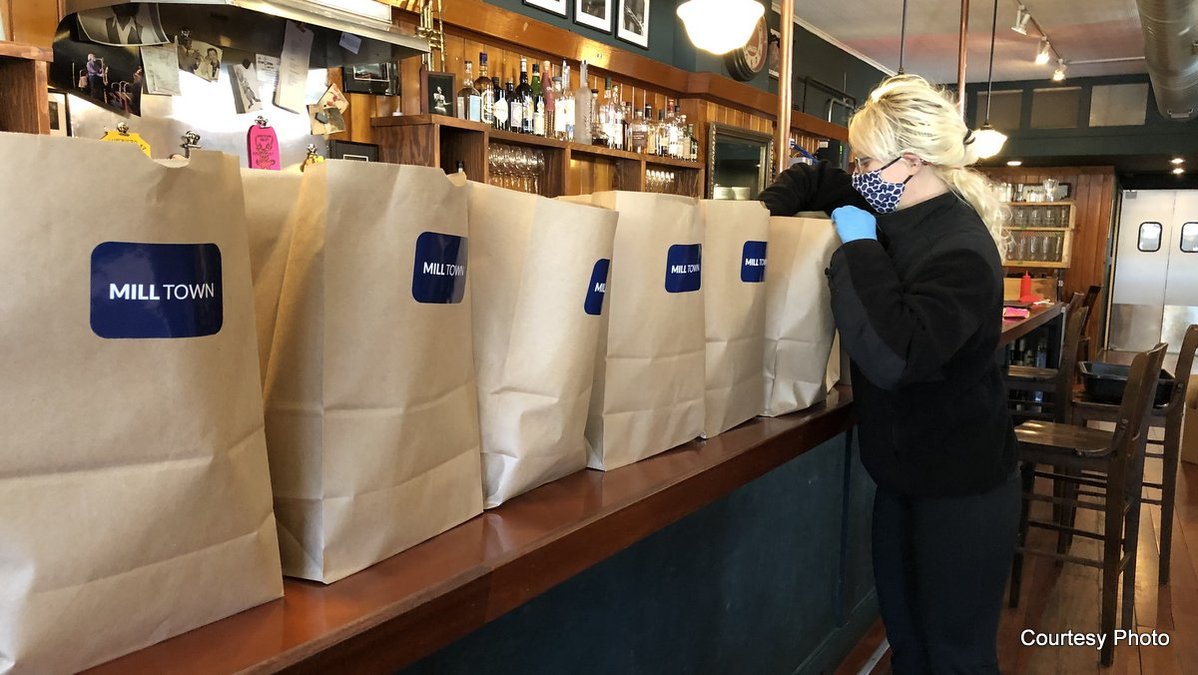
So in May, Mill Town Capital teamed up with Lantern chef Raymond Stalker to whip up some meals for medical professionals, community service providers, and others who do not get to stay home during the pandemic.
"We wanted to provide a small bit of comfort and respite from their trying days protecting us and caring for our community," Holland said. "Realizing that they are going through extraordinary measures at their workplaces, we thought that they would appreciate some relief from food shopping and meal preparation during the few hours they had away from their workplaces."
She said the Lantern prepares 12-16 meal servings a week for Berkshire Health Systems employees, emergency child-care providers at 18 Degrees, Berkshire Family YMCA, and Gladys Allen Brigham Community Center, and staff at Williamstown Commons
The bags can be picked up or delivered to the workers' locations. Berkshire United Way volunteers have also been utilized for drop-offs.
Holland pointed out some of the highlights from the menu that includes Vietnamese chicken salad and noodle-based salads.
"Many of the prepared foods have a creative twist in their ingredients list," Holland said. "We received a note from one recipient who shared that she and her grandson were having a really fun time learning about some of the new ingredients they were not familiar with and turned mealtime into a learning opportunity, researching the country of origin for the ingredients."
She added that there is also a stress on healthy food with immune-boosting ingredients.
"We absorbed the extra preparation effort and cost to focus the menu items on really nutrient-dense ingredients and healthy preparation techniques," she said. "We need our front line workers to stay as healthy as possible and energized with quality fuel in the tank to keep up their work and continue to keep our community healthy, quality, nourishing food is a key component to helping them remain healthy and ready to report to work."
She said, as of mid-May they had distributed about 150 units to Williamstown Commons, 35 units to early child-care centers in Pittsfield, and more than 150 units to medical professionals at BMC.
"Many of these workers have been able to share these food bags with their families, so in reality, the reach of this program has extended by many multiples beyond the approximate 350 front-line workers who received a bag," she said.
Kelly Marion, CEO of Gladys Allen Brigham Community Center, said they are caring for the children of front-line workers and by the time they get out of work, the markets are usually picked over.
She said the Fridge Filler Project absolutely has made their lives just a little bit easier.
"We want to say thank you to everyone involved in the Fridge Filler Program at Mill Town," she said. "The meals provided have saved money and time. Staff don’t have to rush to the grocery store after work because they know they already have food in the fridge. There were nice food options; it also allowed us to try new things, healthy food selections that boosted our energy."
Holland said this is just what they hoped to accomplish with the Fridge Filler Project.
"We hope this provides a bit of relief for them, saving them time from a grocery trip or dinner preparation, so instead, they can spend that time with their families, relaxing, going for a walk, watching a movie, reading a book," she said. "Whatever they do to find some respite from the stresses of their day."
Tags: COVID-19, food, good news,
More Coronavirus Updates