Pittsfield School Committee Eliminates Full In-School Opening Plan
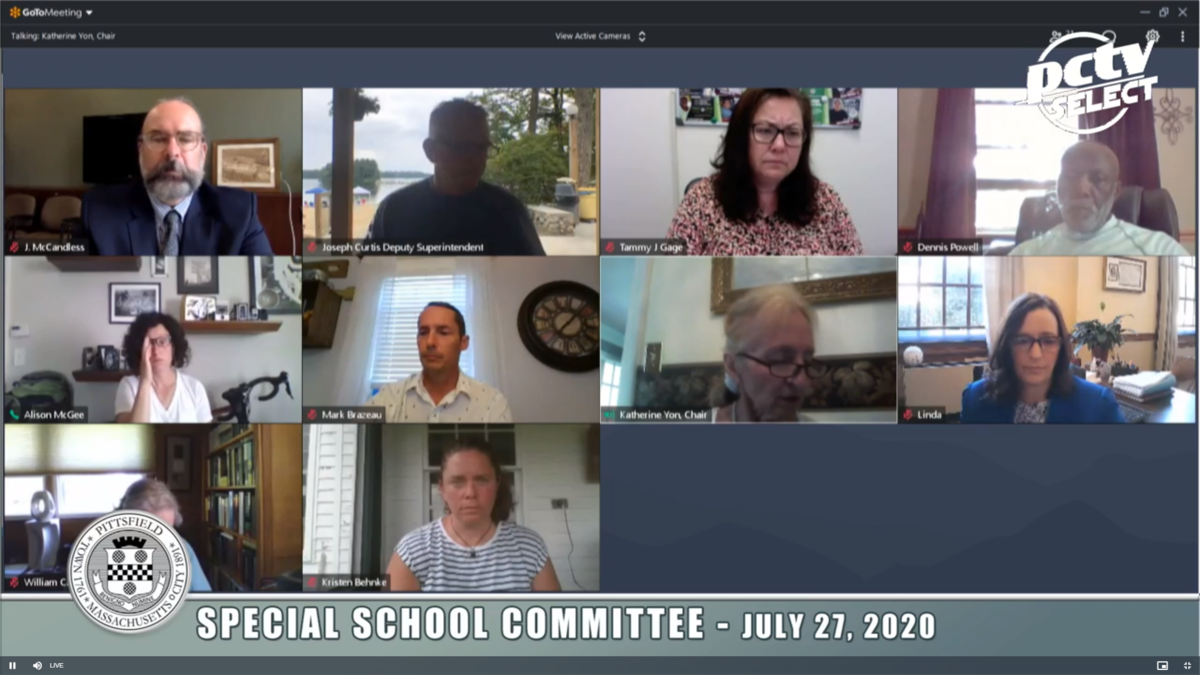
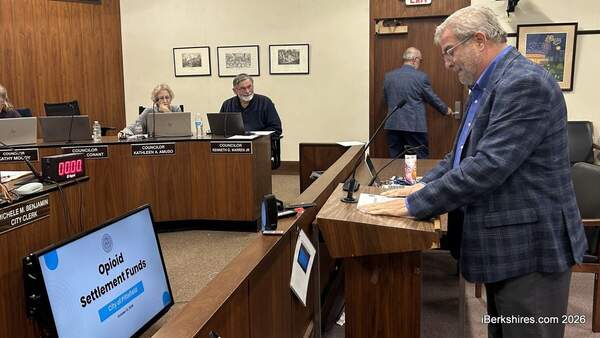
The school Committee on Monday morning voted to eliminate planning for a full school reopening in the fall. The district educates more than 5,200 children in a dozen school buildings.
The committee voted Monday morning during a special meeting to take the full in-person education model off the table and continue working on hybrid and remote options while continuing negotiations with bargaining units.
"We don't need you at this point to approve a specific model but to give the administration and the bargaining units more of a direction on which way to spend the majority of our time," Superintendent Jason McCandless said. "As we reach a month away of what is currently the first day of school ... we need to focus meeting time when it comes to negotiating and getting an agreement down on paper."
The committee's series of votes directed the administration to submit to the state a preliminary plan that would include a hybrid learning plan as well as a remote learning plan. The district will report that the state's preferred full in-person learning is not a possibility.
While the state has been setting up the potential for reopening schools by providing health guidelines, no decision has yet been made by the administration. Gov. Charlie Baker has resisted calls from the federal government to reopen schools — and the possible withholding of federal aid if they don't. Vice President Michael Pence raised that issue at a brief press event with Baker on Nantucket over the weekend, saying he would ensure the Bay State had the resources to reopen schools.
"To open up America we need to open up America's schools," the vice president said, according to a report in the Worcester Telegram. "I support your effort to open the economy, but it's important to reopen schools."
The United Educators of Pittsfield posted a statement through social media stating that they wish to resume education in the fall remotely. The teachers' union felt a remote learning period would allow time to fully develop a hybrid learning plan that would work for both students and staff.
Deputy Superintendent Joseph Curtis said they plan to enter into negotiations in earnest this week and the vote allows the administration to continue negotiating a hybrid and remote model. A vote to endorse the UEP's statement would direct the administration to fully focus on remote learning in the fall nixing both hybrid and full in-person models in the statement to the Department of Elementary and Secondary Education.
McCandless said although their opinion does differ from the UEP, he said they aren't too far apart in many areas and both agree more time is needed.
"There are areas where we overlap and are in agreement with our bargaining units," he said. "We would agree that we are not ready to have kids back to school at the end of August ... We totally agree that we need more time to figure this out."
Curtis added that because of timelines the school year will most likely start later into September. He said this is a rough guess and the School Committee would ultimately have to vote on the matter.
McCandless did go through a presentation outlining some of these possible scenarios and first touched on the state's preferred goal of a full in-person school week. Students would have to be masked and stay 3 feet apart.
The administration would prefer 6 feet apart, which just is not possible inside the school buildings.
"I think that all of us basically reject the notion that 3 feet of distance is adequate," he said. "We cannot facilitate a full school in any of our schools with 6 feet of distance It almost drives us completely away from the all-day, all-student model."
He read through some survey data and noted 56.2 percent of responders would not be willing to send their kids to school for a full in-person school week.
But 58.4 percent of those who responded no said they would be willing to send their kids to school if a hybrid model is used that would reduce student capacity.
McCandless said there is a sense that some students just benefit from in-person interaction with teachers even if it is minimal and they would like to preserve this in some way.
"We do know that it is going to be much better for the educational health and social-emotional health of some of our students to have some version of in-person as soon as possible," he said.
The superintendent said although a full remote scenario is being planned, the district is also developing two separate hybrid systems that would accommodate social distancing by shrinking the student body in the schools at one time.
An morning/afternoon model would split the student body in half for 2 1/2-hour shifts At each school, a morning cohort would go in leaving sometime in the late morning. The second cohort would then go to school and leave around 3 p.m.
Students would be provided core instruction in the building and participate in remote experiences for the rest of the day.
McCandless said they believe teachers would need a 45-minute preparation period and would be given a one-hour unpaid duty-free lunch. A 30-minute collaborative planning period would also be scheduled in the middle of the day.
Custodial work would take place at this time.
This all would have to be negotiated with the bargaining units and would likely extend the workday.
McCandless went over a second model, the "AARRR/ RRRAA" model, in which students would go to school two full days each week and learn remotely for the rest of the week.
McCandless said this model provides less consistency and lunch would have to be scheduled as well as frequent mask breaks.
With the half-day model, students would be provided lunch but would eat at home.
"Lunch is a concern of ours and this would take eating right out of the picture," he said.
Curtis noted that all of this is "rough thinking" and true negotiations would truly guide scheduling
McCandless added that according to a survey, 14.3 percent of the student body are in a high-risk category per the U.S. Centers of Disease Control.
With this, he noted there is still a portion of the student body that will simply not feel safe returning to school.
Because of this, the plan is to provide a robust fully remote system or virtual academy that will function as its own school for families and staff who are not willing to return to school in any physical form.
Curtis said they expect between 1,000 to 1,200 to enroll and roughly 60 staff members.
McCandless reiterated that the vote does not commit the district to anything and the committee could still decide to start the school year remotely or fully in one of the hybrid systems. As more information becomes available through the negotiation process, he will brief the School Committee.
The School Committee will have to vote on a plan before Aug.10
The meeting went more than three hours and, before diving into presentations, the committee took public comment. Mostly educators spoke in opposition to opening school in person.
Some felt the model would not be workable and potentially unsafe. There was also a concern that teachers would spend more time making sure kids were wearing their masks and social distancing than teaching. Also, some felt there would be staffing issues with employees urged to stay home even with minor cold symptoms.
There were also questions over ventilation and the use of fans.
McCandless said this input along with a staff survey to be released will help inform future planning.
"We are not going to come up with a system that is going to thrill everybody so we all have to do our best," he said. "We have to do our homework and we have to do what the data tells us."
Tags: Pittsfield Public Schools, school reopening,
More Coronavirus Updates